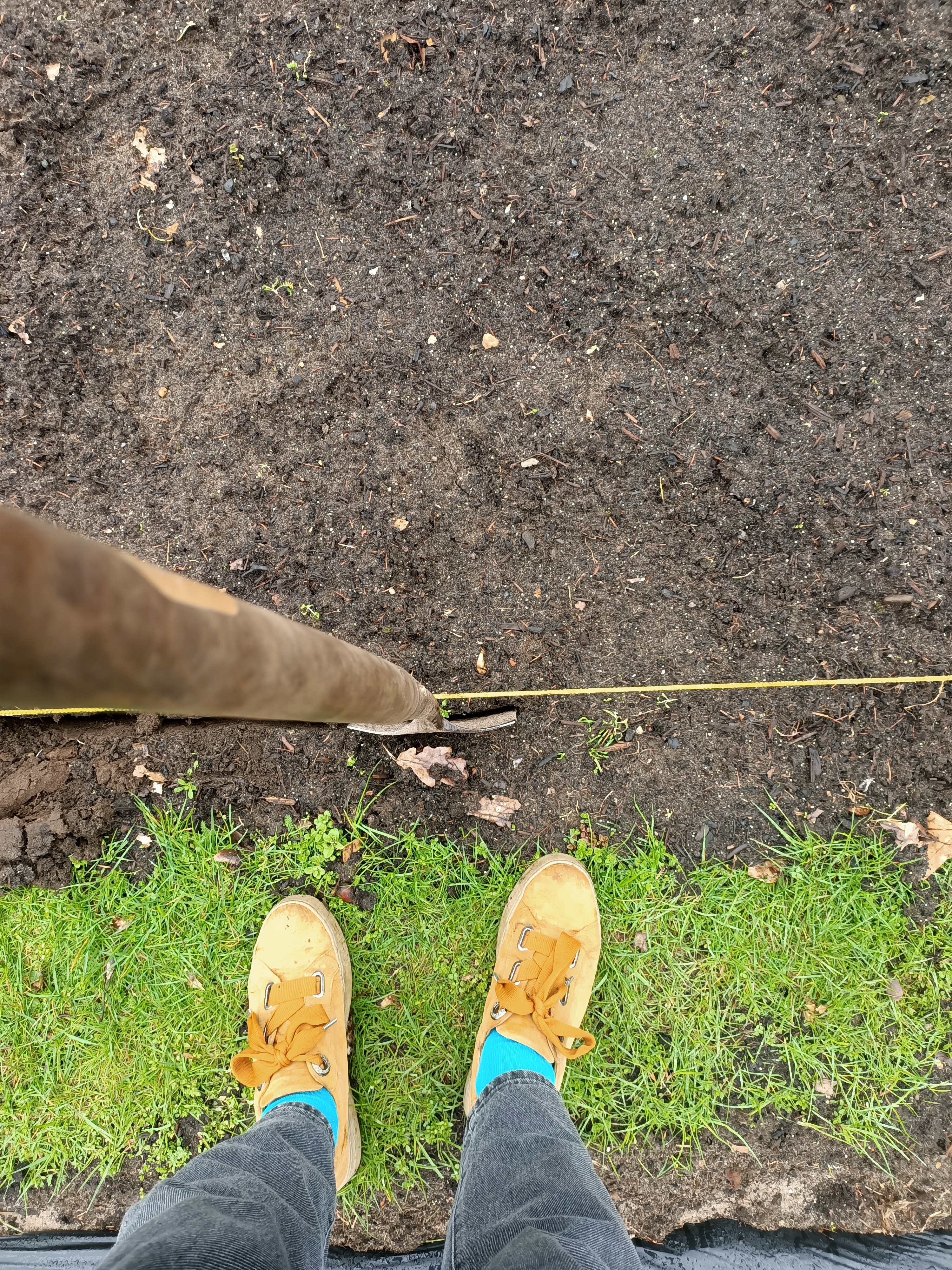
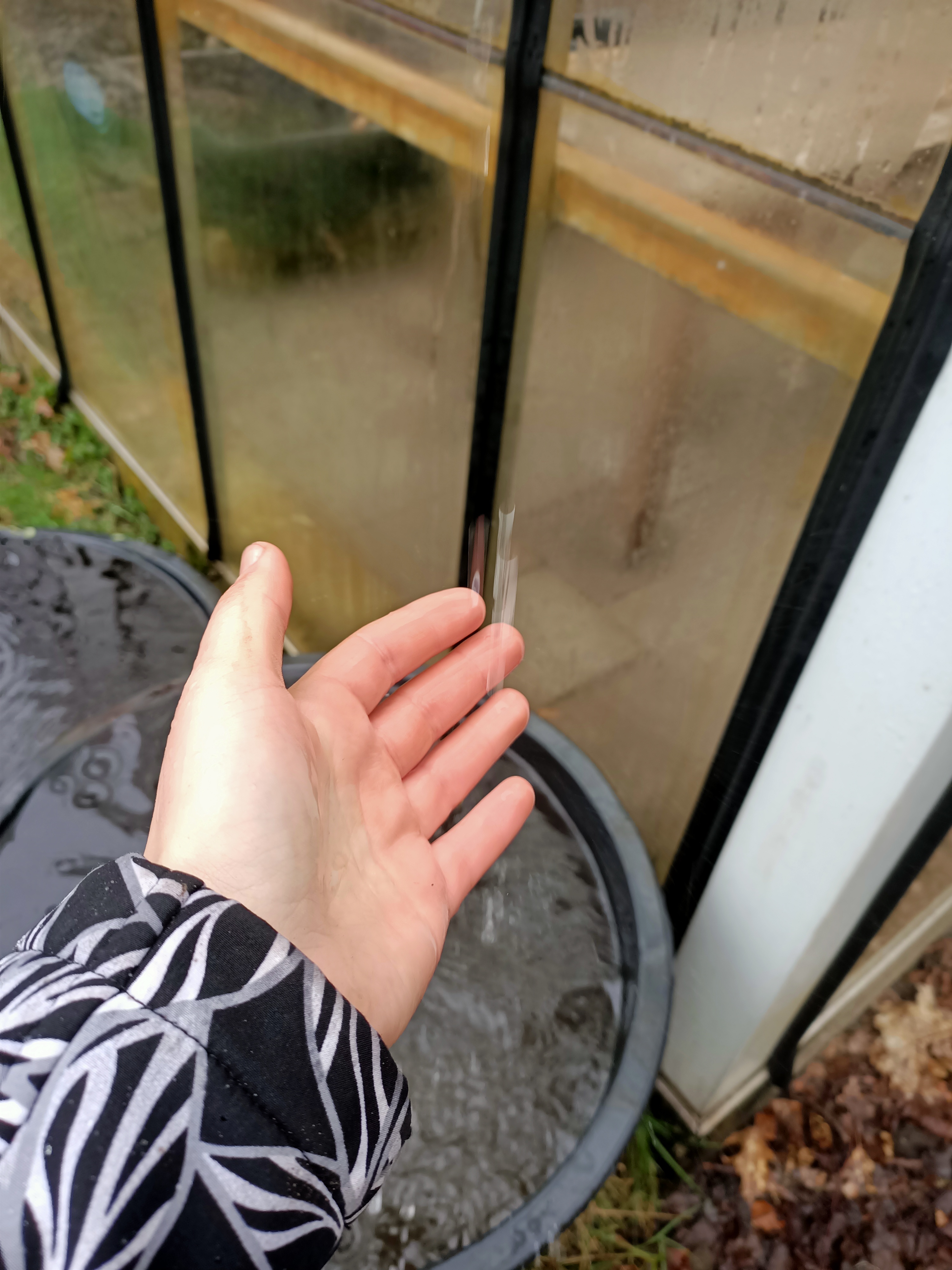
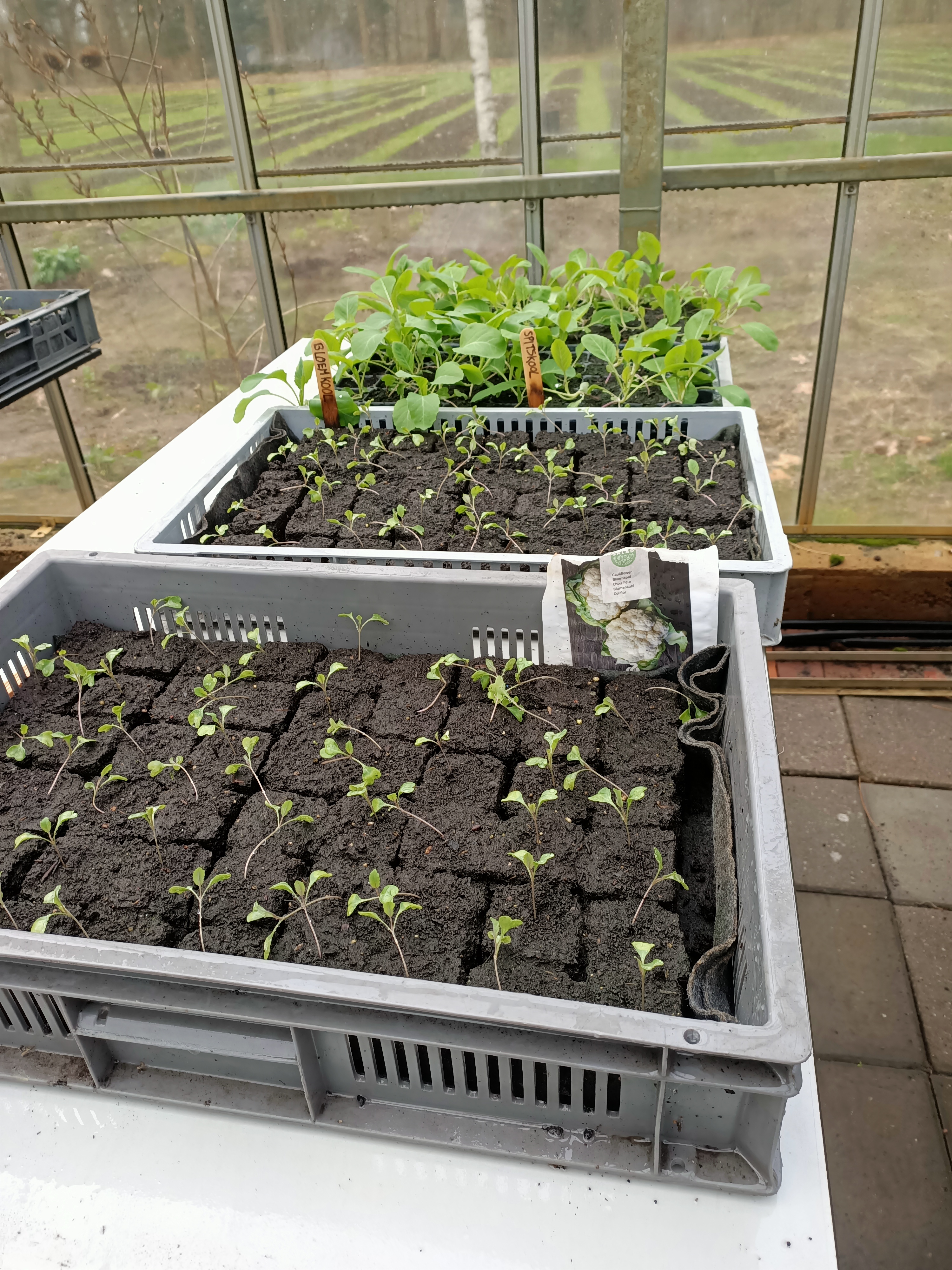
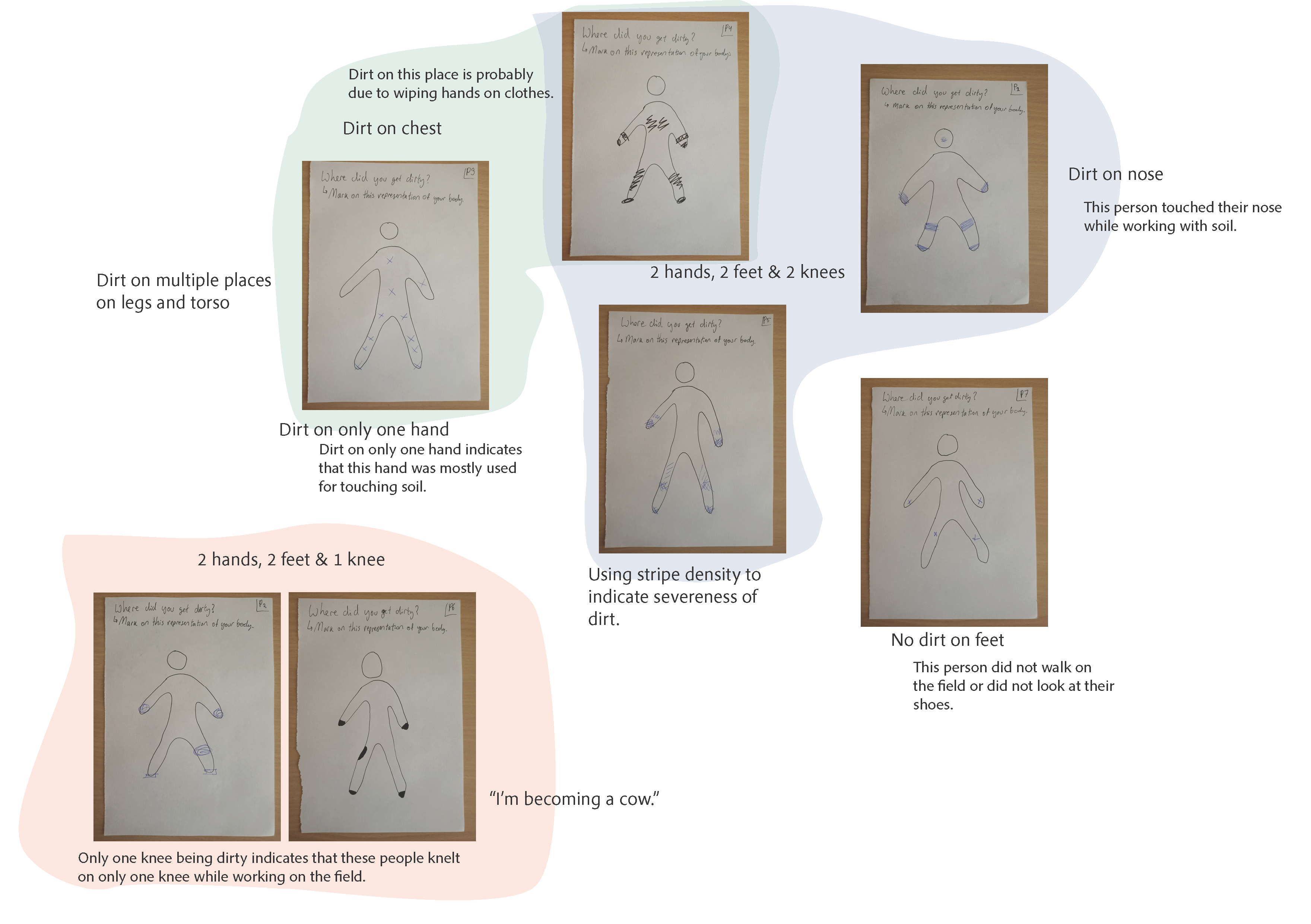
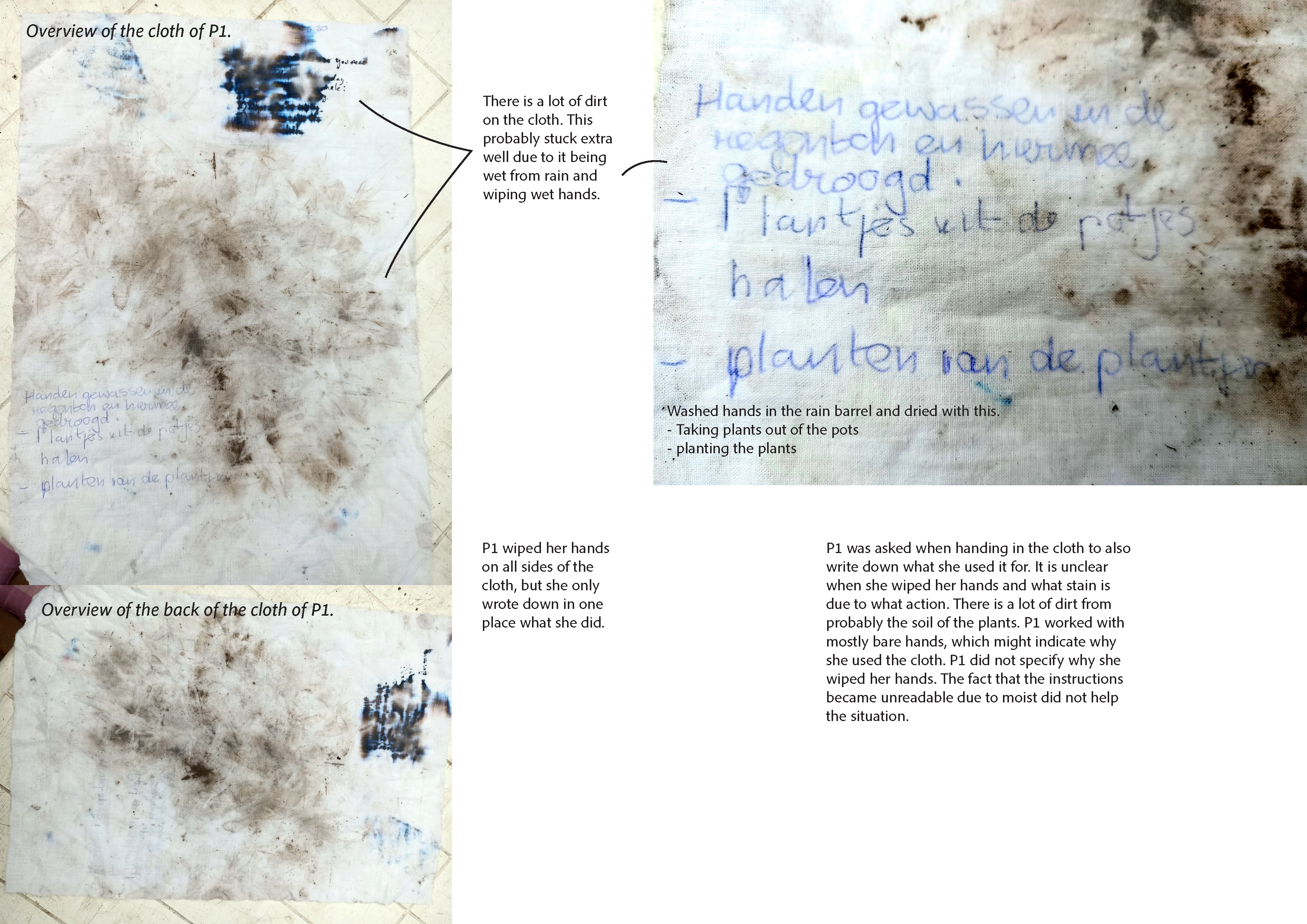
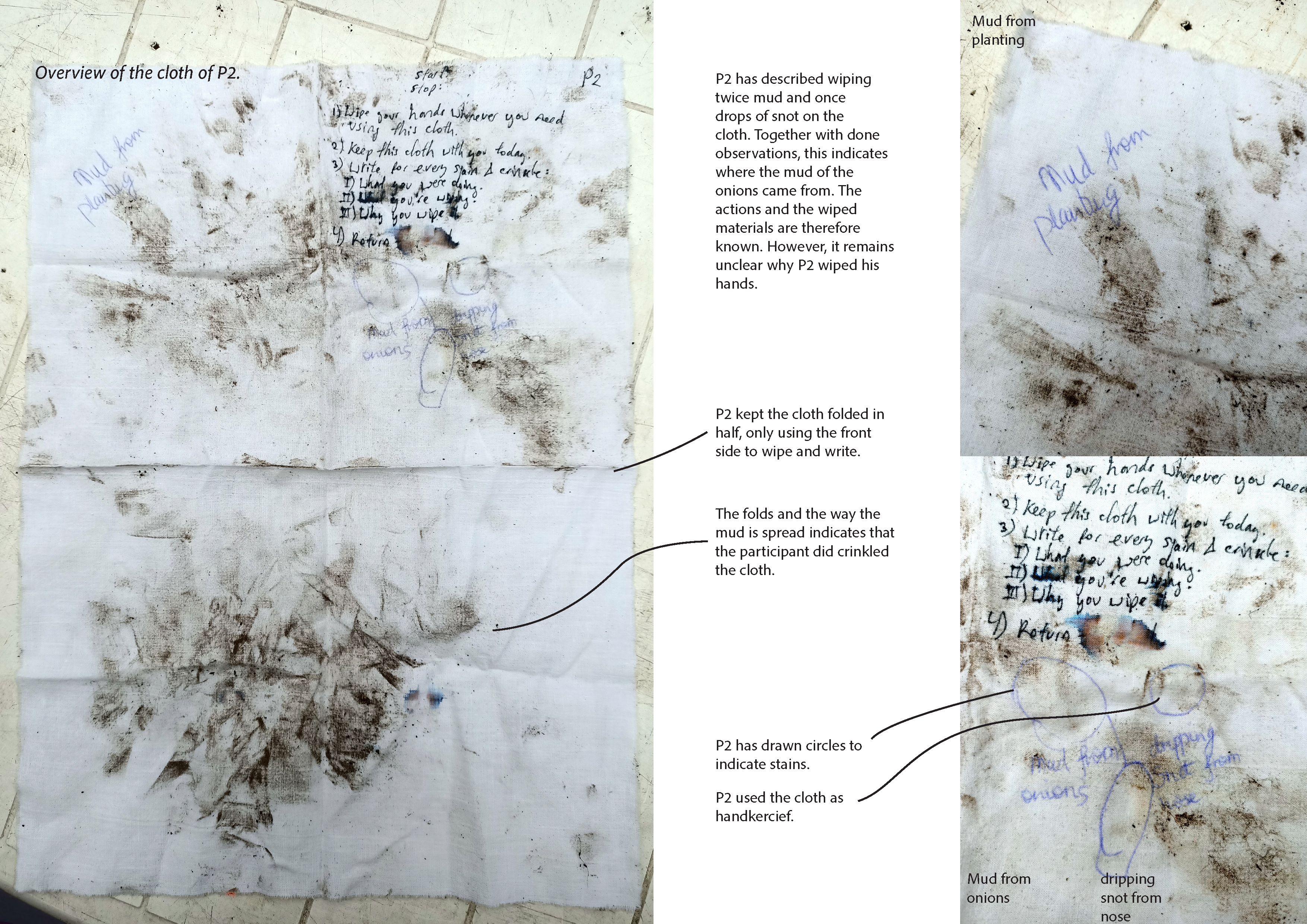
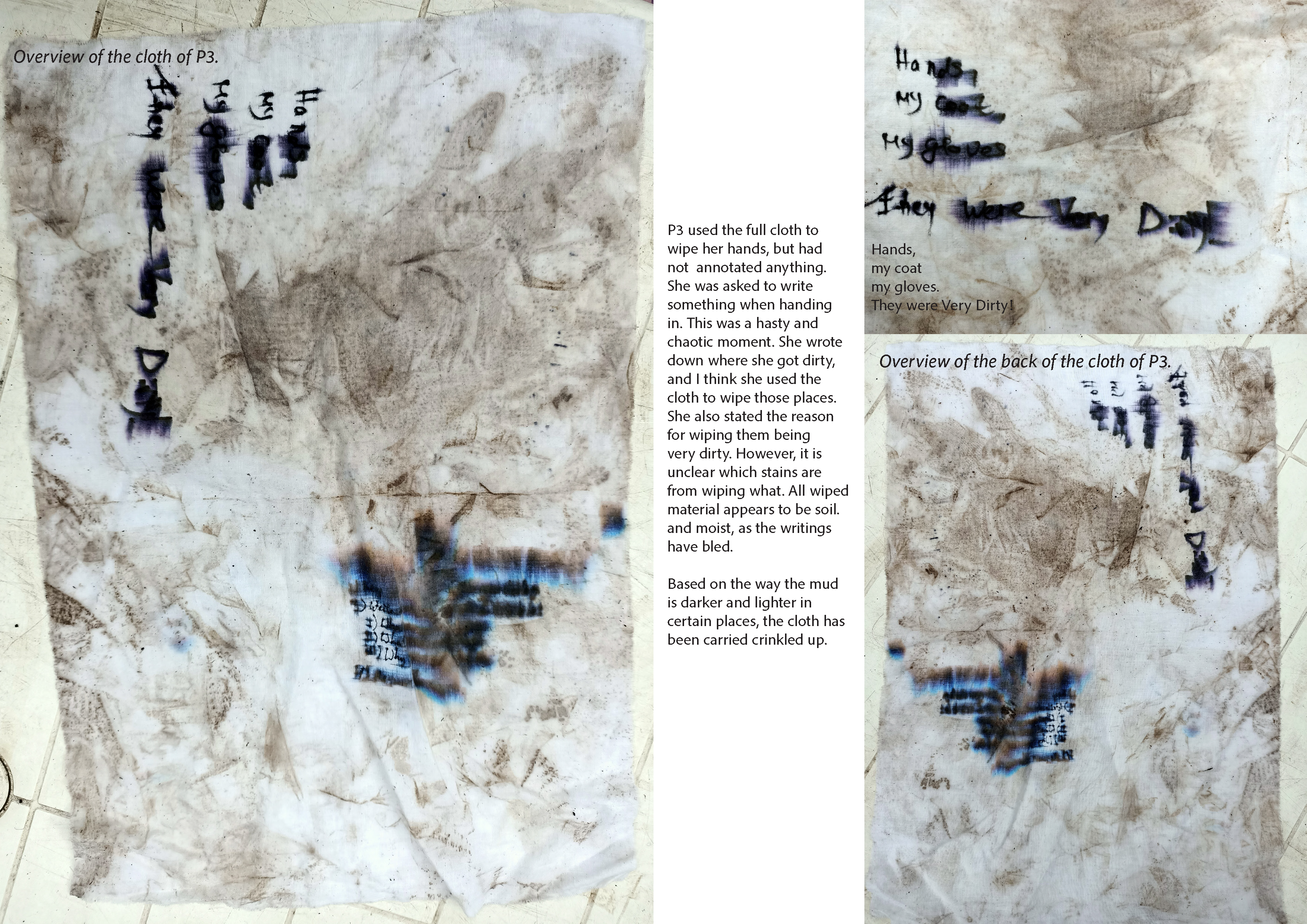
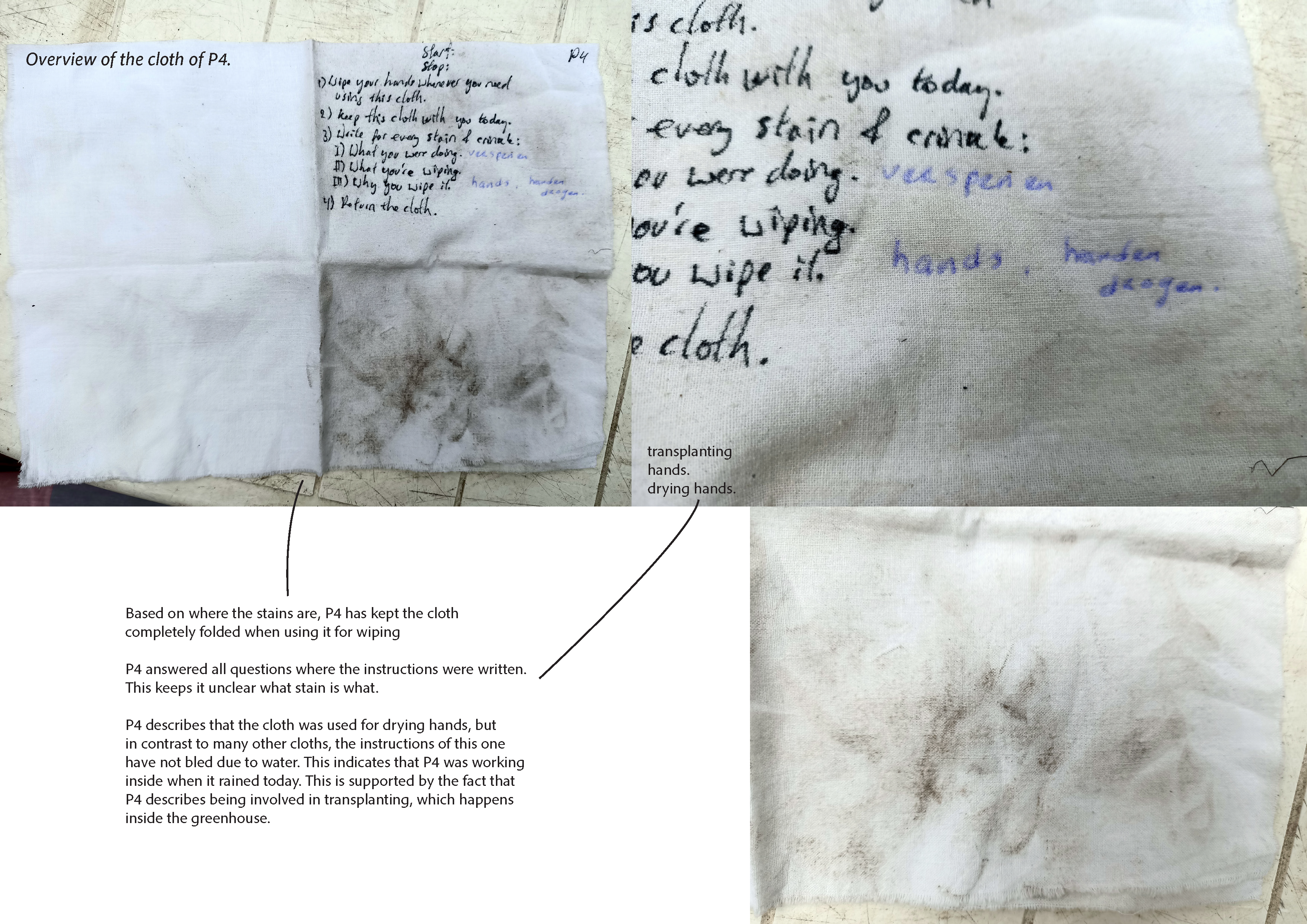
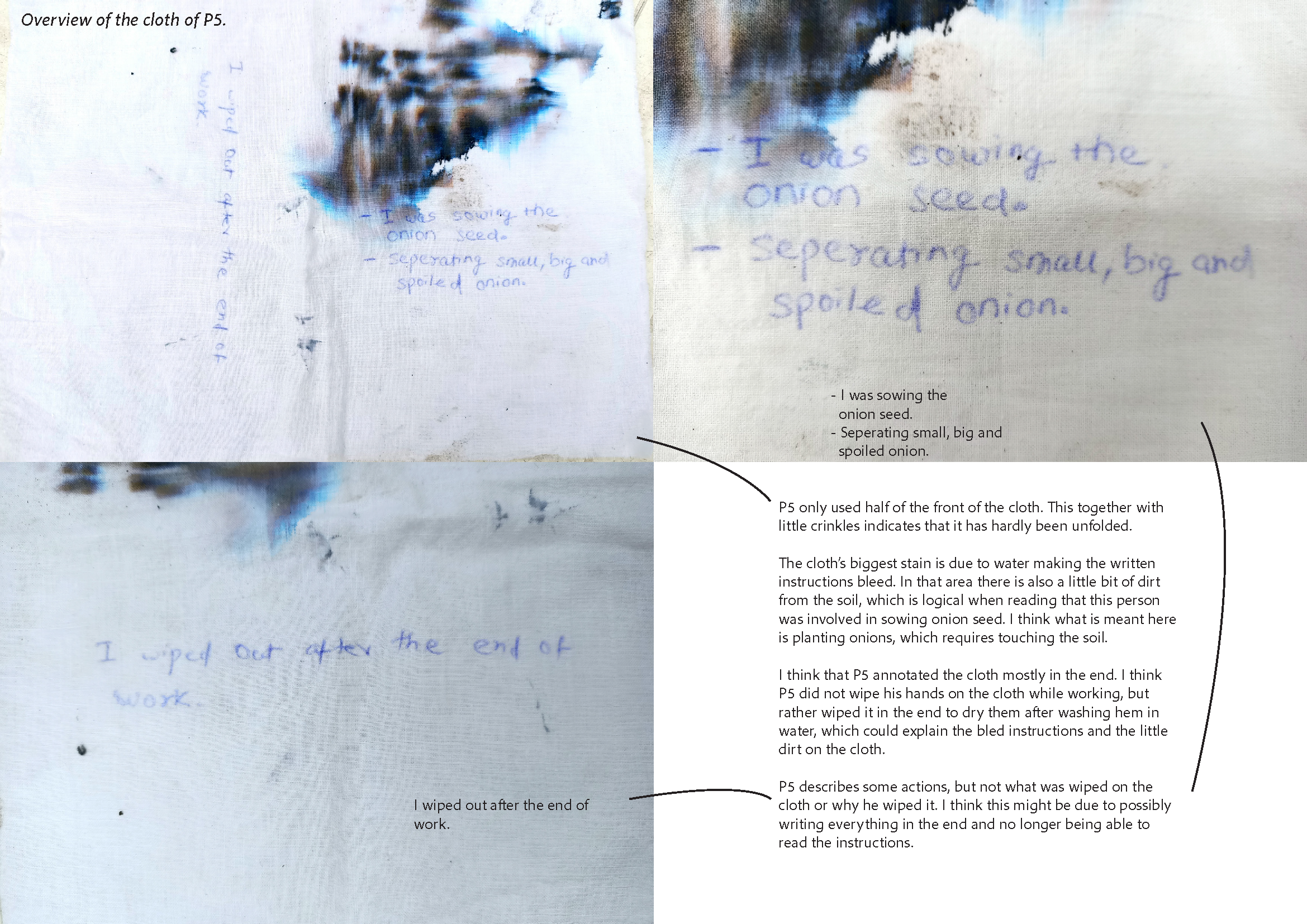
In this research project, I investigated the role of dirt at Stadsakkers Eindhoven, an initiative where volunteers grow food for the foodbank in an ecological manner. I studied their practices through sensory ethnography and ethnographic probes to see how they inspire a transition towards sustainable food systems. The cloth probes provide a richer layer of data by capturing not only actions and stains but also information about weather through smell and moisture. This more direct form of data offers a sensory experience that can help people imagine the cloth probe’s creator’s experience. In my research, I saw dirt as a representation of the effort, time and resources invested in growing food. The volunteers at Stadsakkers appreciate what they grow, demonstrating care in their actions. With my research, I share Stadsakkers’ stories and inspire ways of increasing people’s appreciation for food to limit its waste.
In this project, I found a way to do an organically growing/drifting design process in a specified context, not just by experimenting with making, but also with ethnography. I learned about growing food, the value of small details and how they play a role in storytelling. I extended my skills for research through design.
Pictures

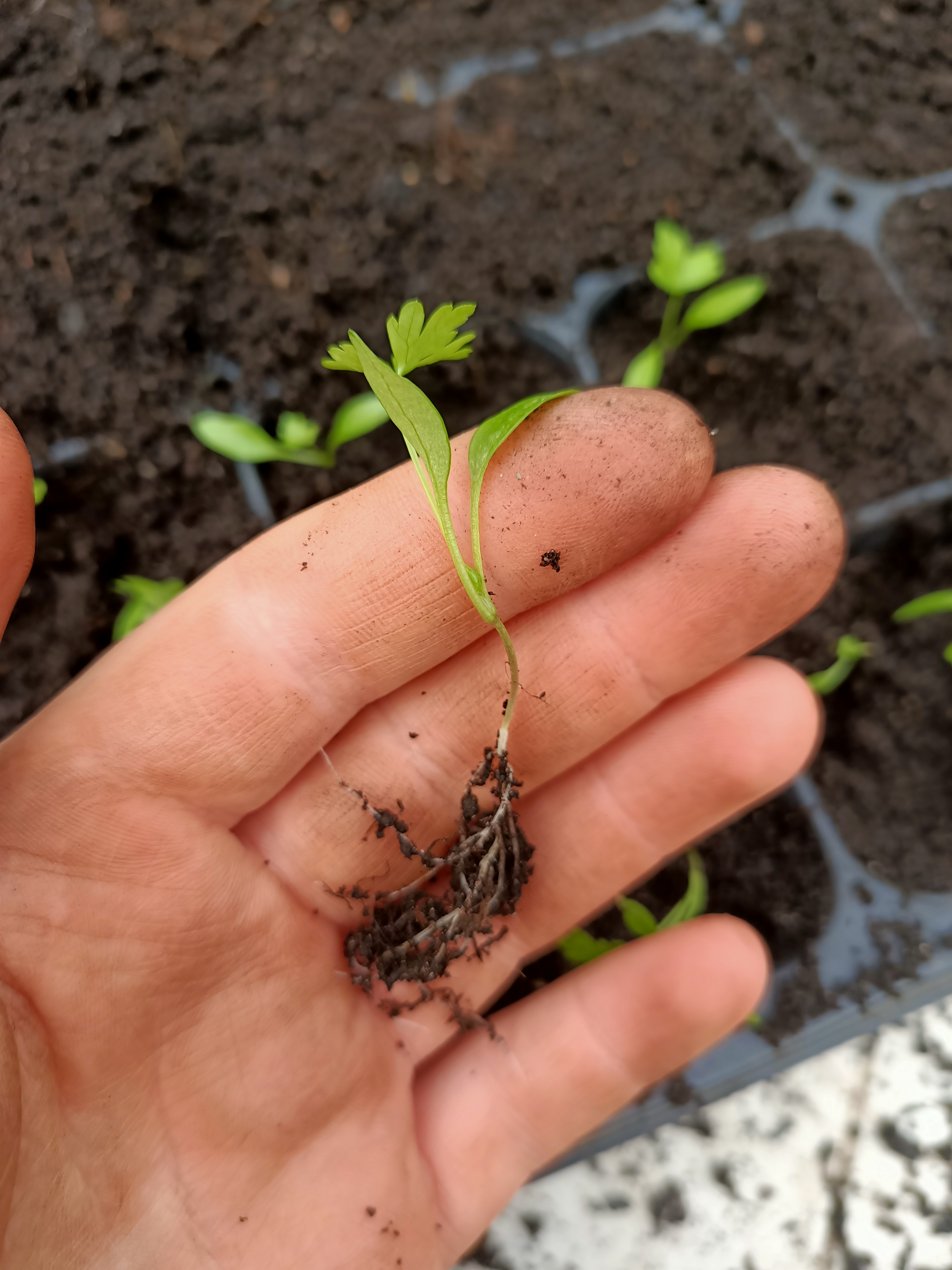
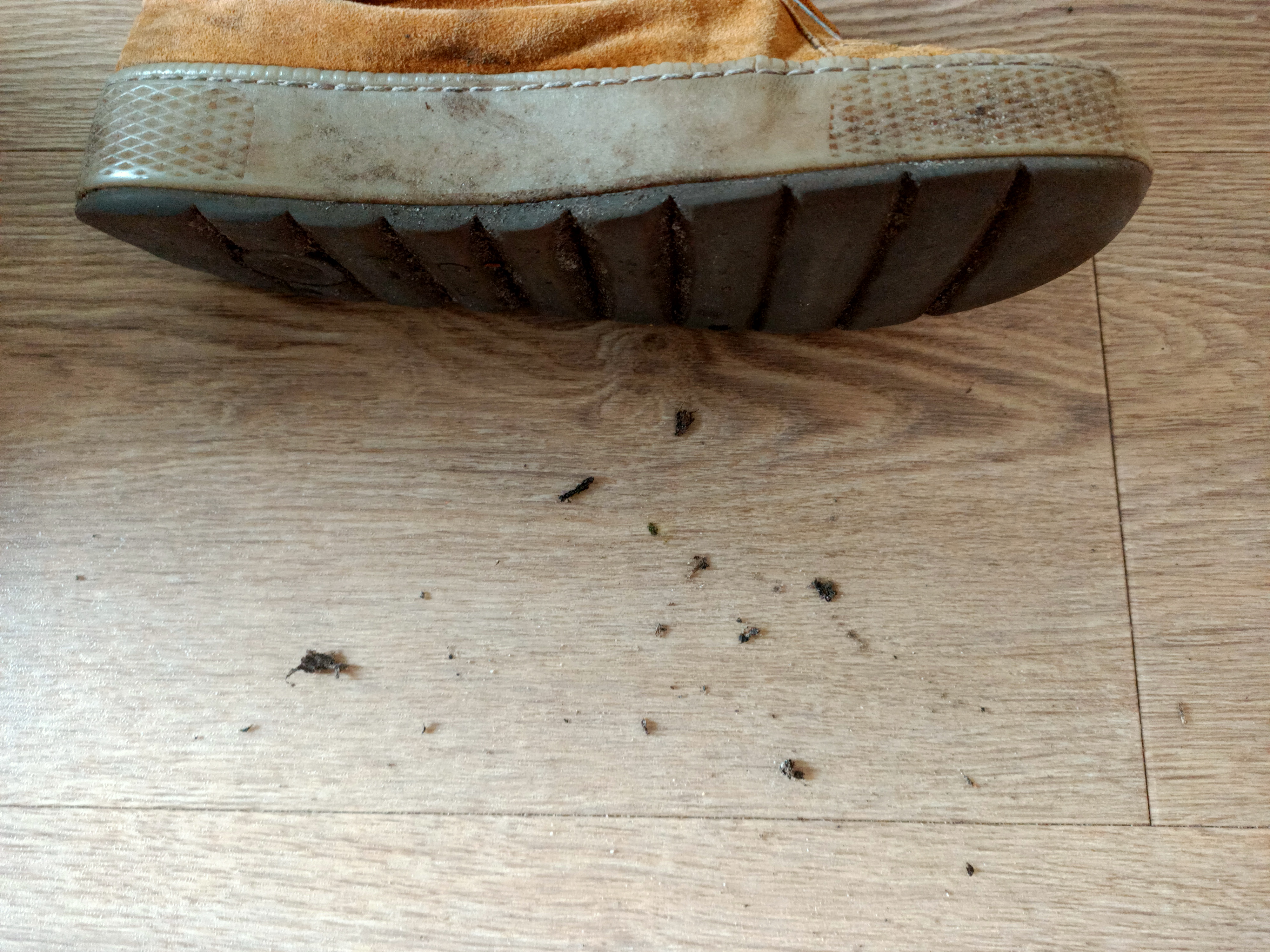
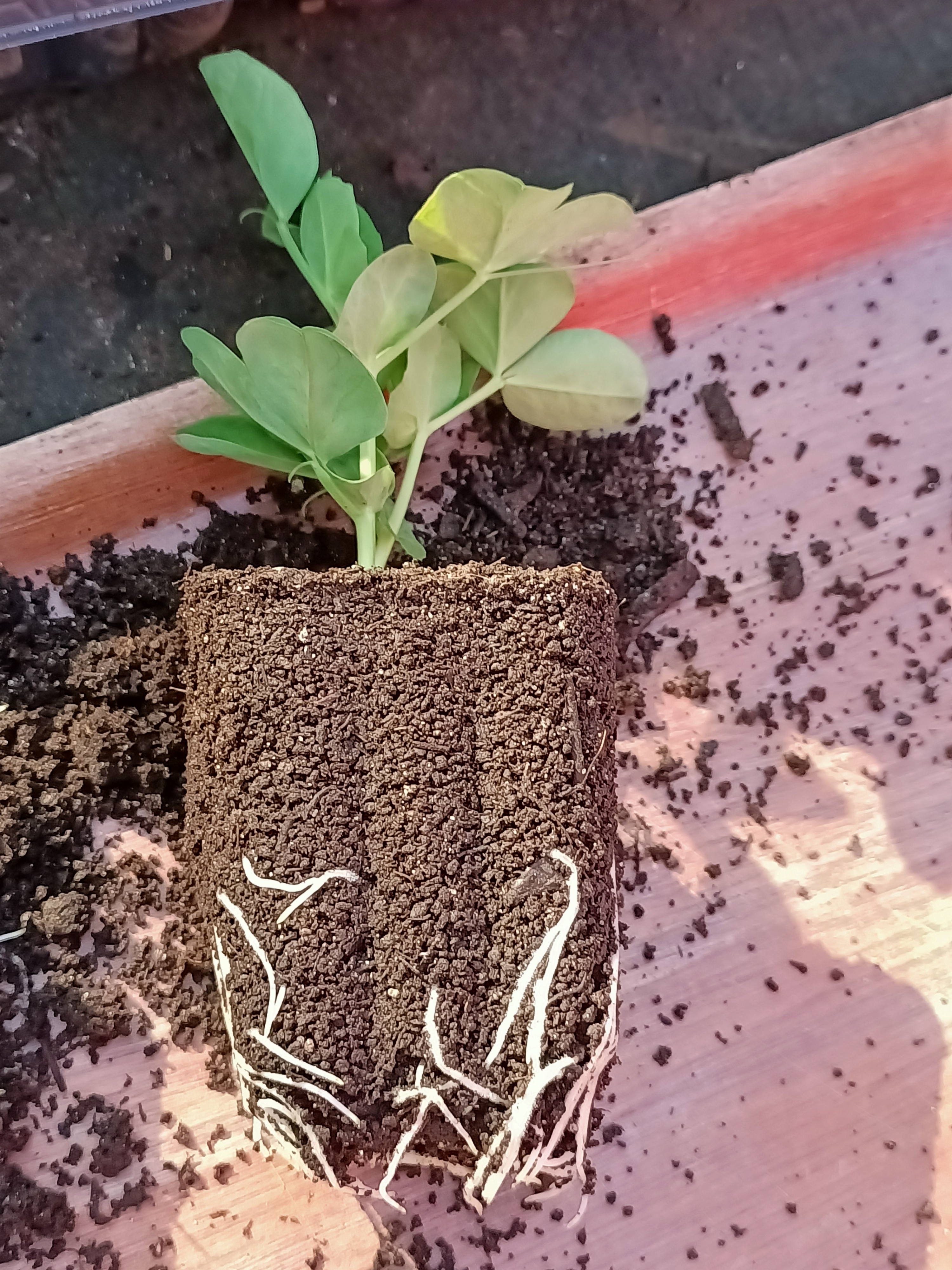
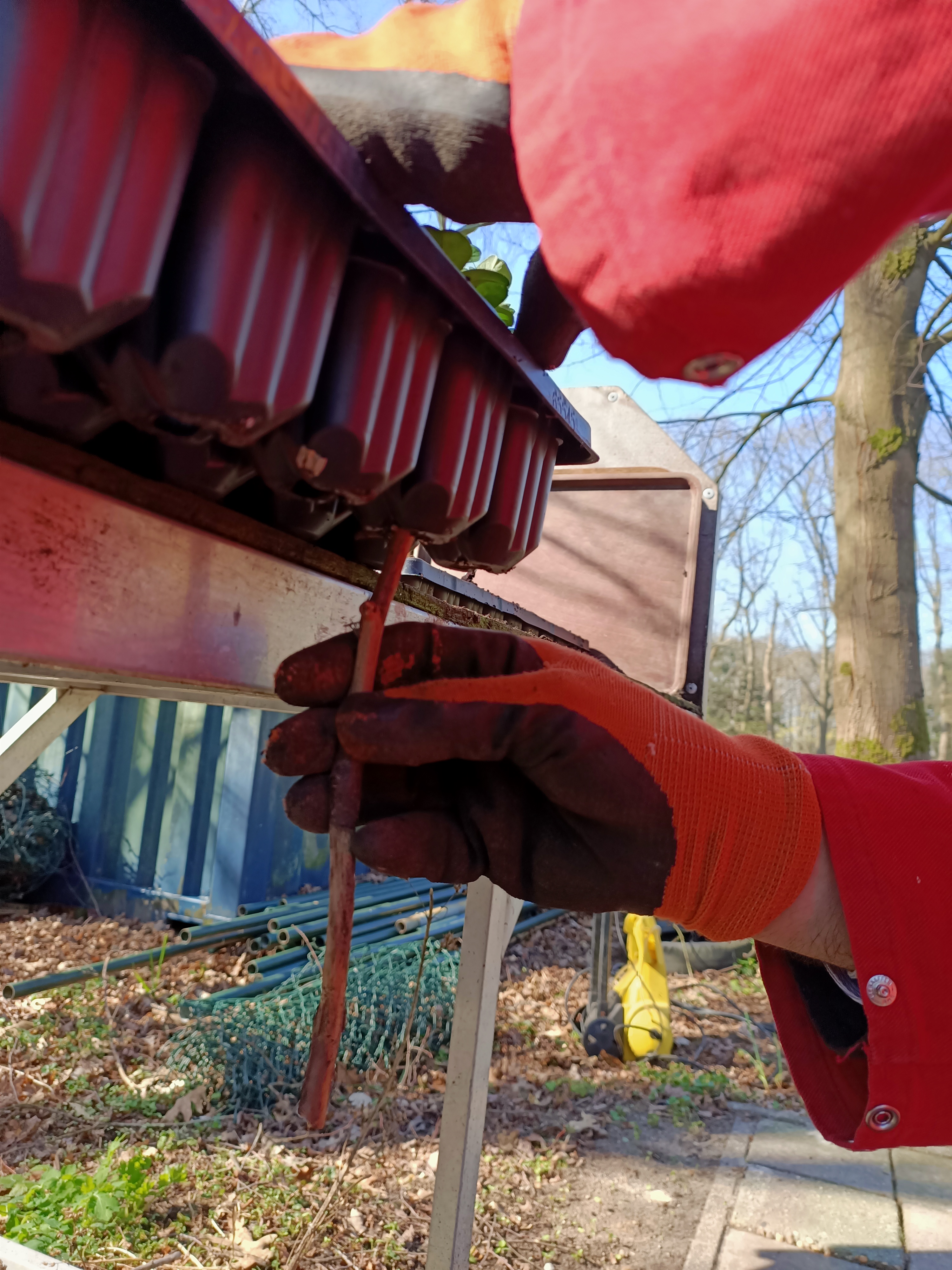

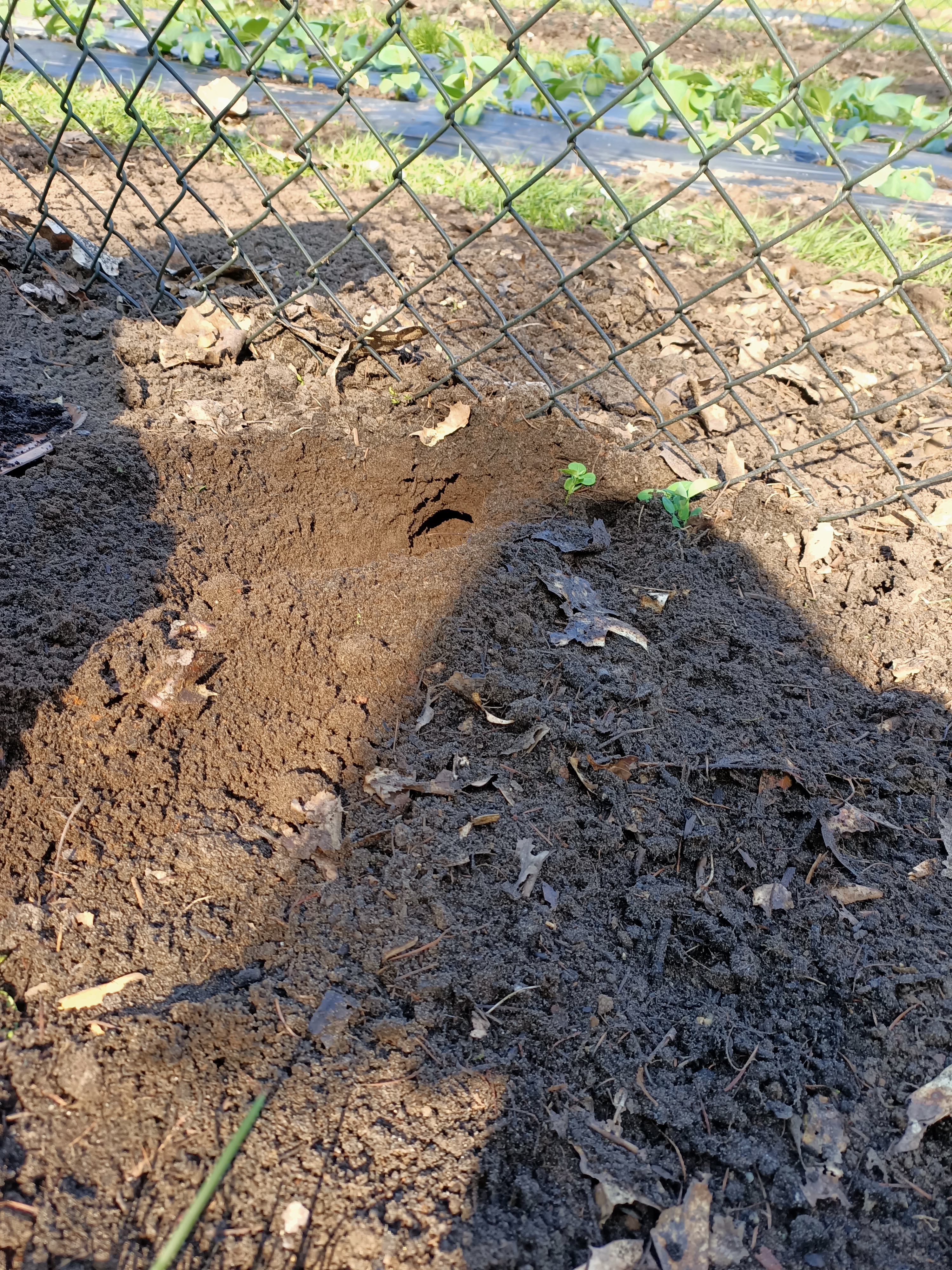
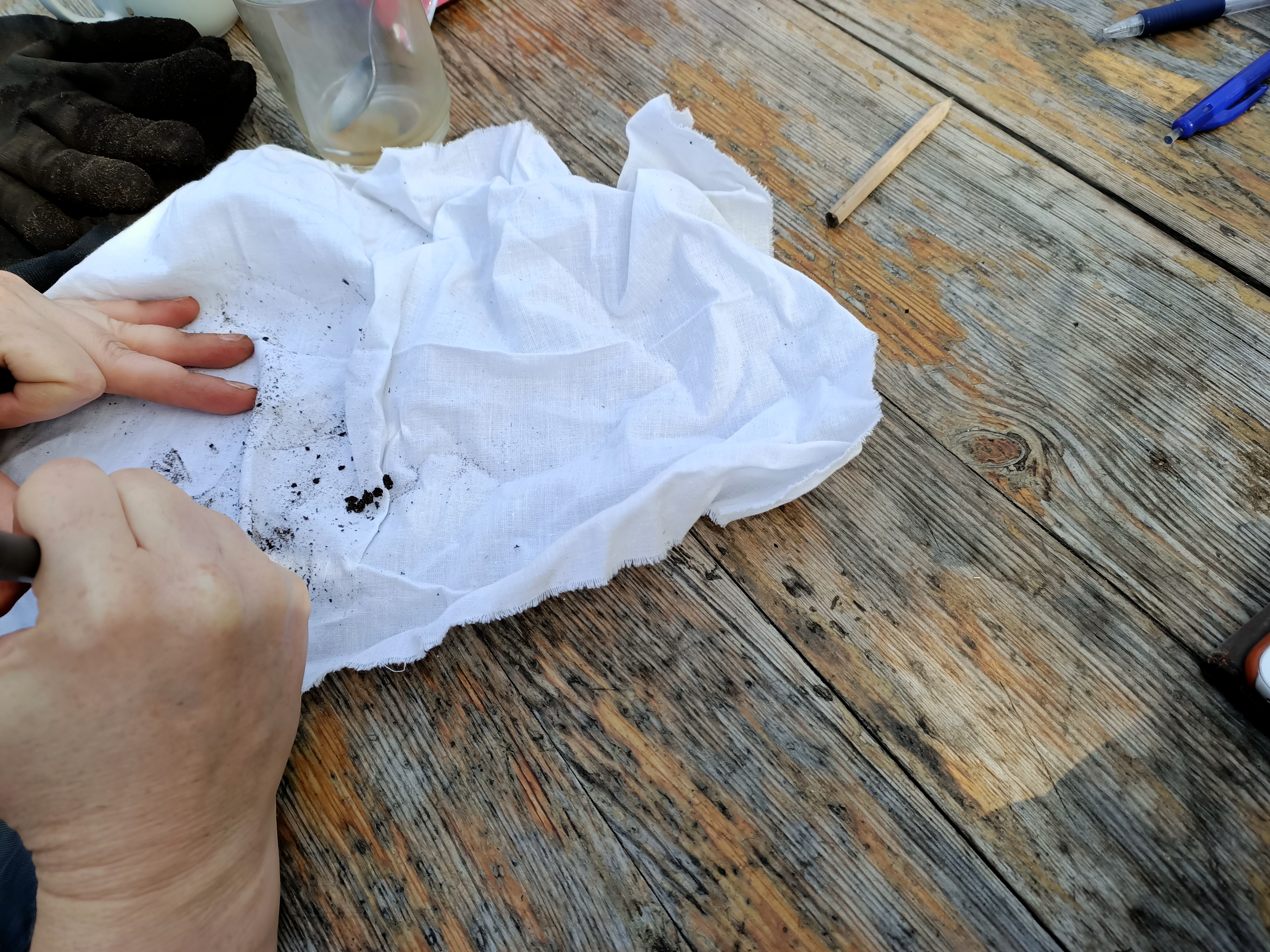
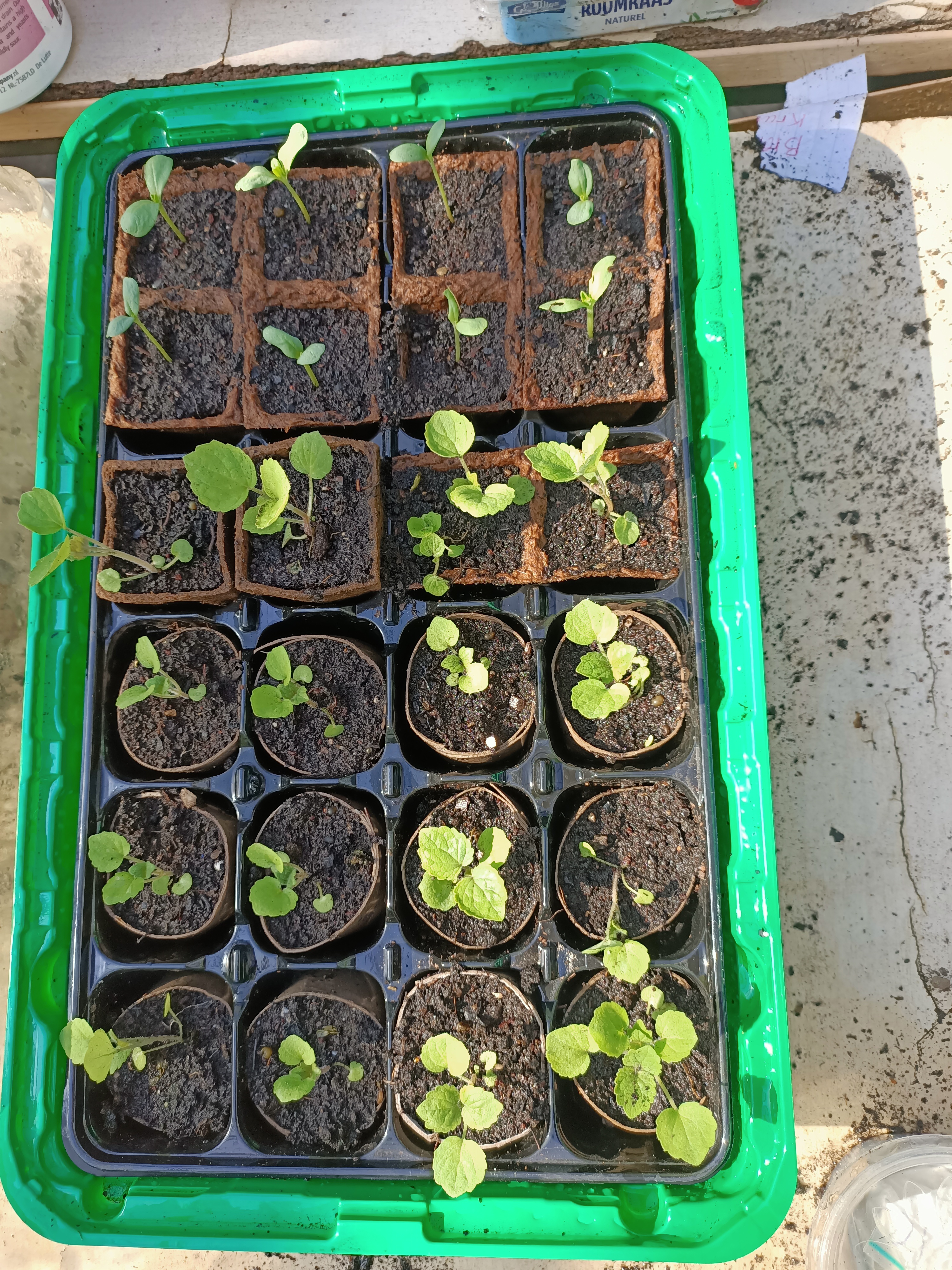
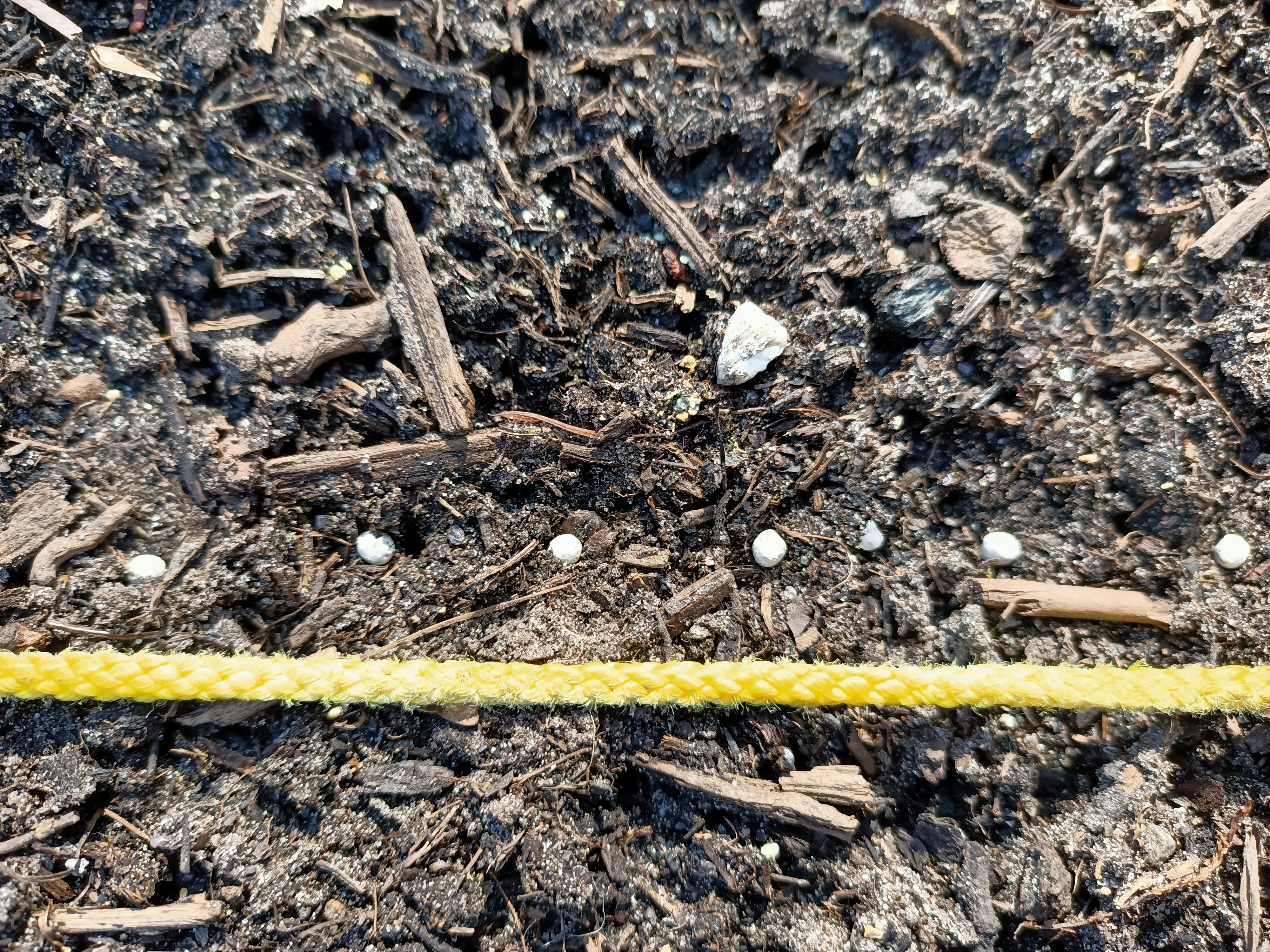

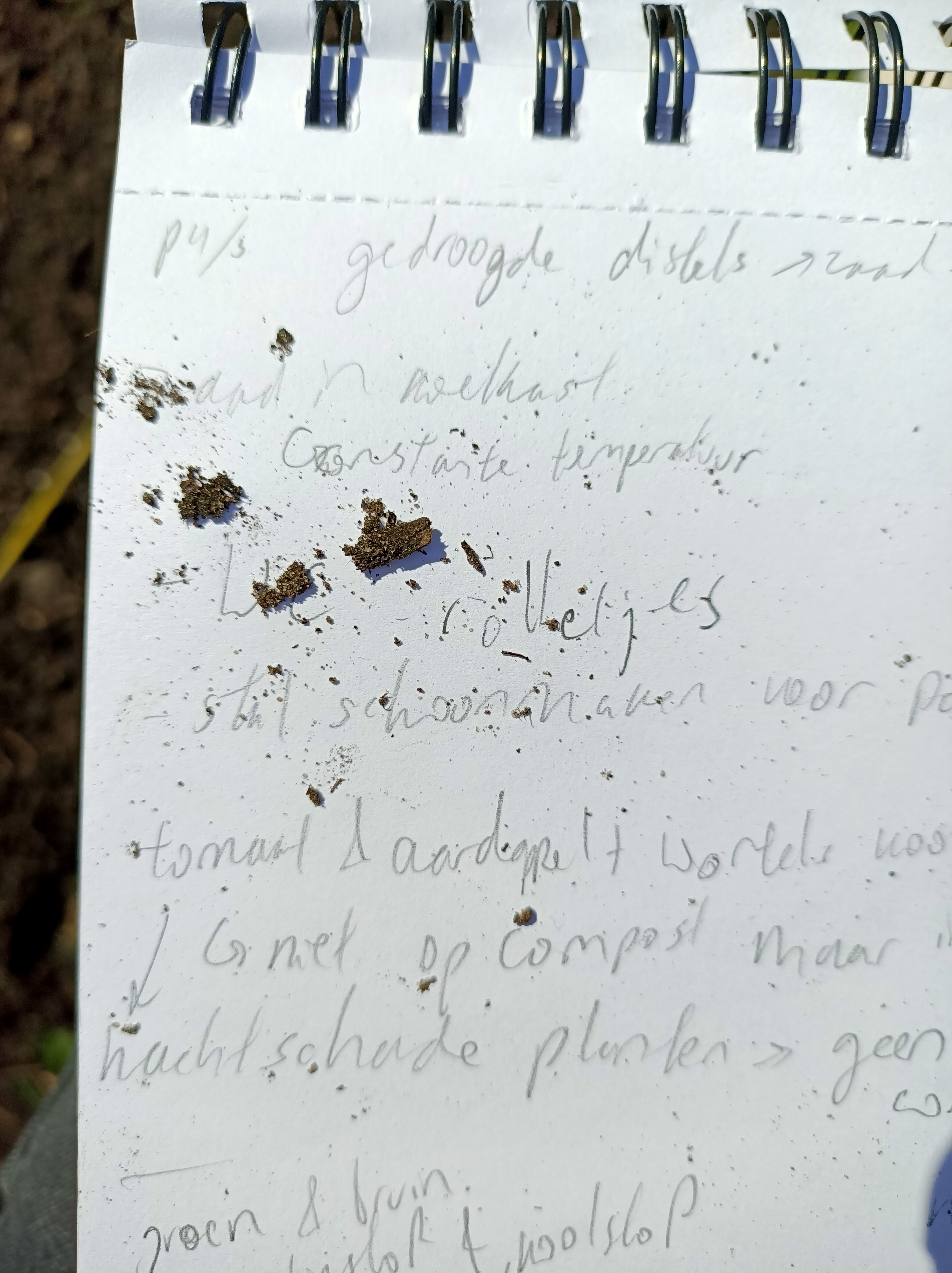
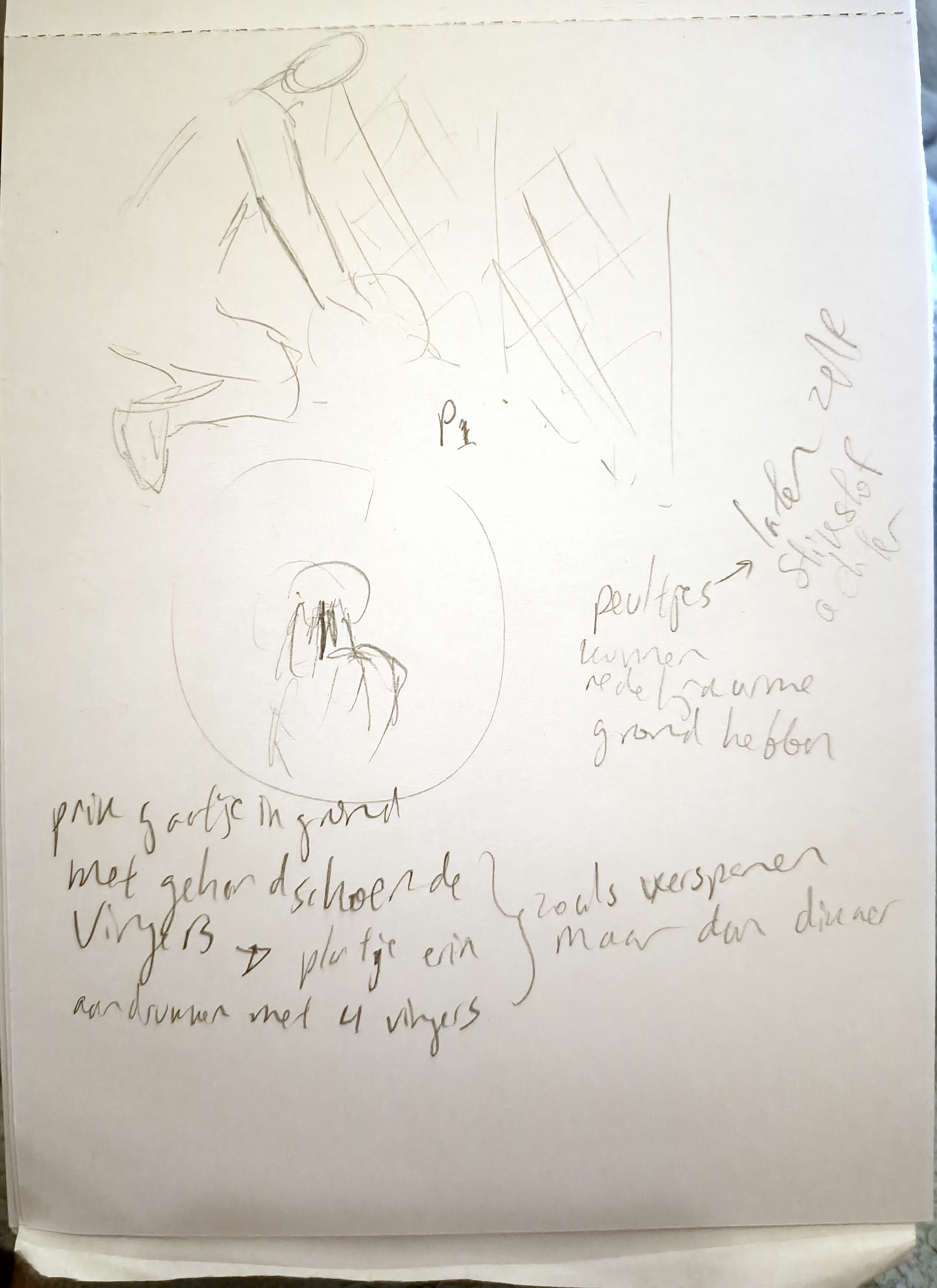
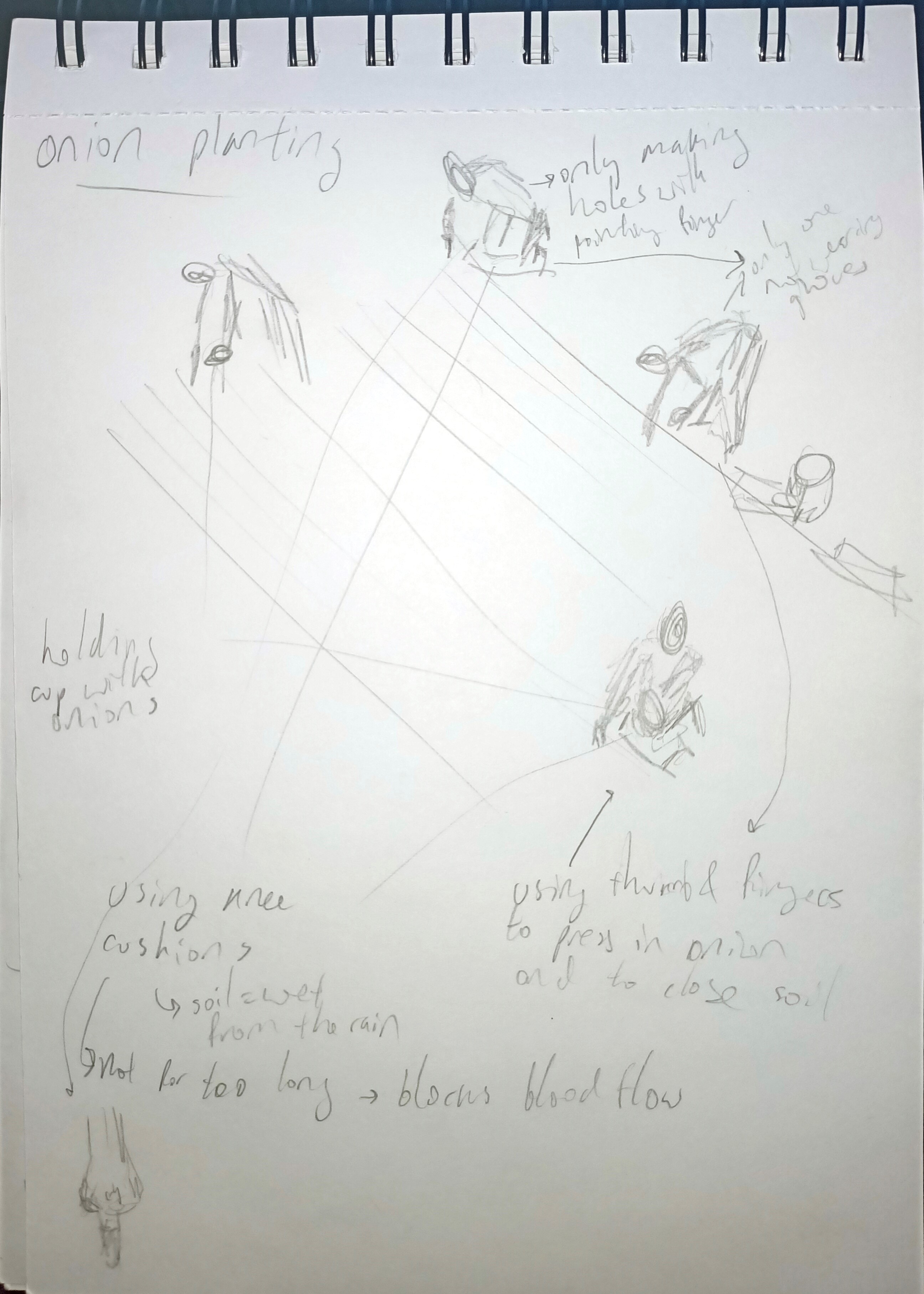
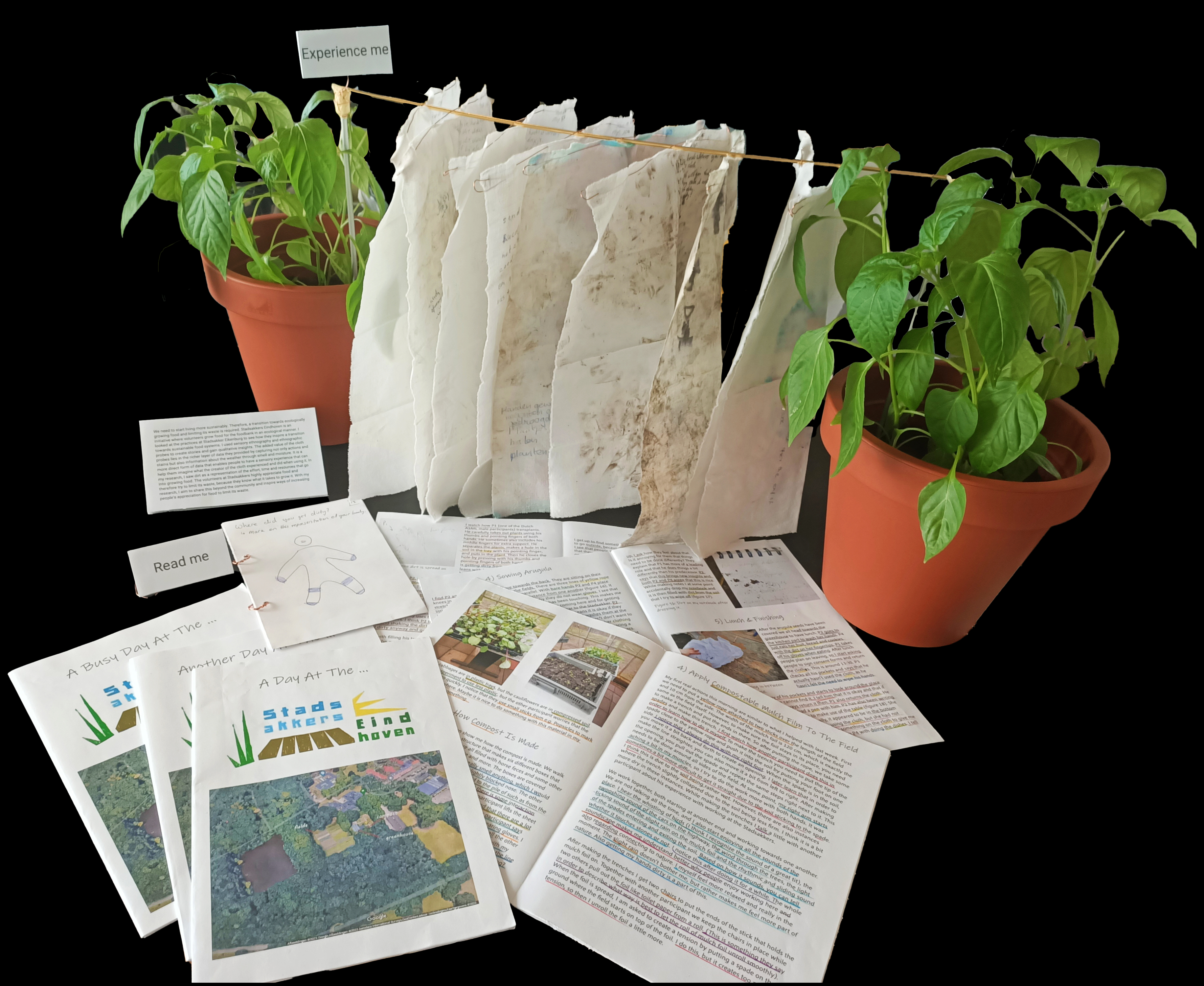
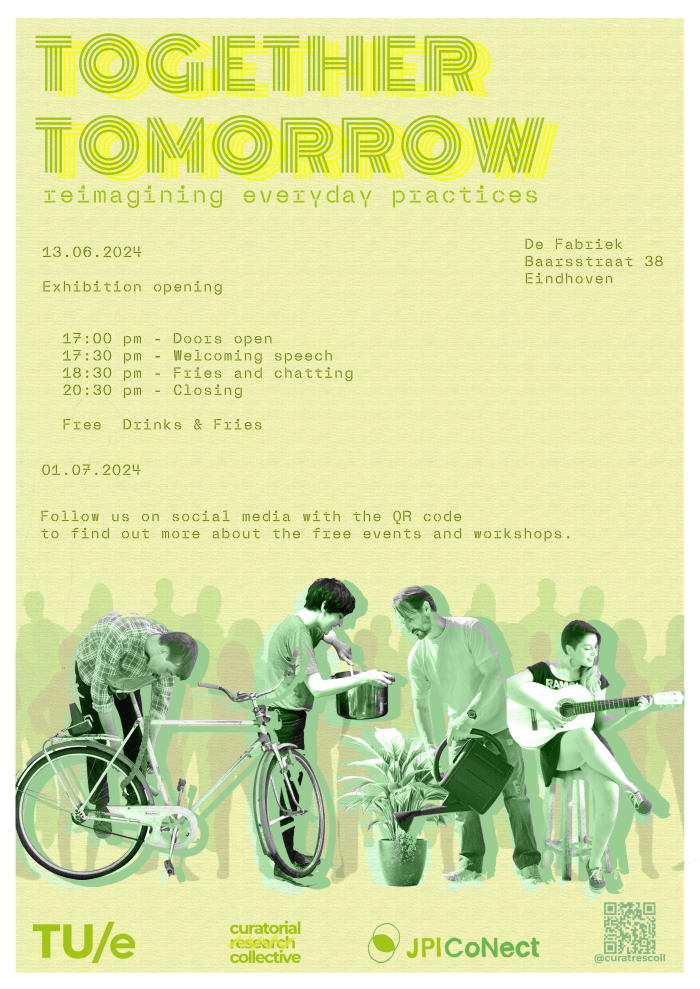
This project was part of inspirational material in the exhibition Together Tomorrow: An exhibition about practices that could be seen as an example of a more sustainable and interconnected society. Stadsakkers was acknowledged as such a place and my Dirt Stories conveyed their message.

