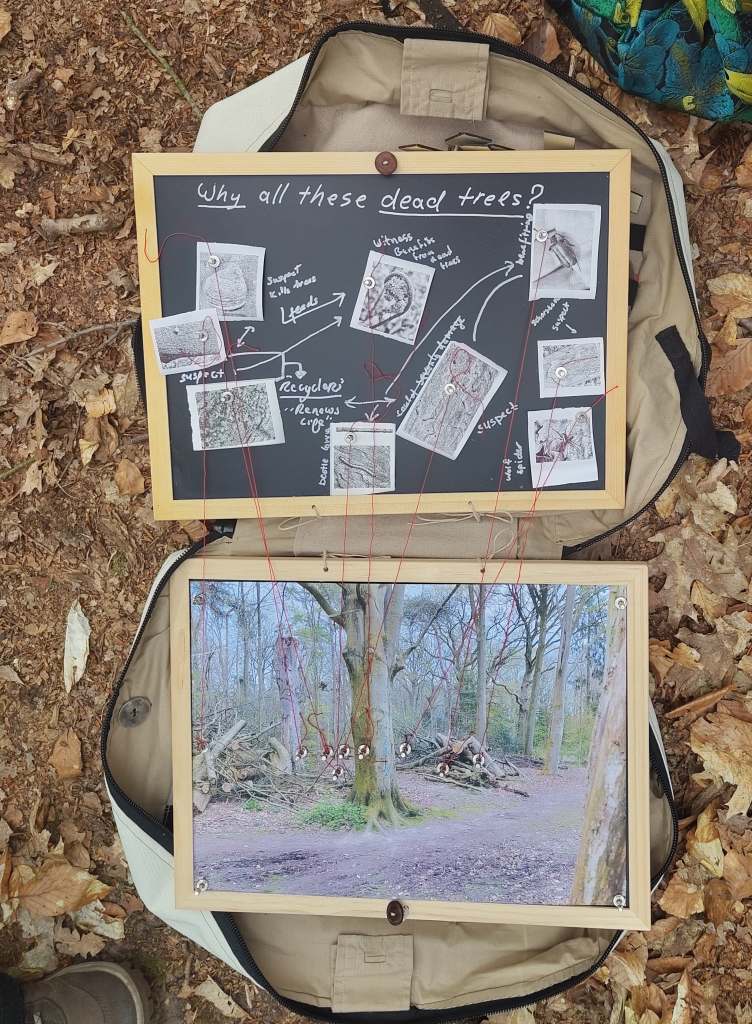
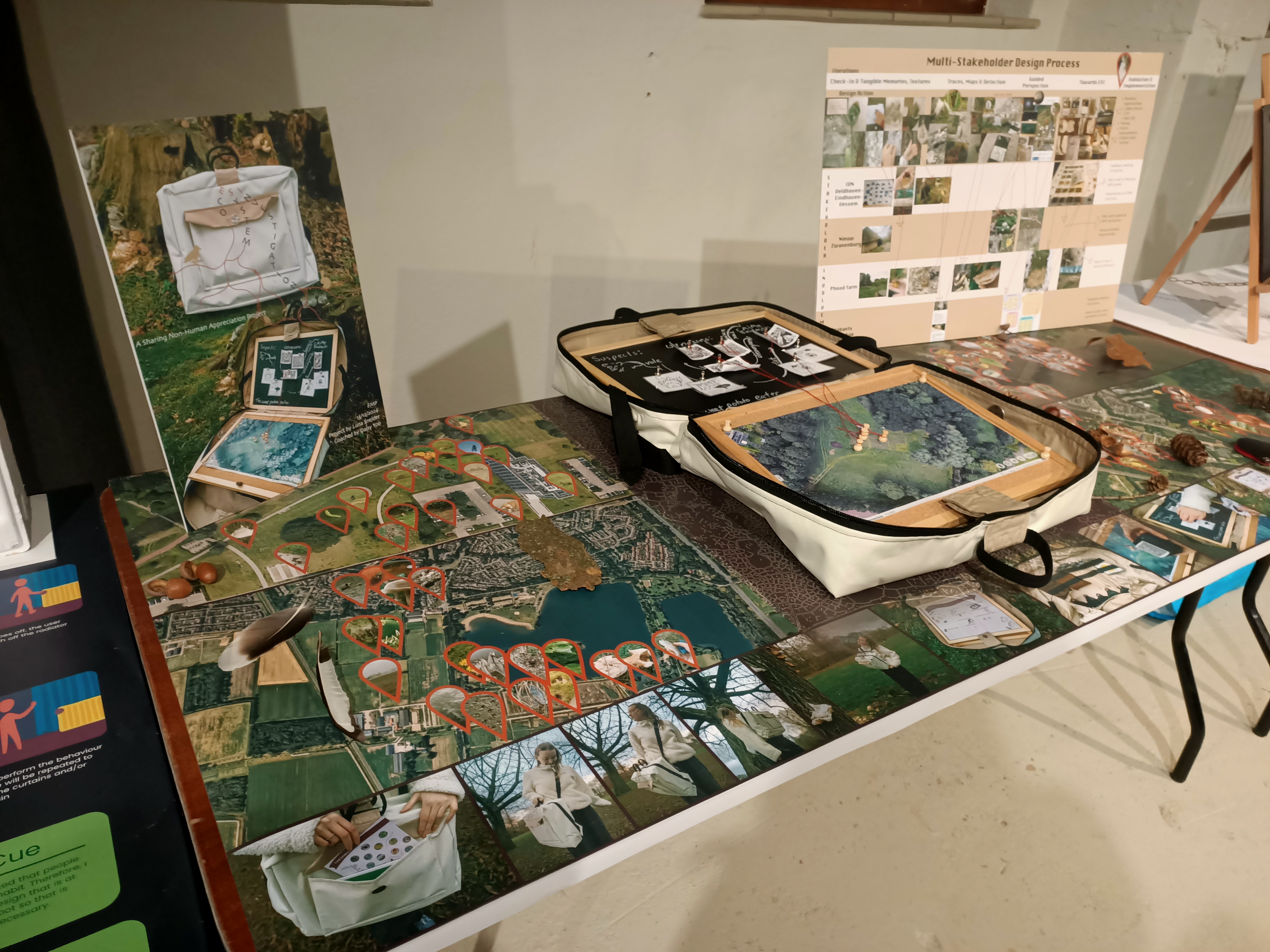
EcoSystem Investigation (ESI) emerged from collaboration with IVN Veldhoven-Eindhoven-Vessem, Nieuw Zwanenburg, Phood Farm and Brabants Landschap. It is a tool for sharing non-human appreciation beyond nature-related communities by enabling their experts to create interactive experiences for adults that involve finding traces and analysing their relations to uncover the ecosystem’s entanglements and humanity’s position within them. This can raise nature-connectedness and foster intrinsic motivation for sustainable behaviour. This project’s multi-perspective approach and societal mission embody my identity and vision as designer.
I developed social-entrepreneurship skills through collaboration with multiple partners in a participatory design process. This concerns building and managing relations through communication about the organisation and design process. Created visual and tangible materials, supported detailed input and discussions. The collaborations enabled discussion of ESI’s actual implementation and potential markets. Through the collaborations, I learned about nature education, conservation, permaculture and multi-disciplinary organisations.
How it works: (See it in action below)
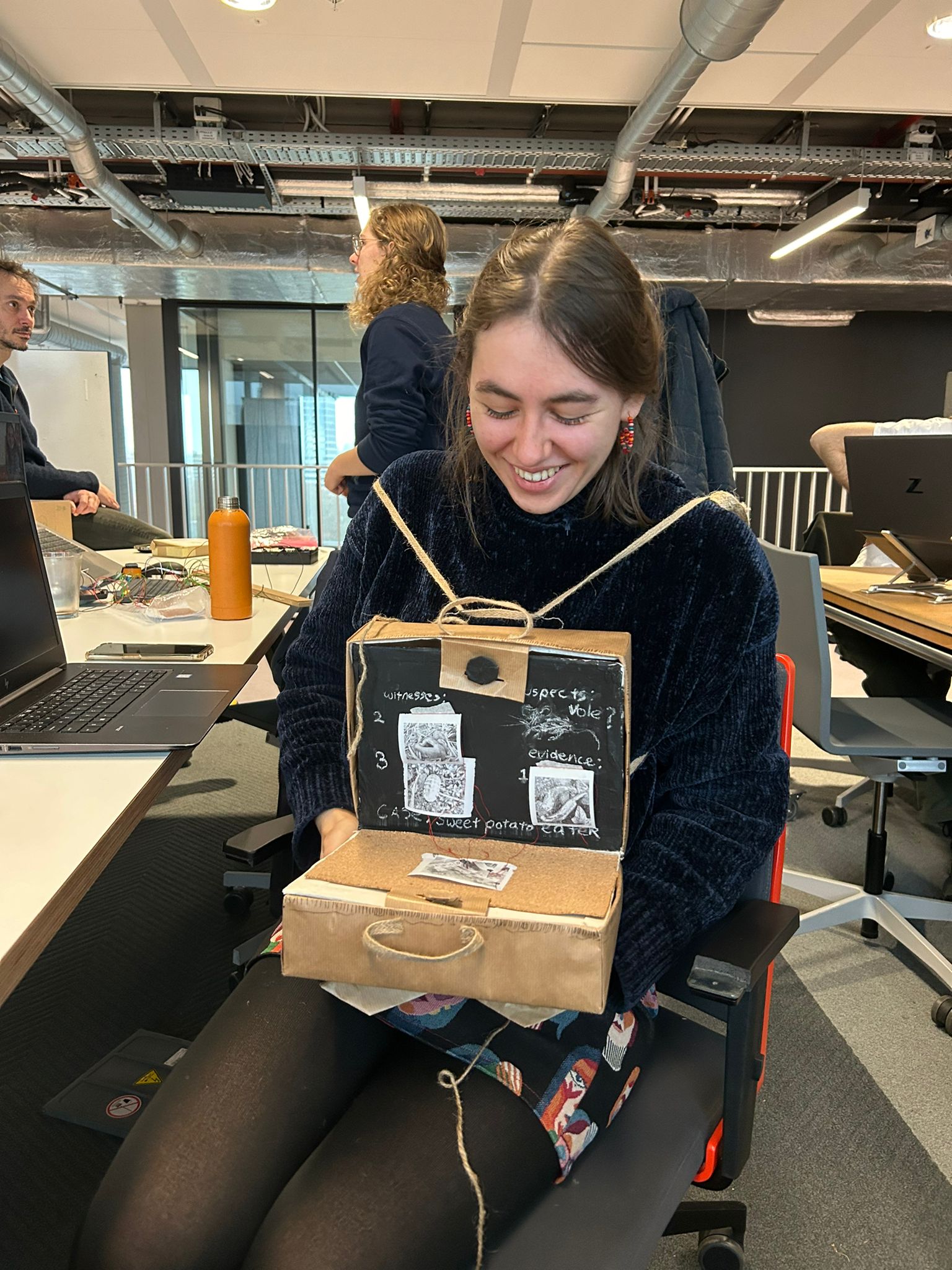
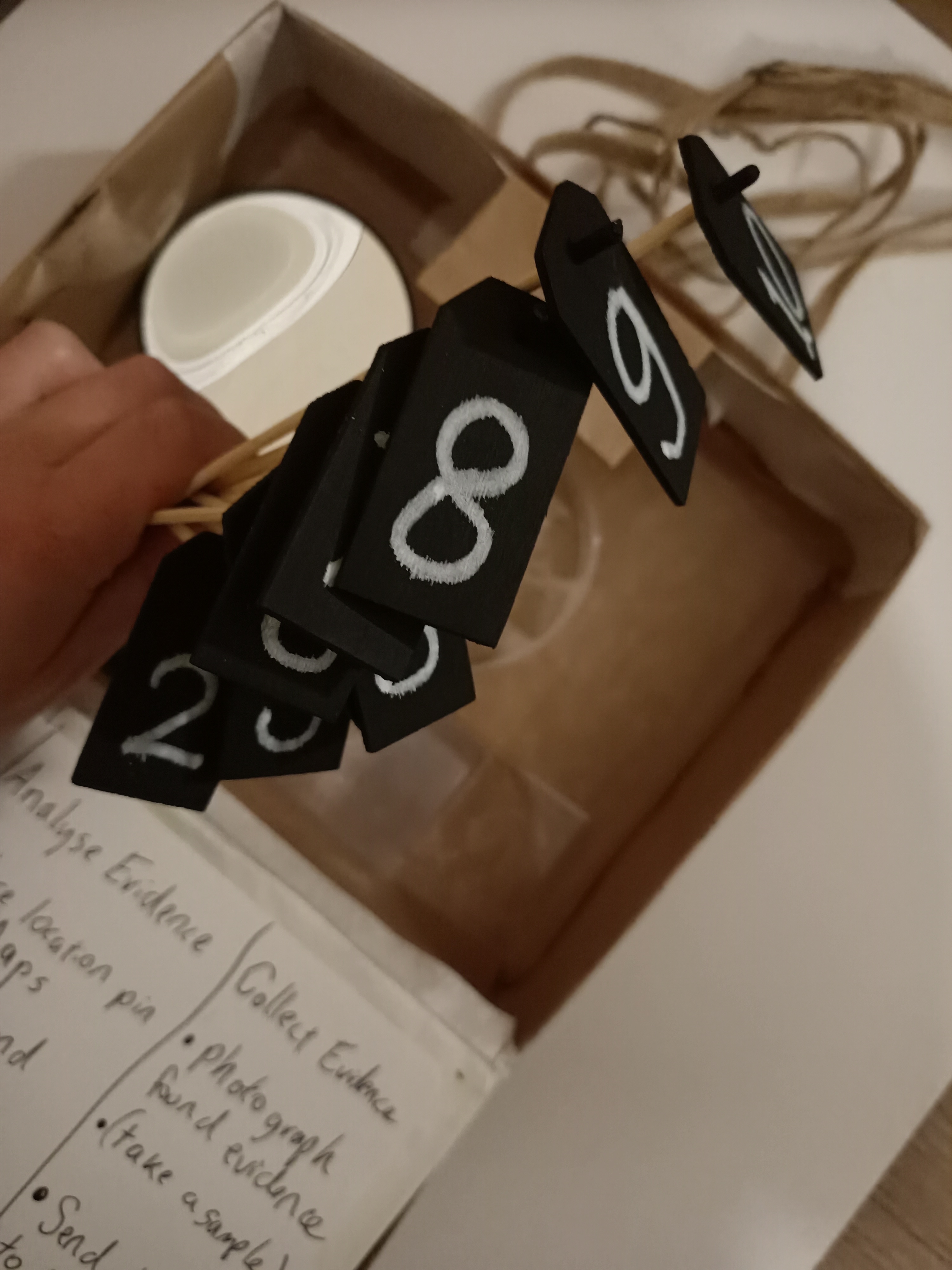
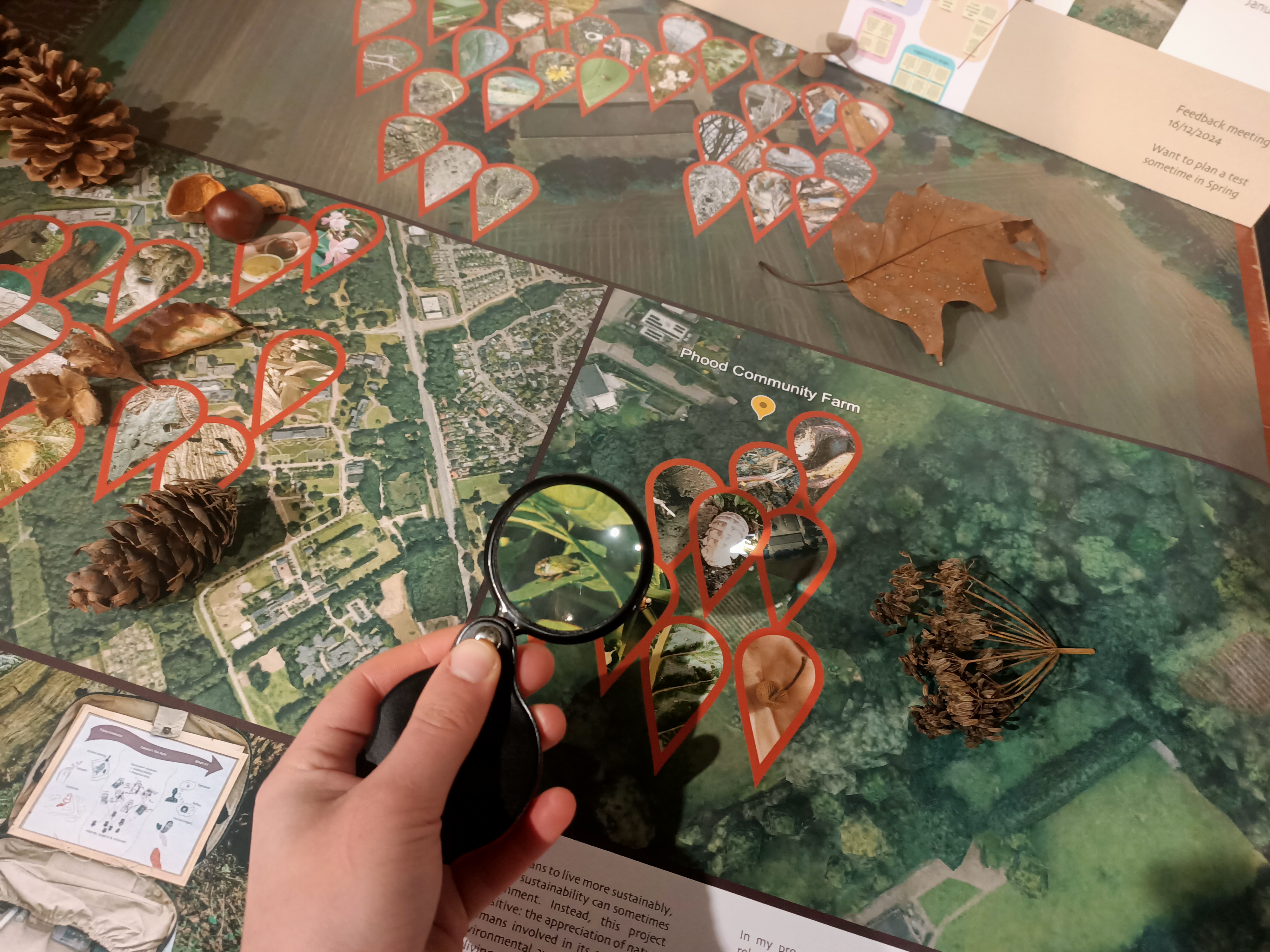
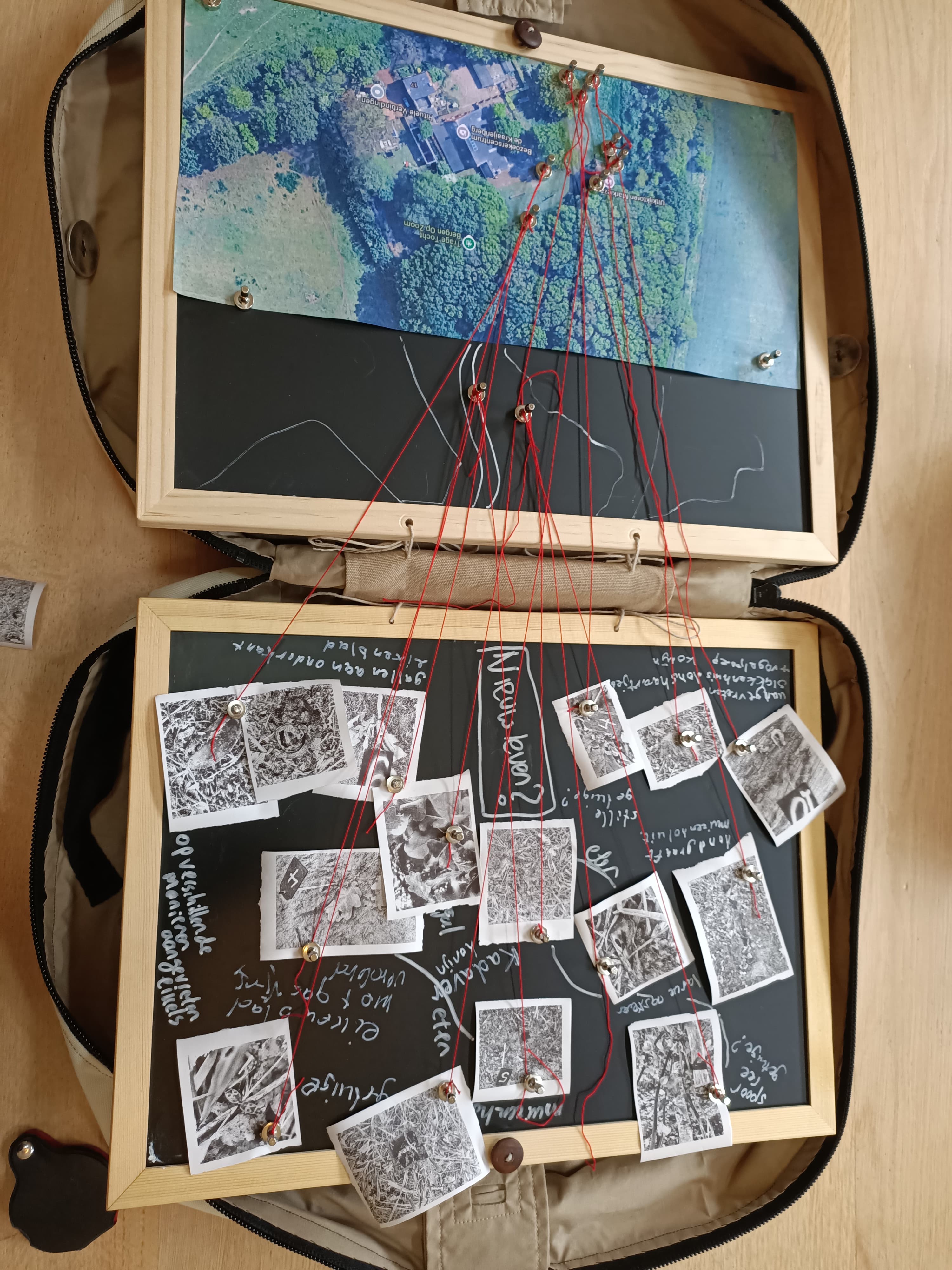
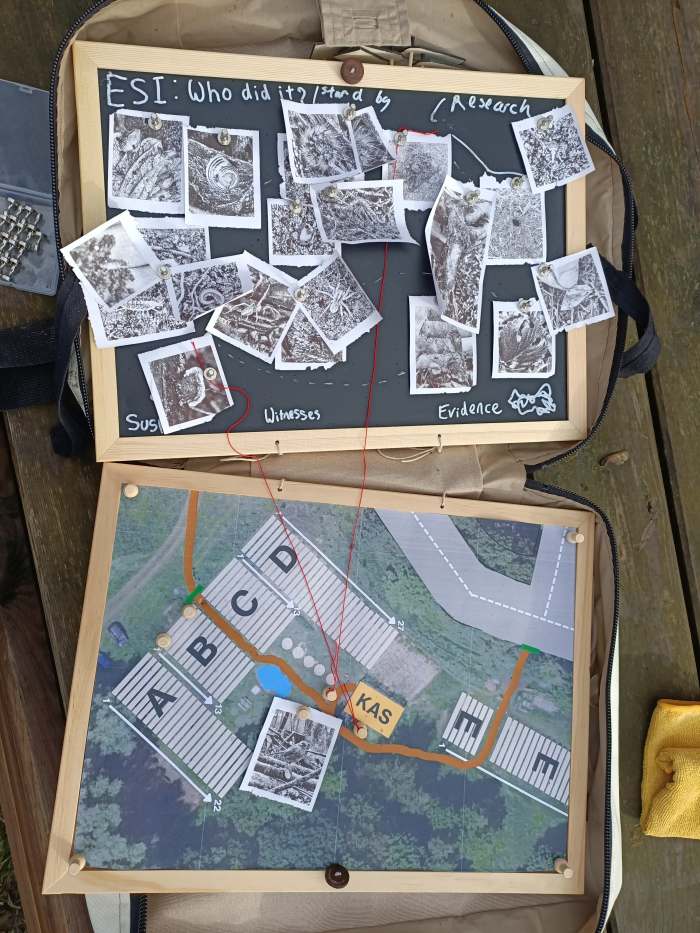
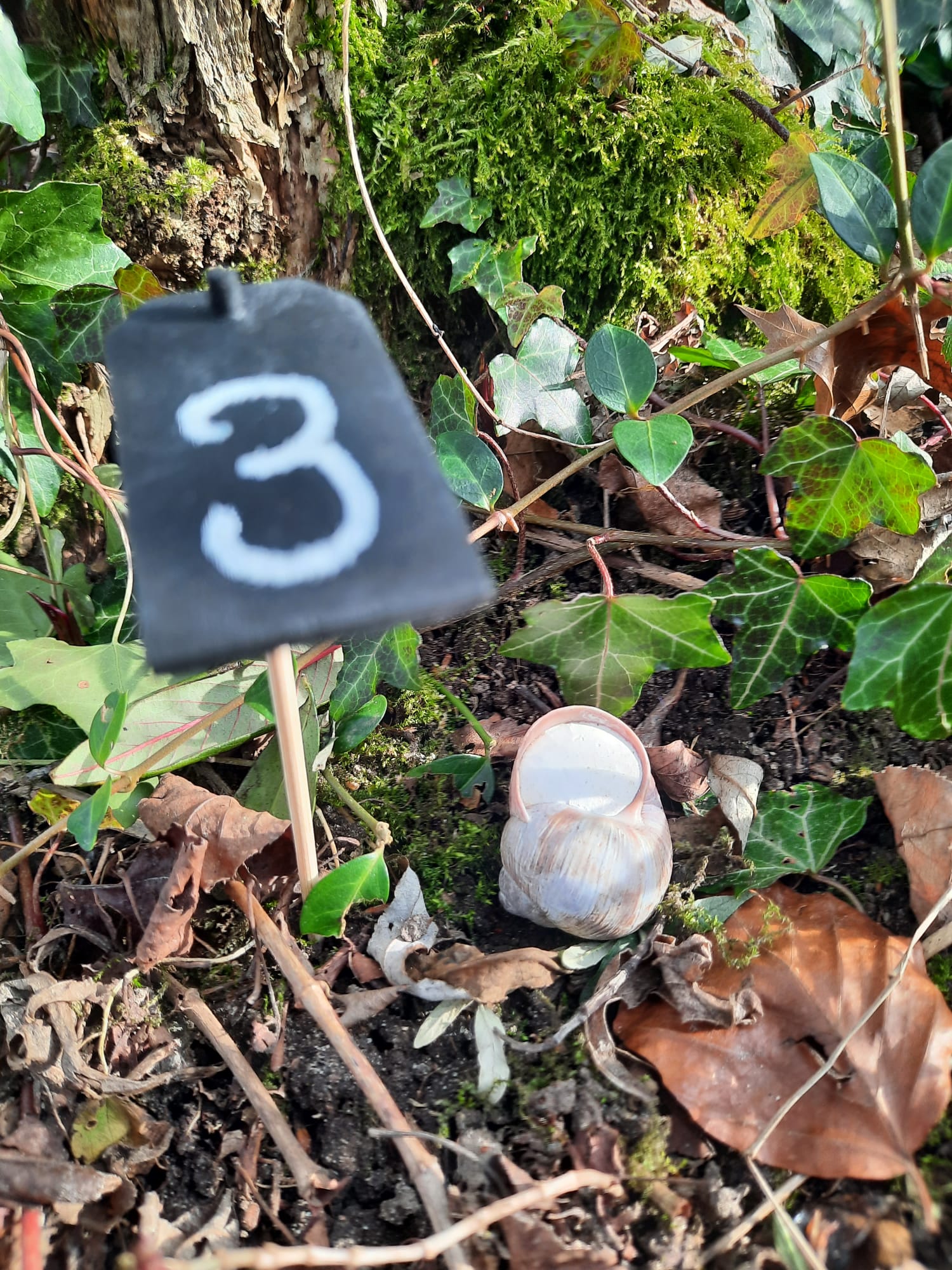
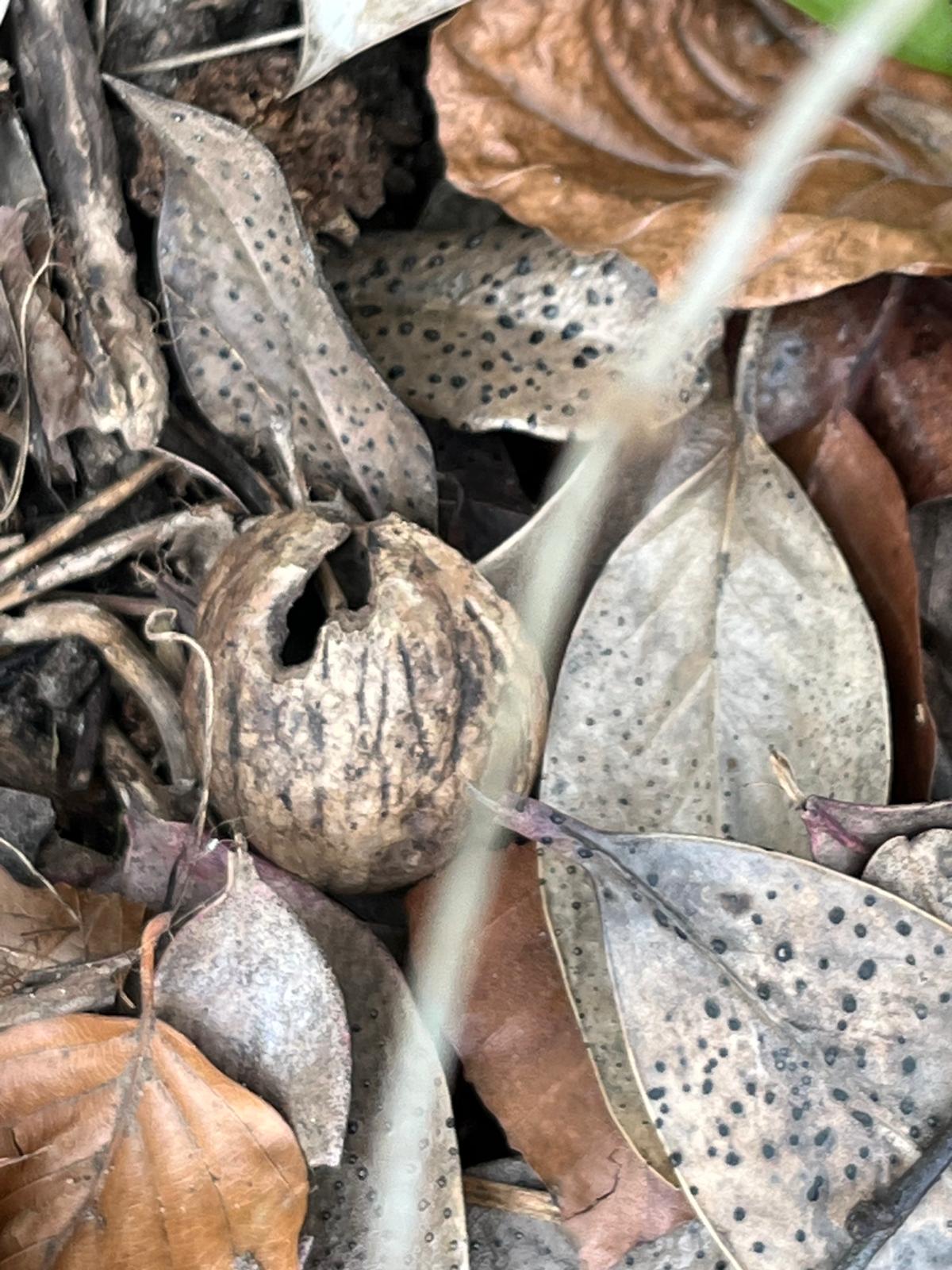
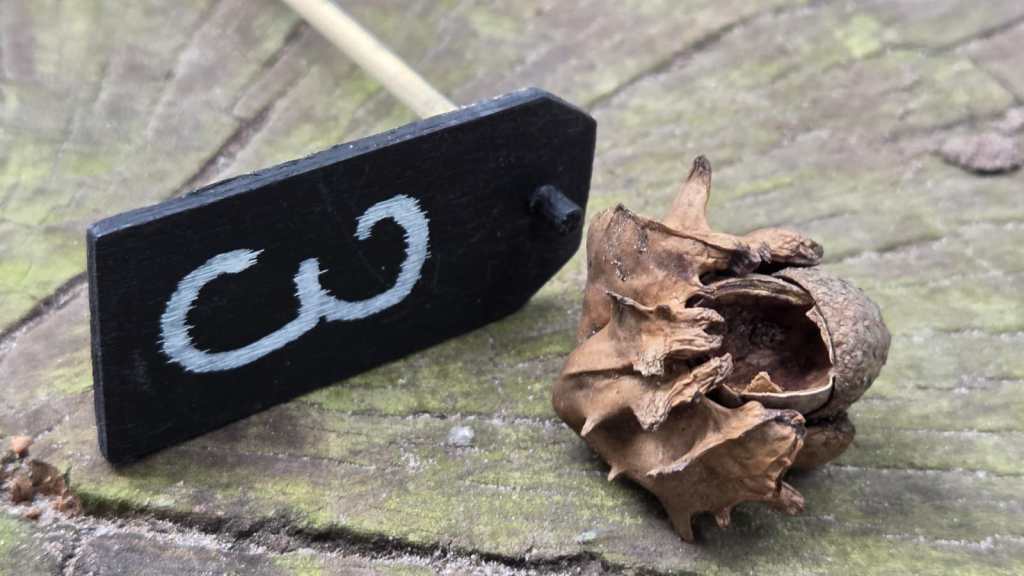
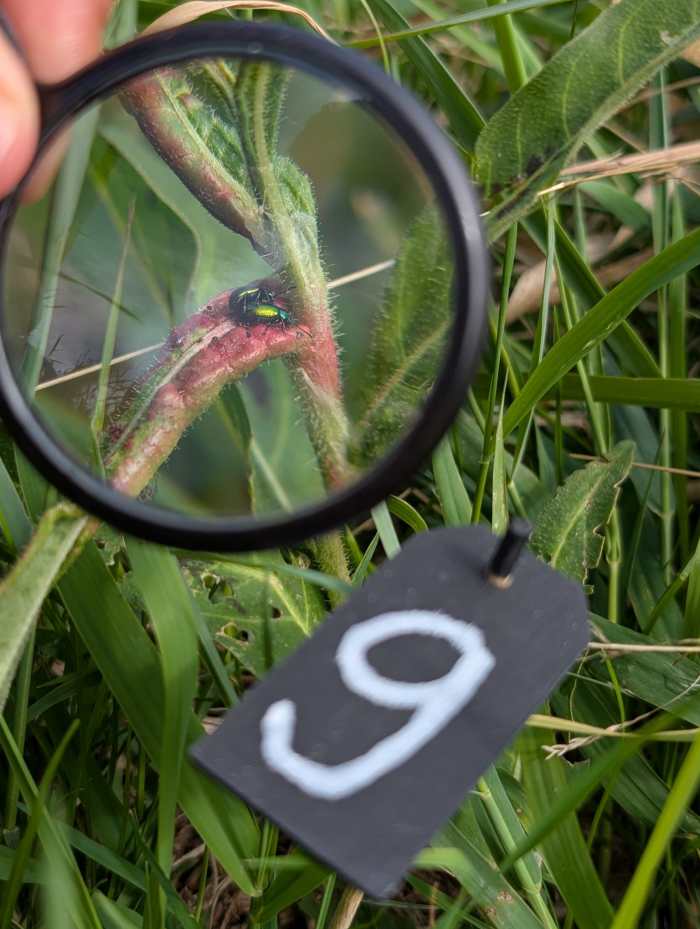
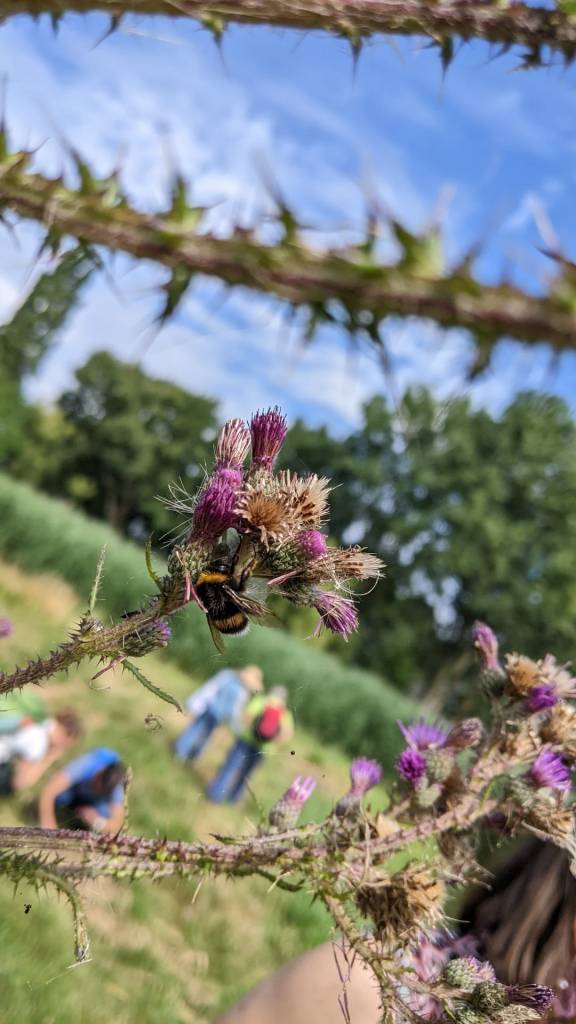
During an ESI activity, a group of up to 10 participants receives a short introduction with a mystery: a location on a map and a photo of evidence of a possible “crime” in the ecosystem. The group then independently investigates for traces of “suspects,” “witnesses,” or additional evidence. They take photos of their findings and send them to the Chief Inspector (the guide or workshop leader).
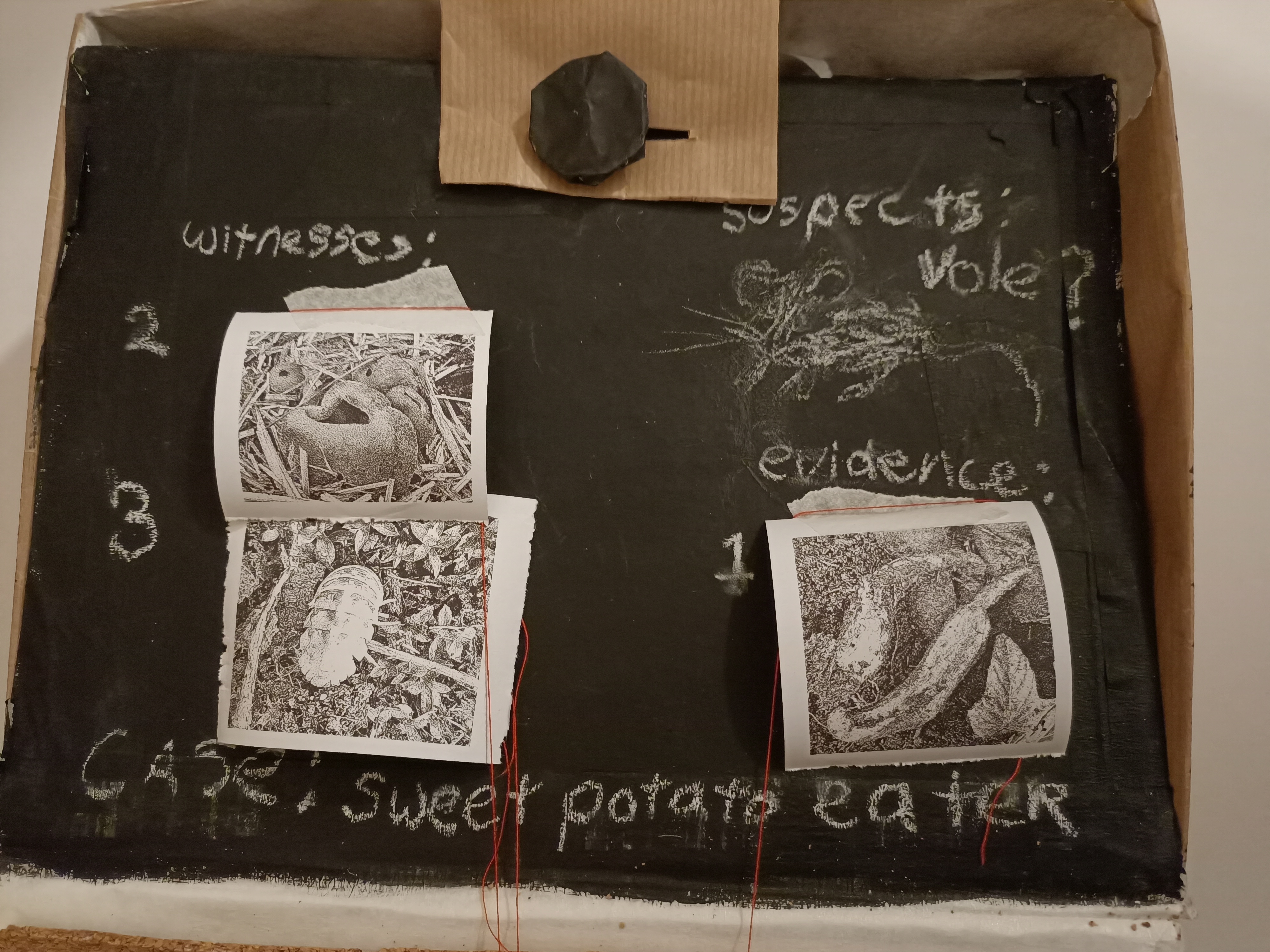
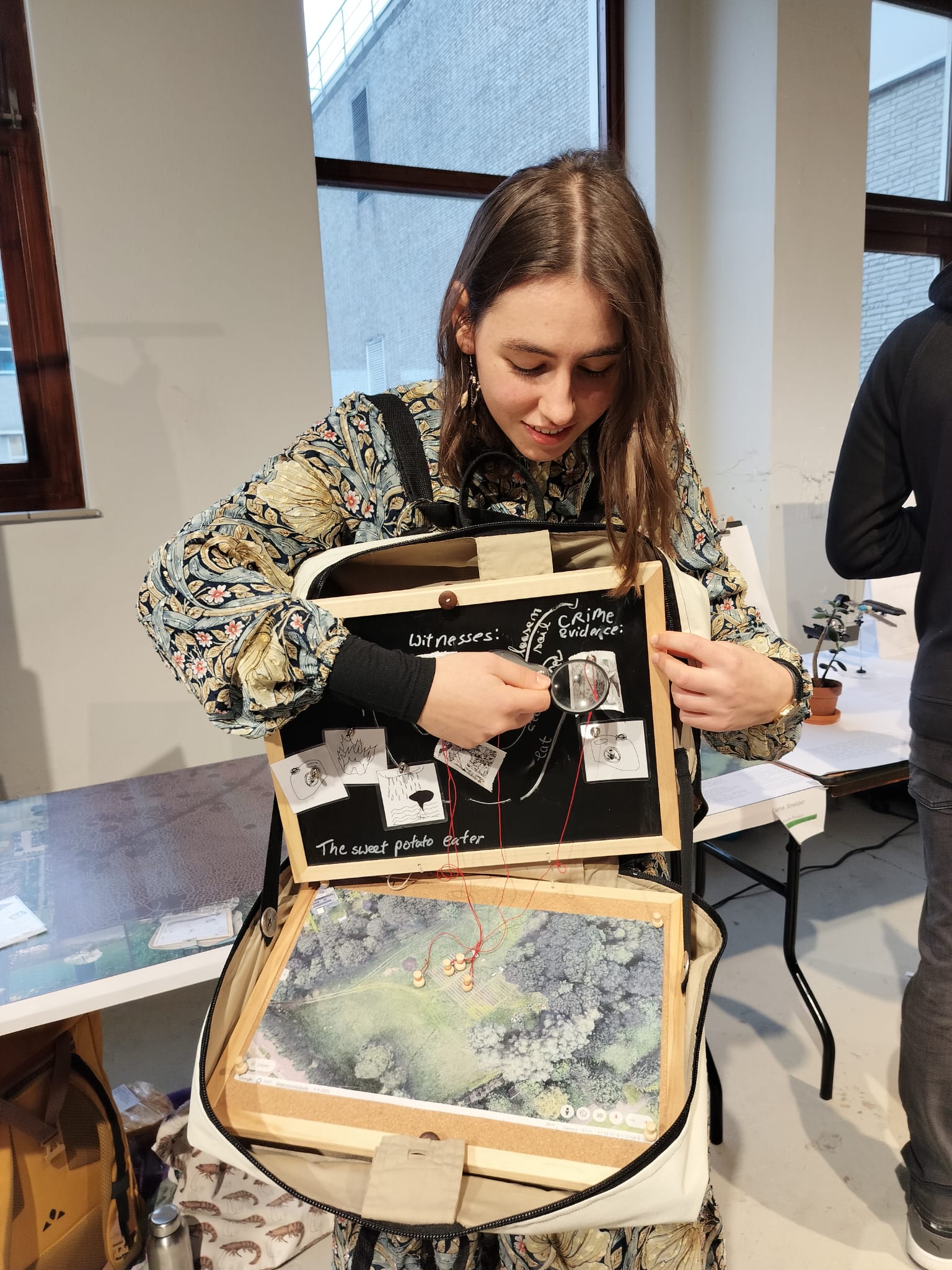
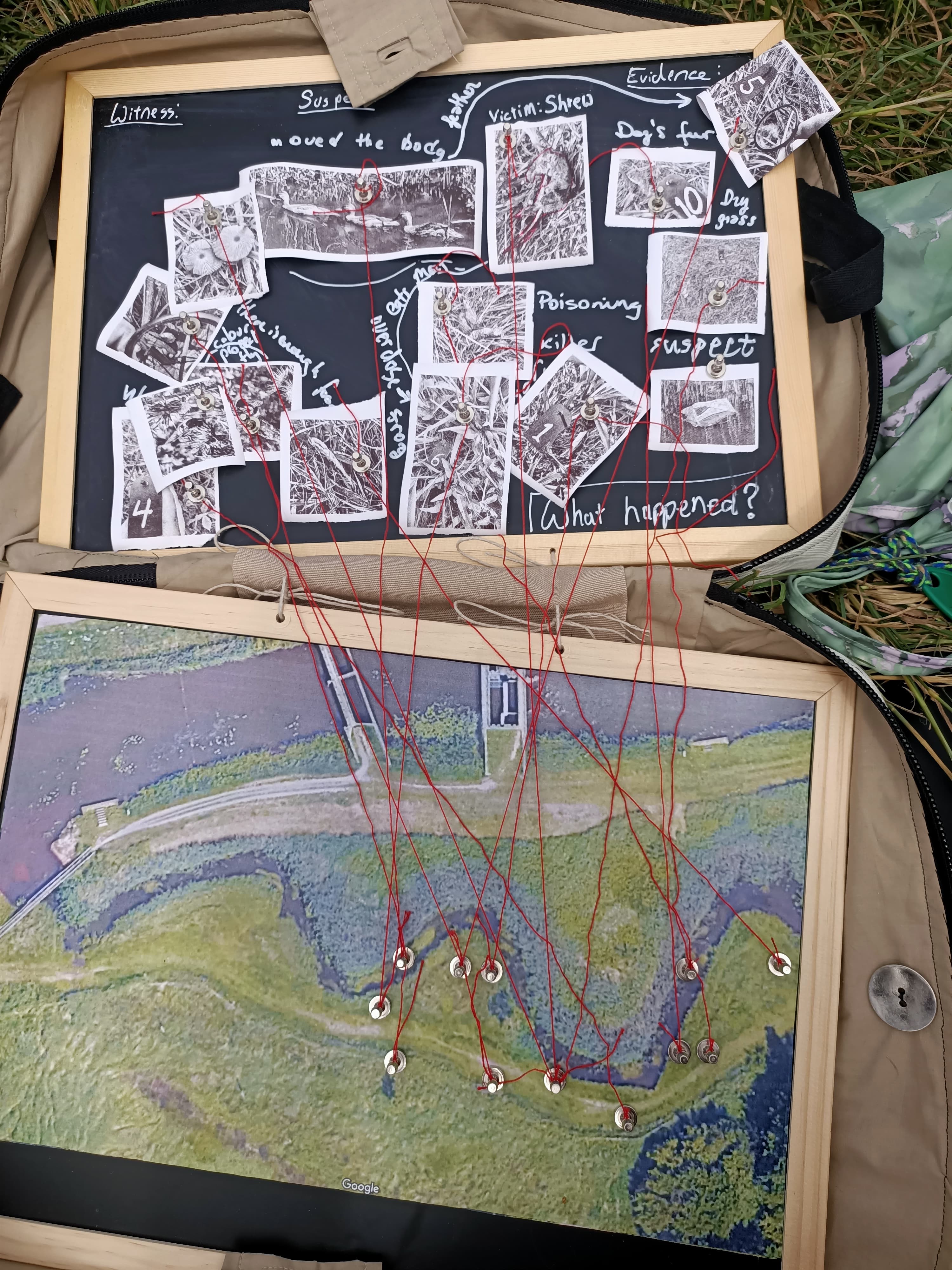
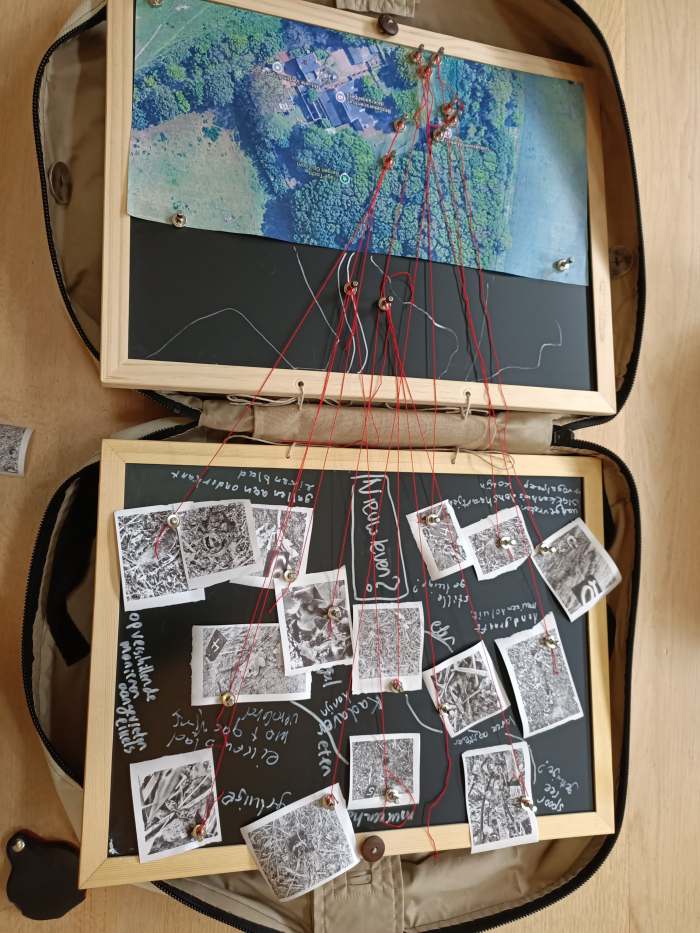
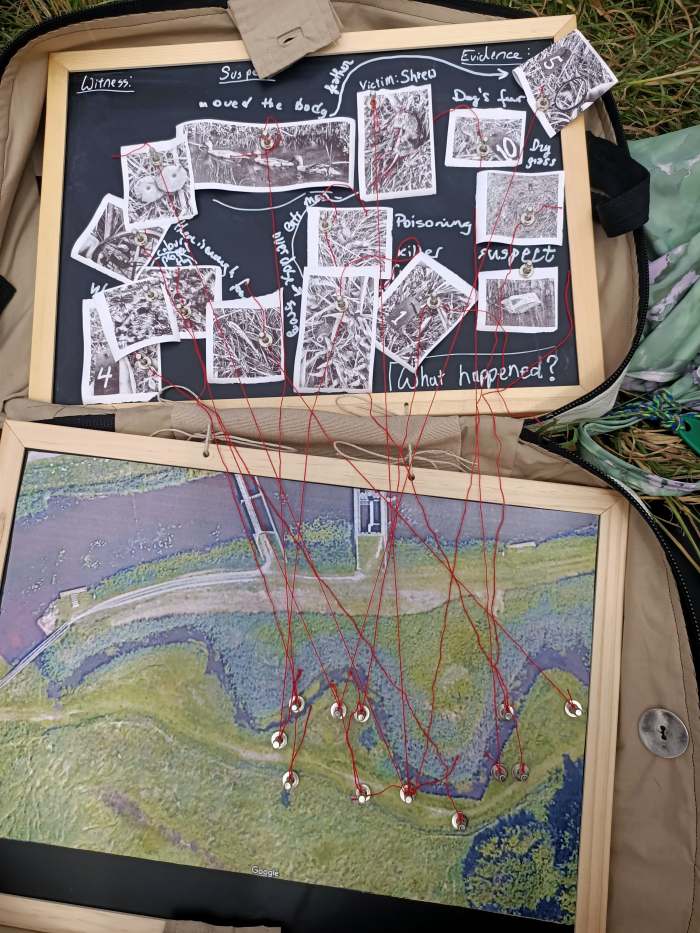
While the group takes a break, the Chief Inspector prints the photos with a thermal printer. Participants then place their photos on a board one by one, provide a description, and match each photo to the correct location on the map. They categorise the trace as, for example, suspect, witness, or evidence.
Once all the traces have been placed, the Chief Inspector leads a group discussion about possible connections: what could have happened? Who plays what role in this ecosystem? This leads to a deeper understanding of ecological relationships and roles, while also considering human impact. Participants are invited to reflect: what happens if, for example, humans intervene and combat a ‘suspect’ species?
Participatory Design Process:




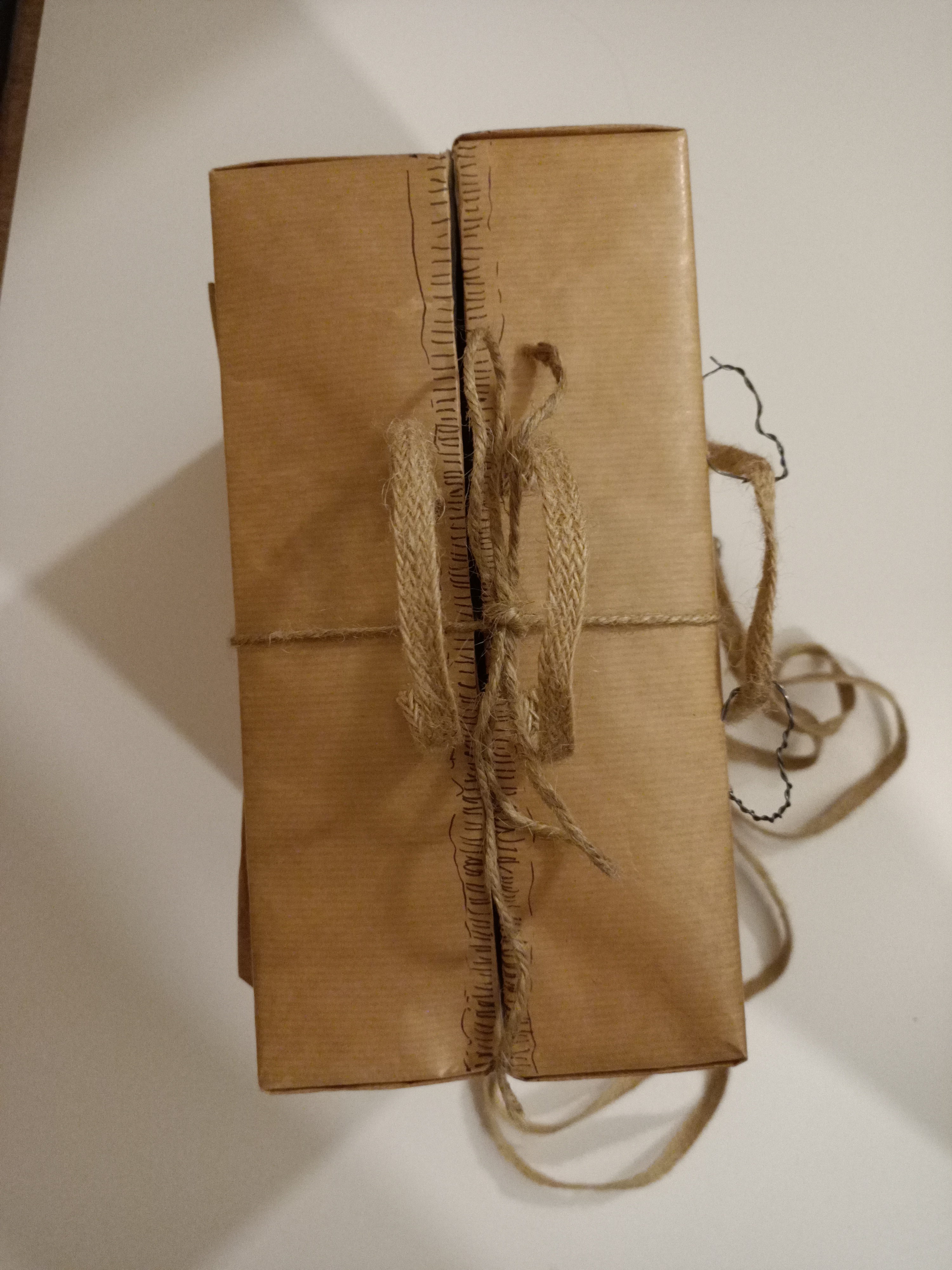

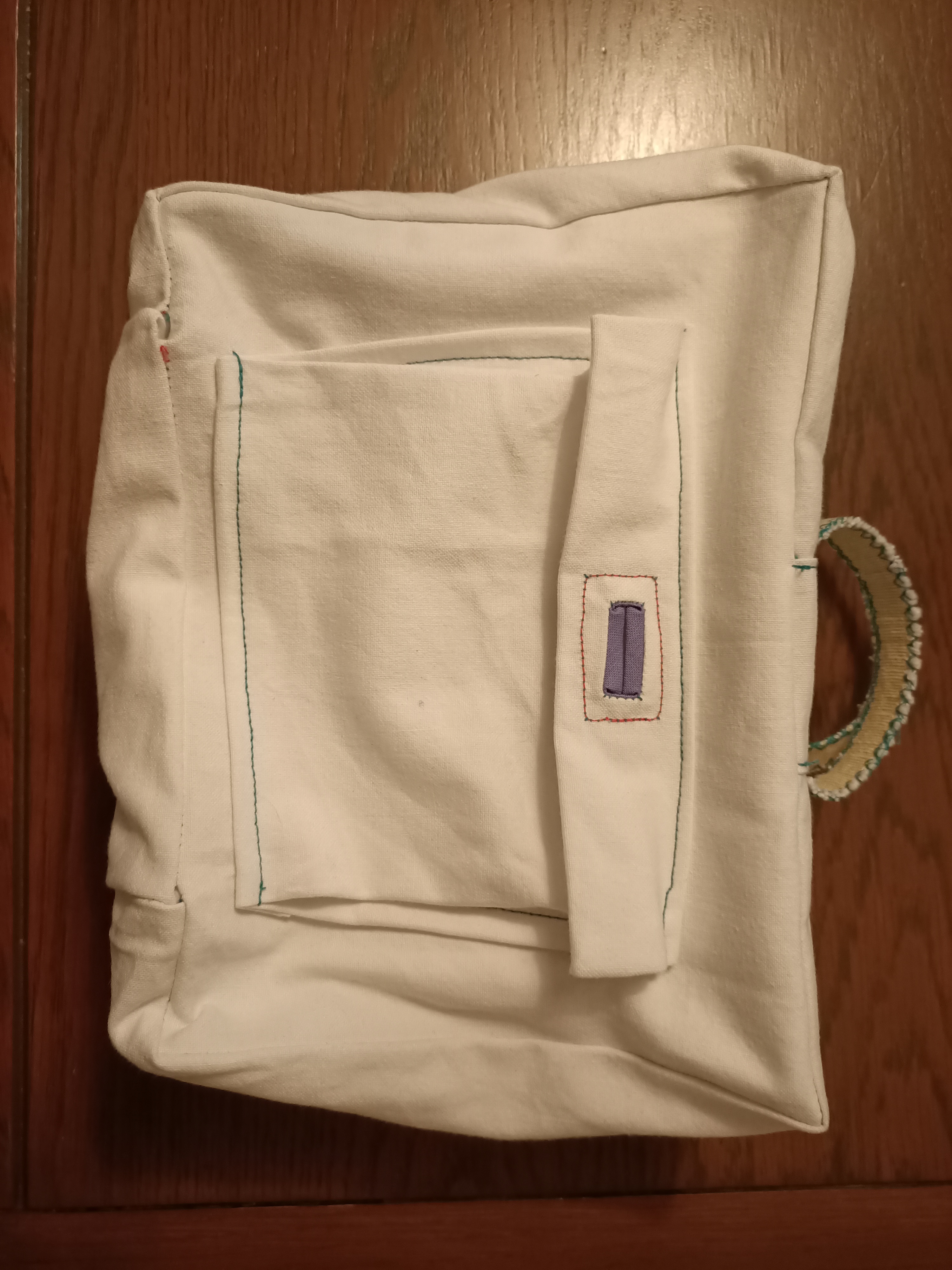




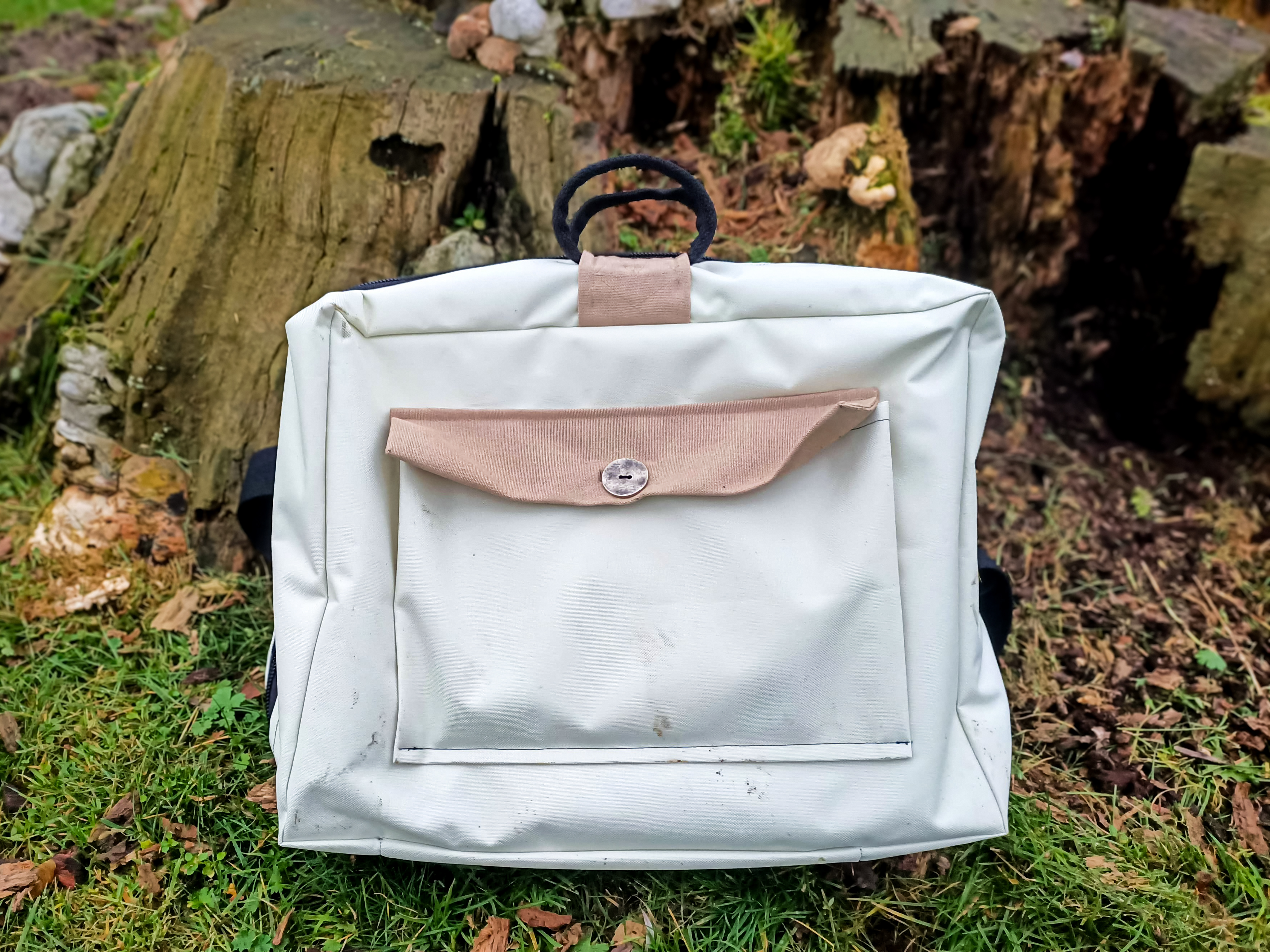
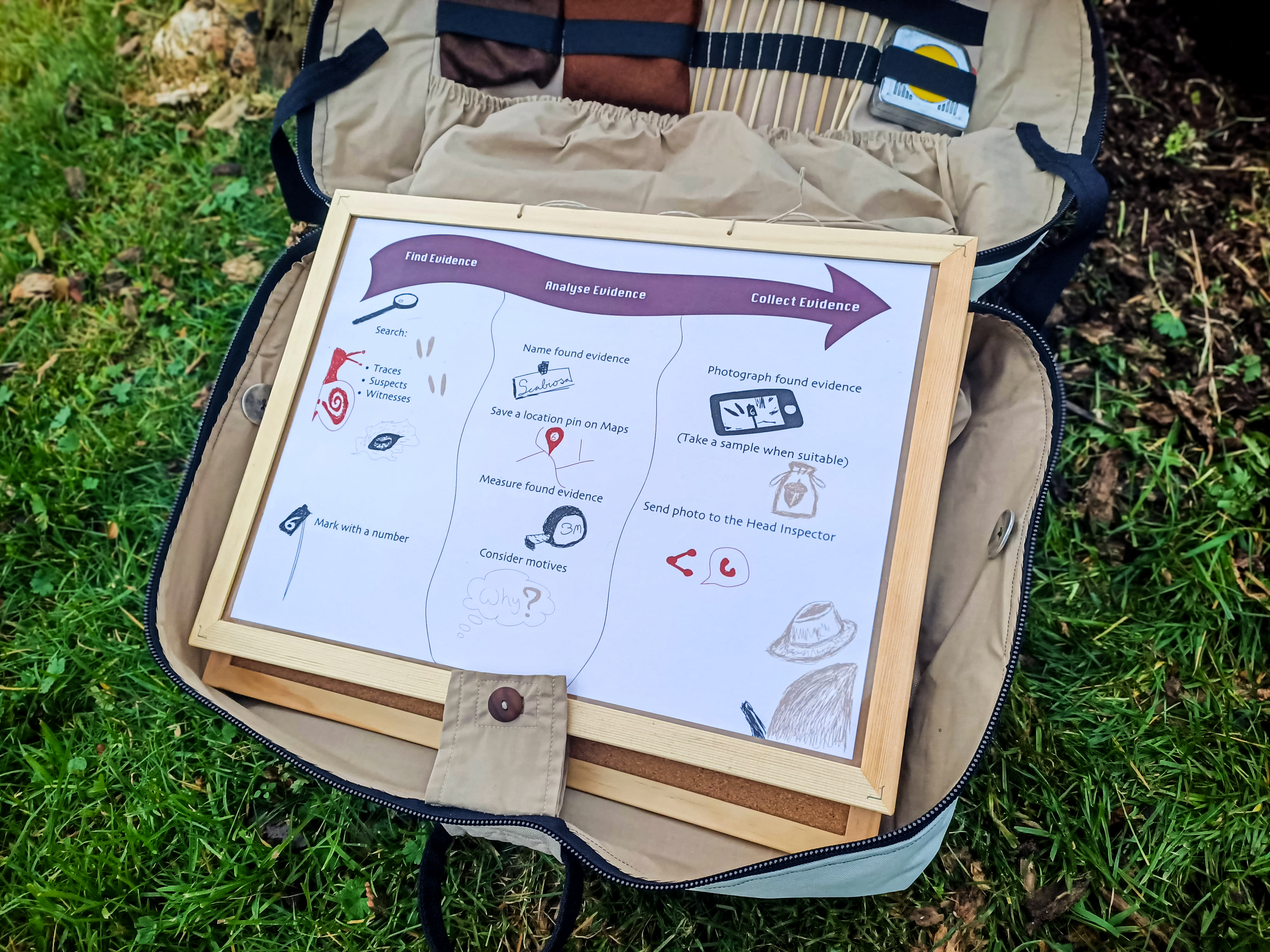
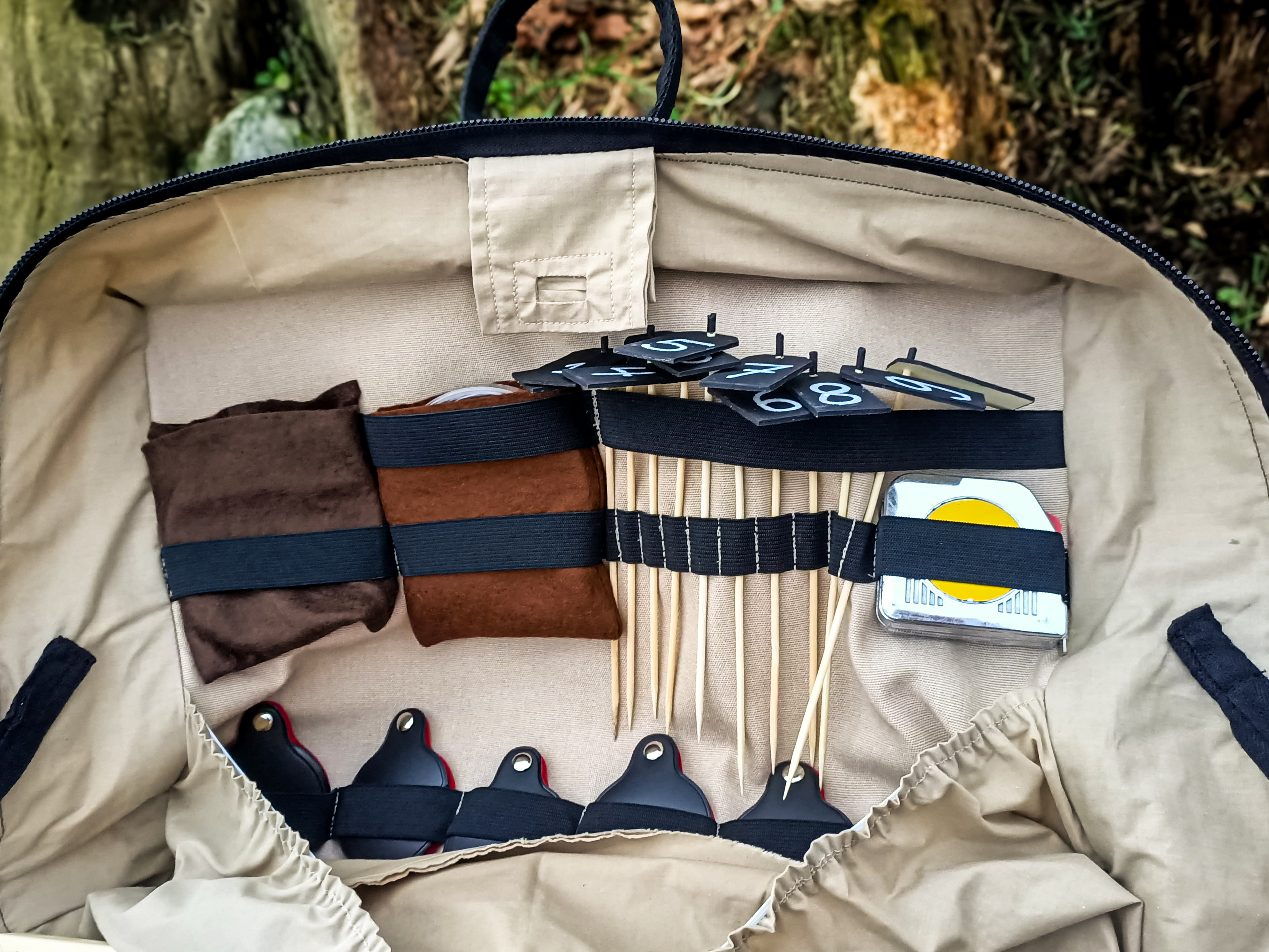

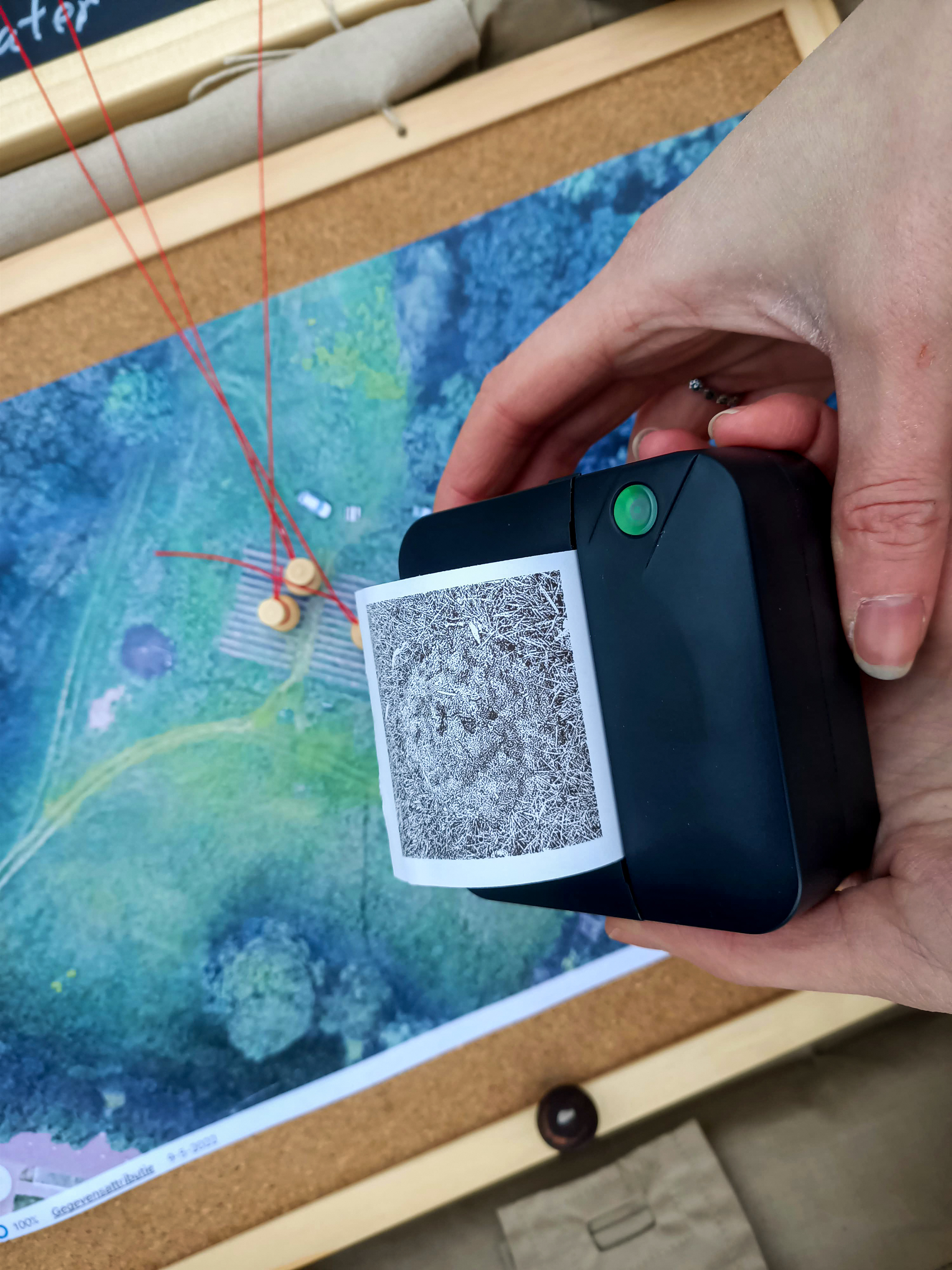
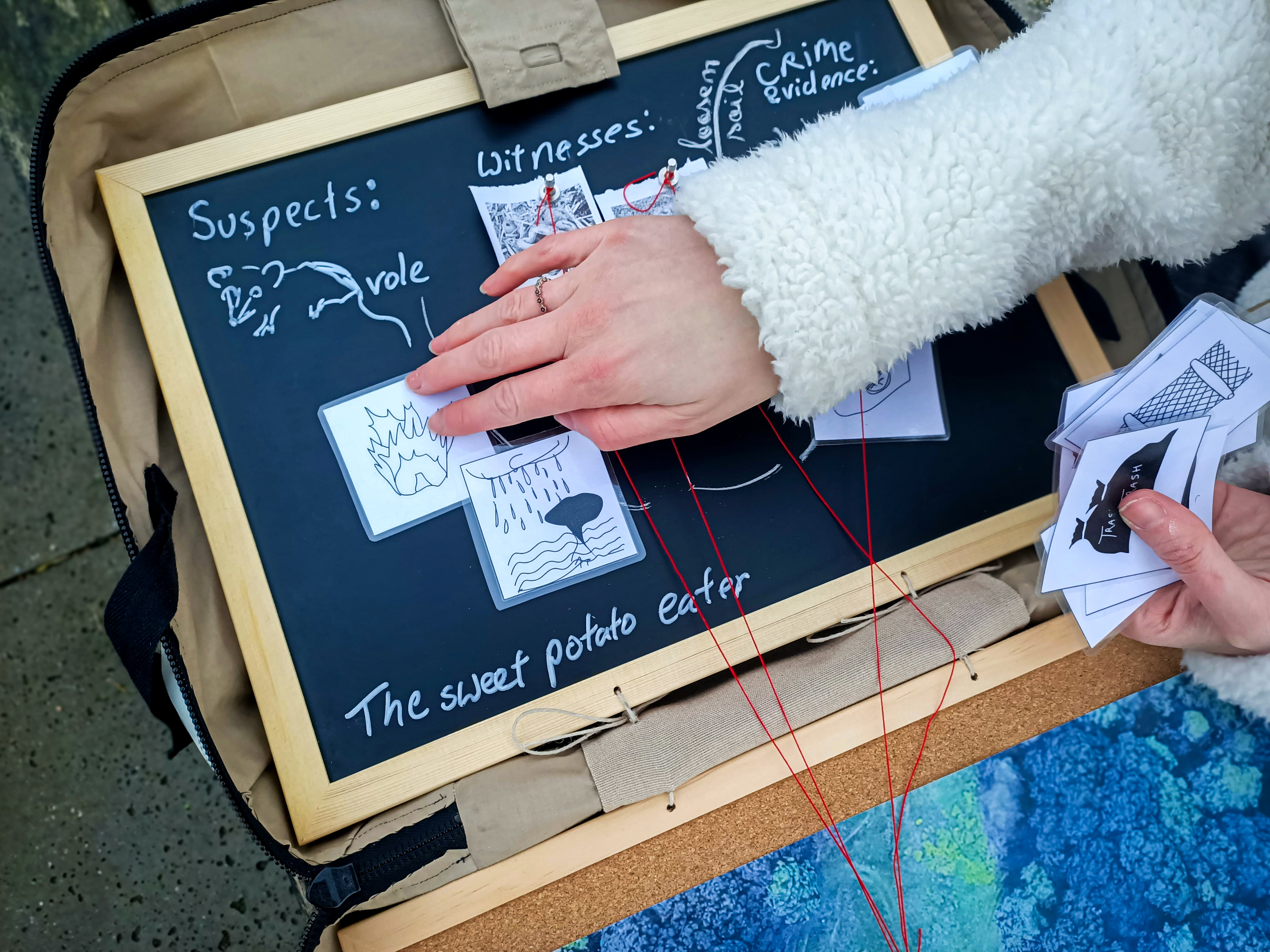
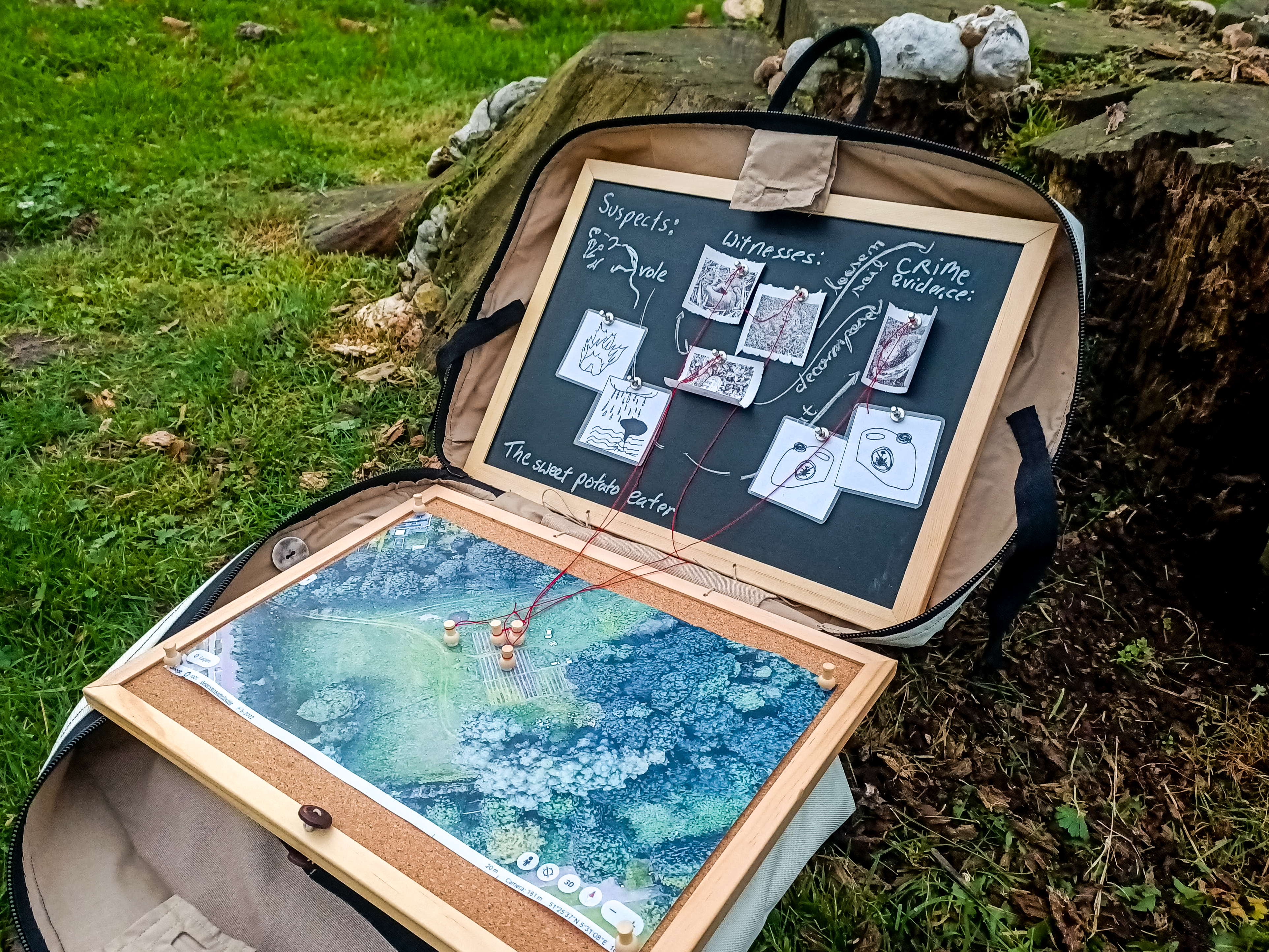
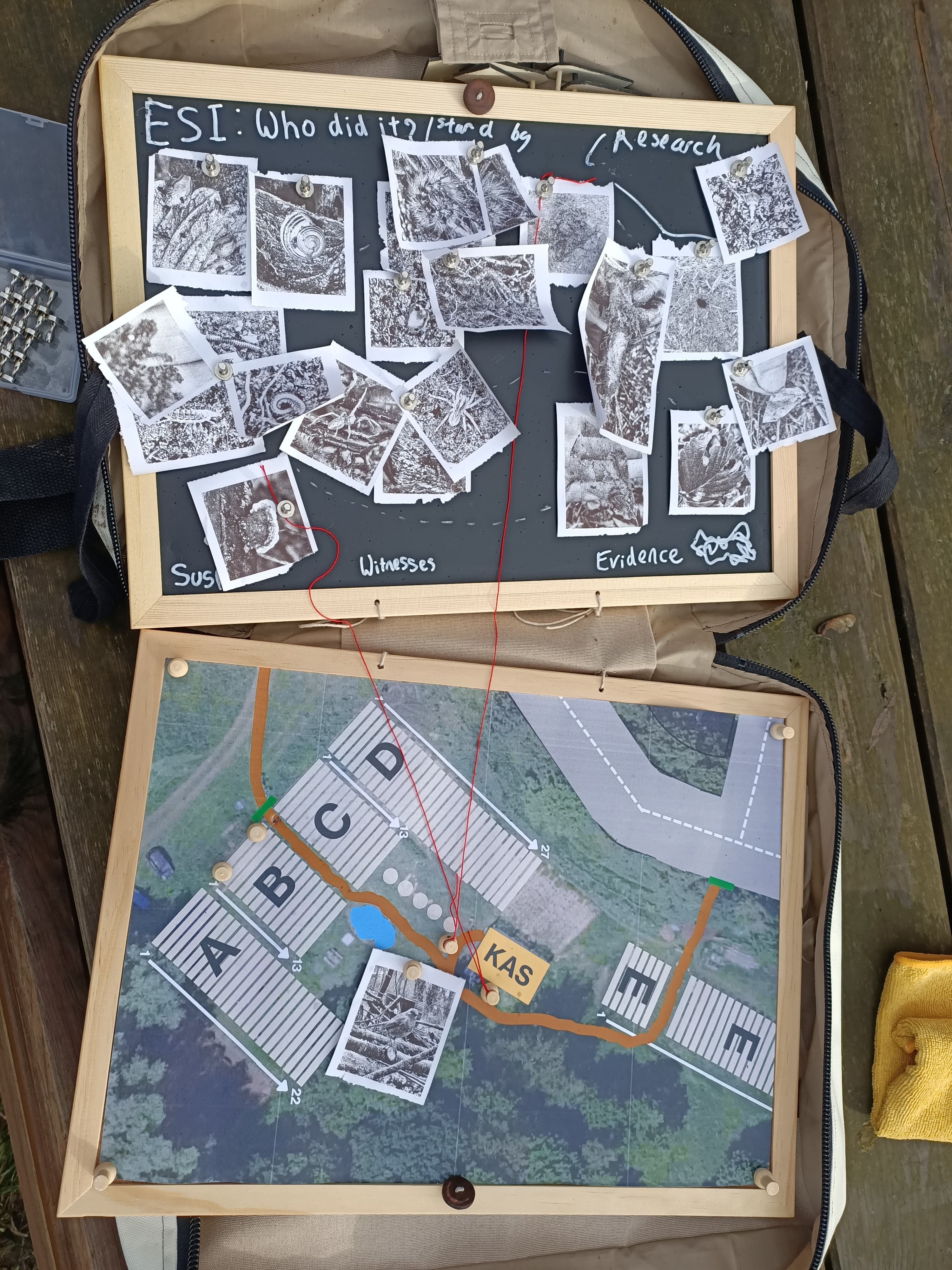
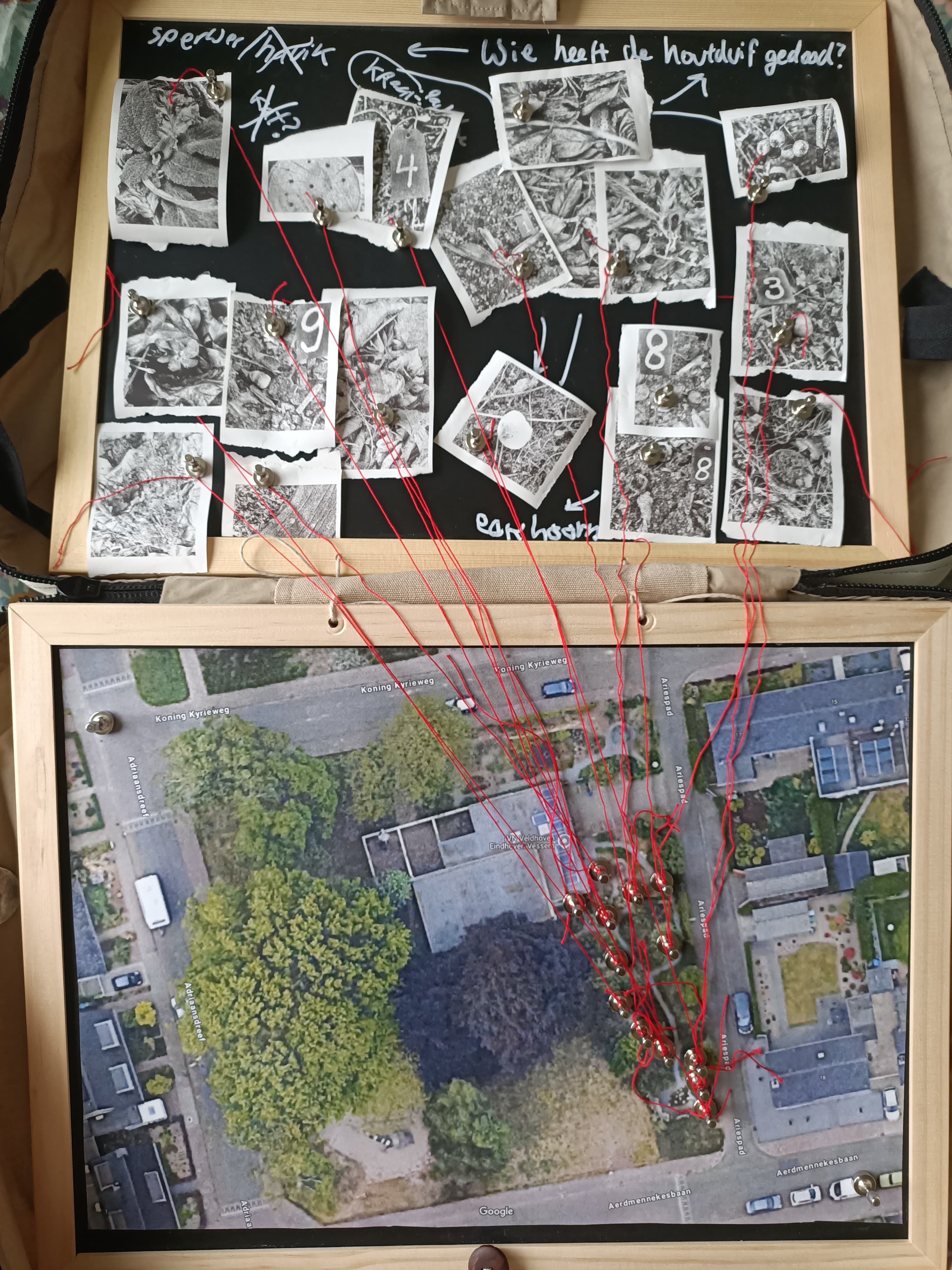
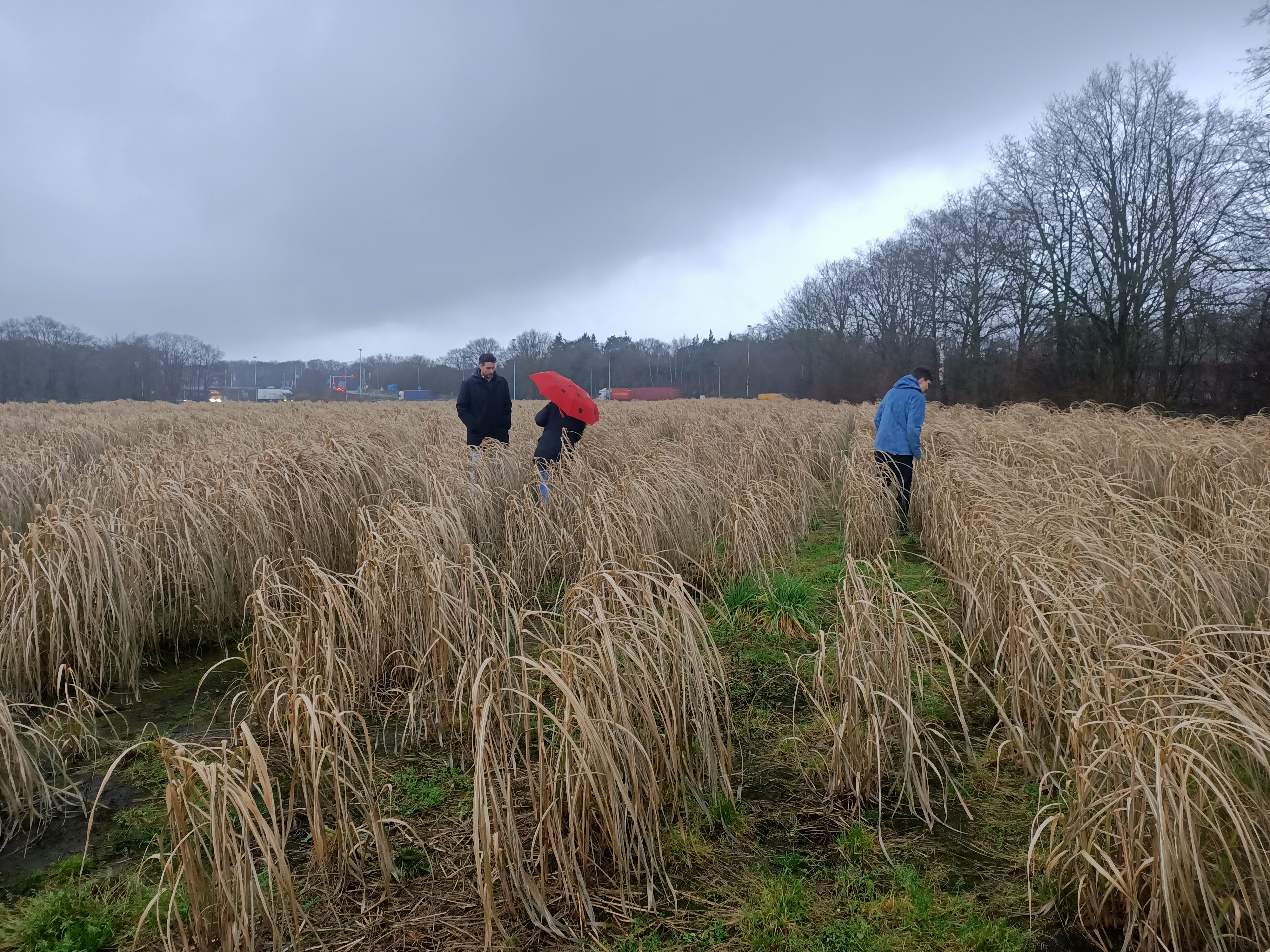
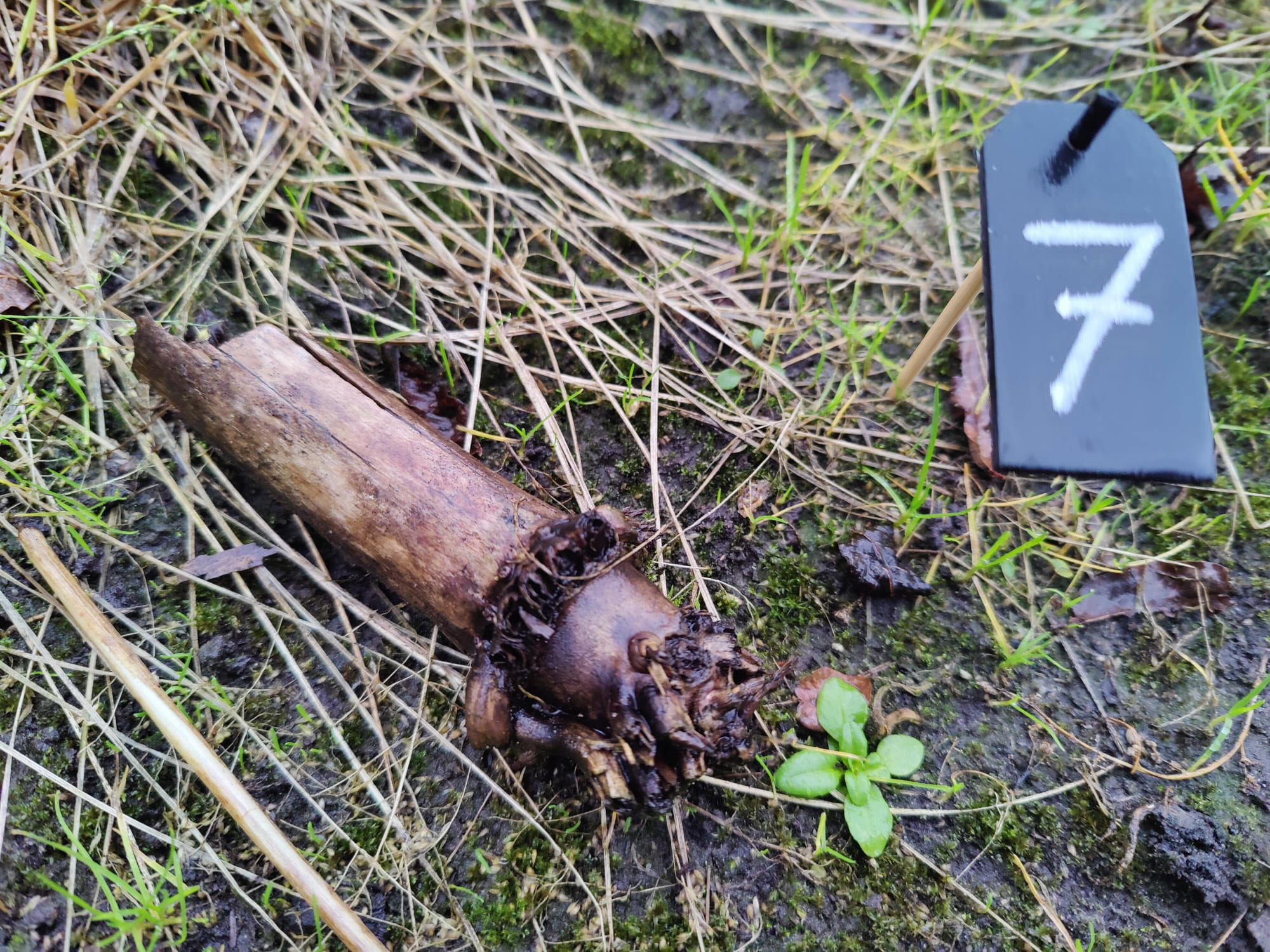
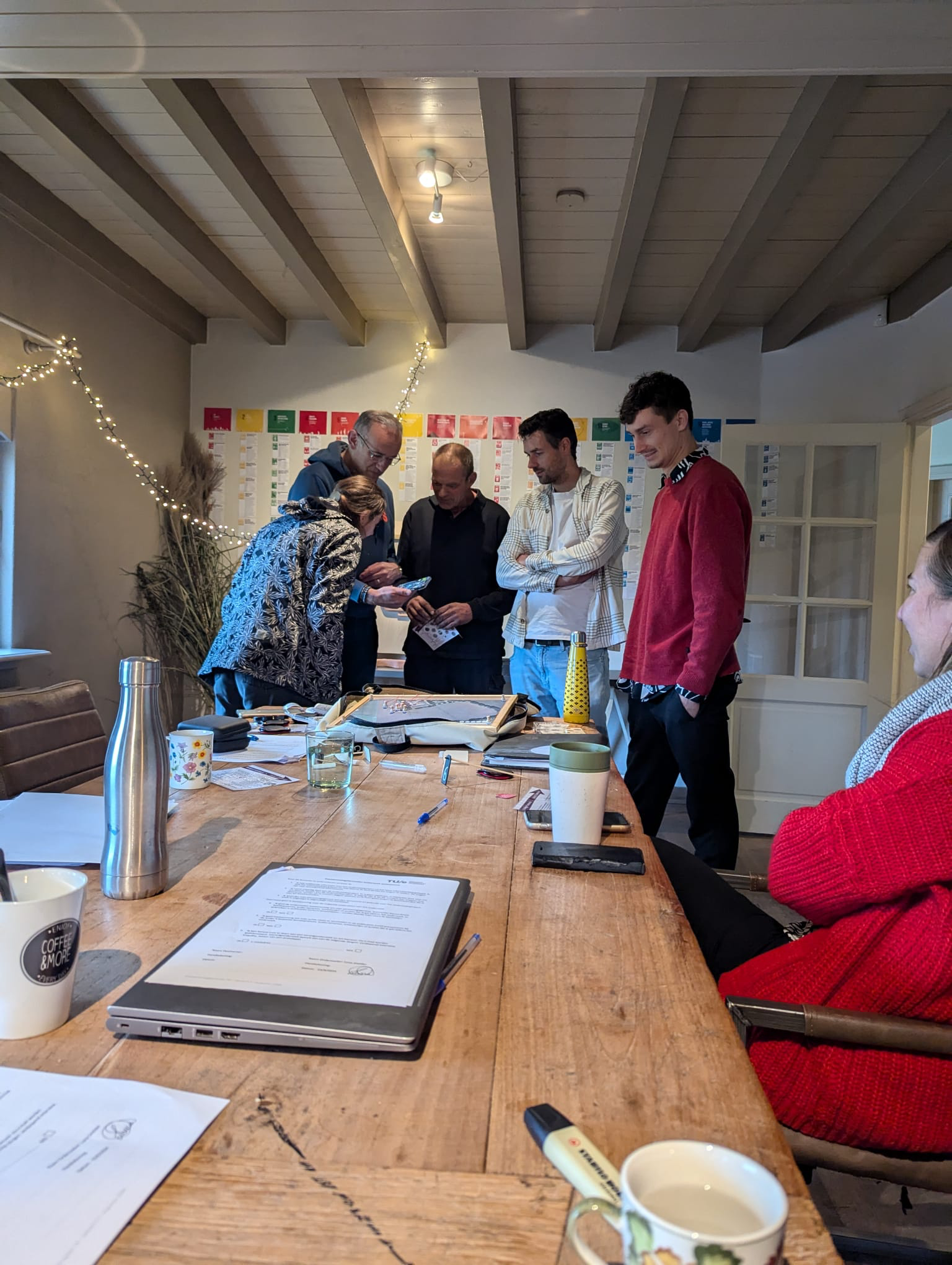
Pilot at Nieuw Zwanenburg: Broken Miscanthus
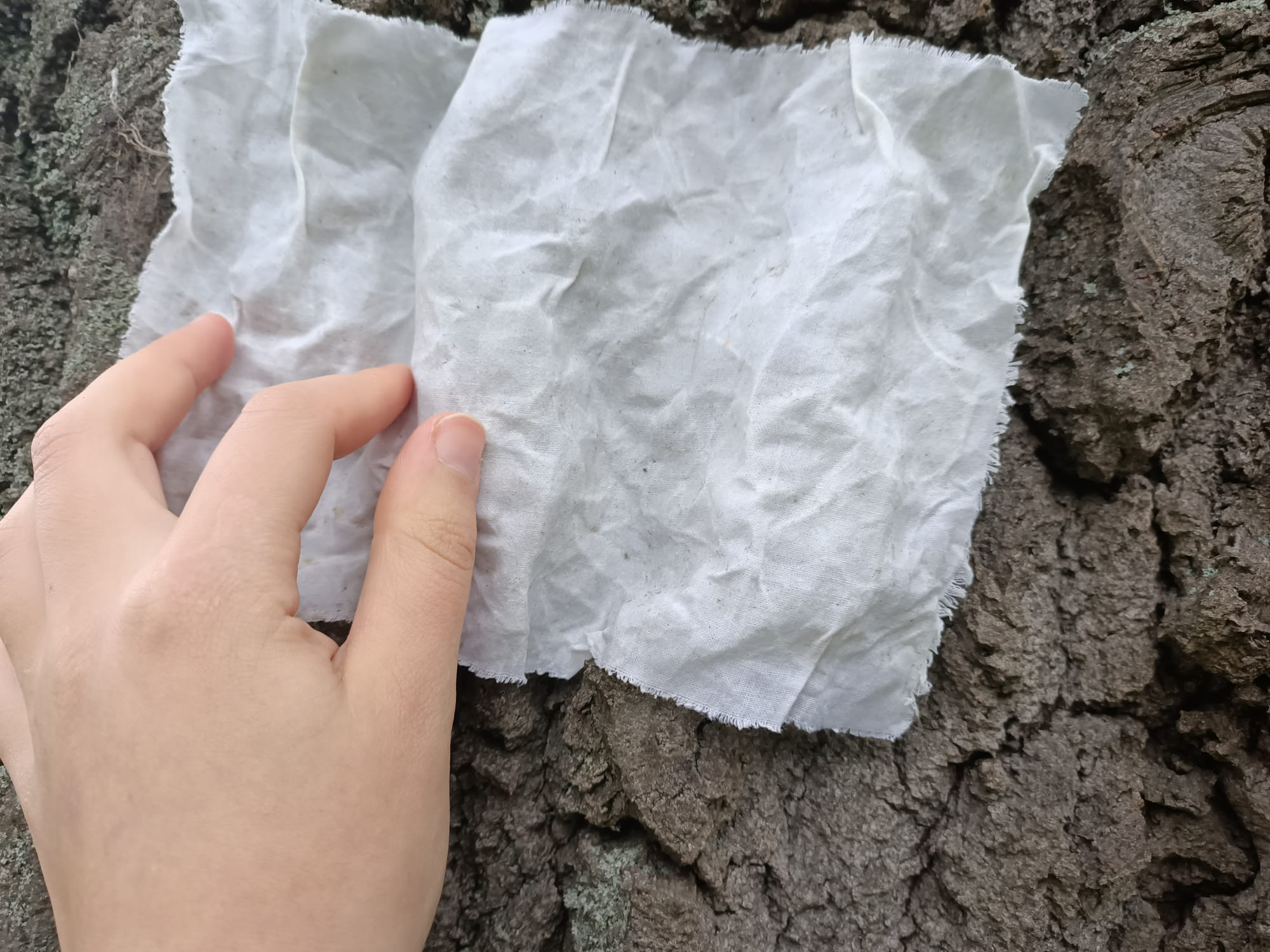
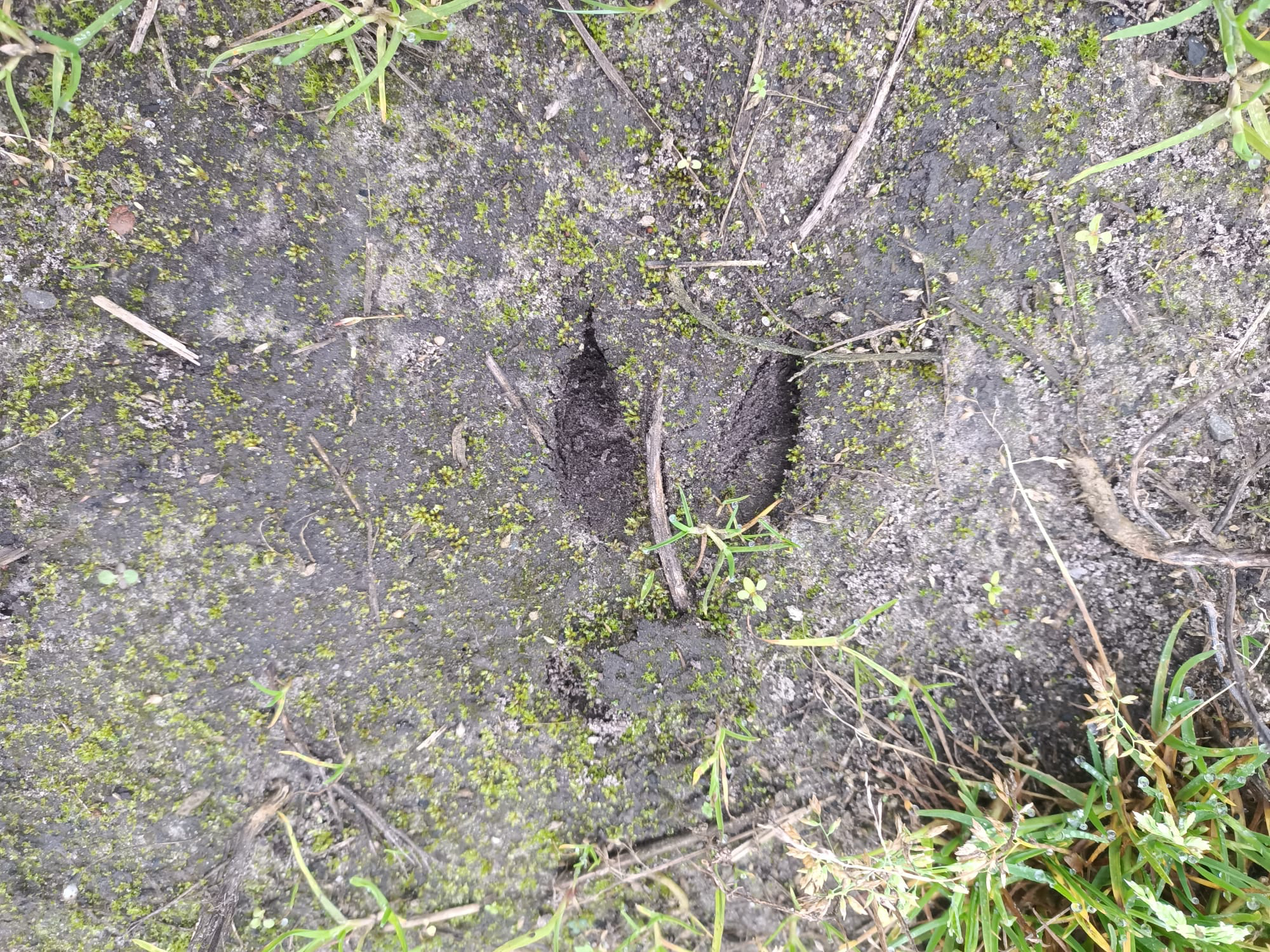
This pilot in the pouring rain started with the mystery of a broken Miscanthus stem (also known as elephant grass). The group found traces of a deer, tractors and rodents. Theories developed about a deer that could have walked over it. However, there were no traces of the deer next to the broken stem. Could the rain have washed those away already? With the local knowledge of how the field is maintained, it seemed more likely that a human on a tractor with a pole attached to it damaged the plant and broke the stem. The plants in the field would know best, as they were the witnesses.



Pilot at Phood Farm: Disappearing roots
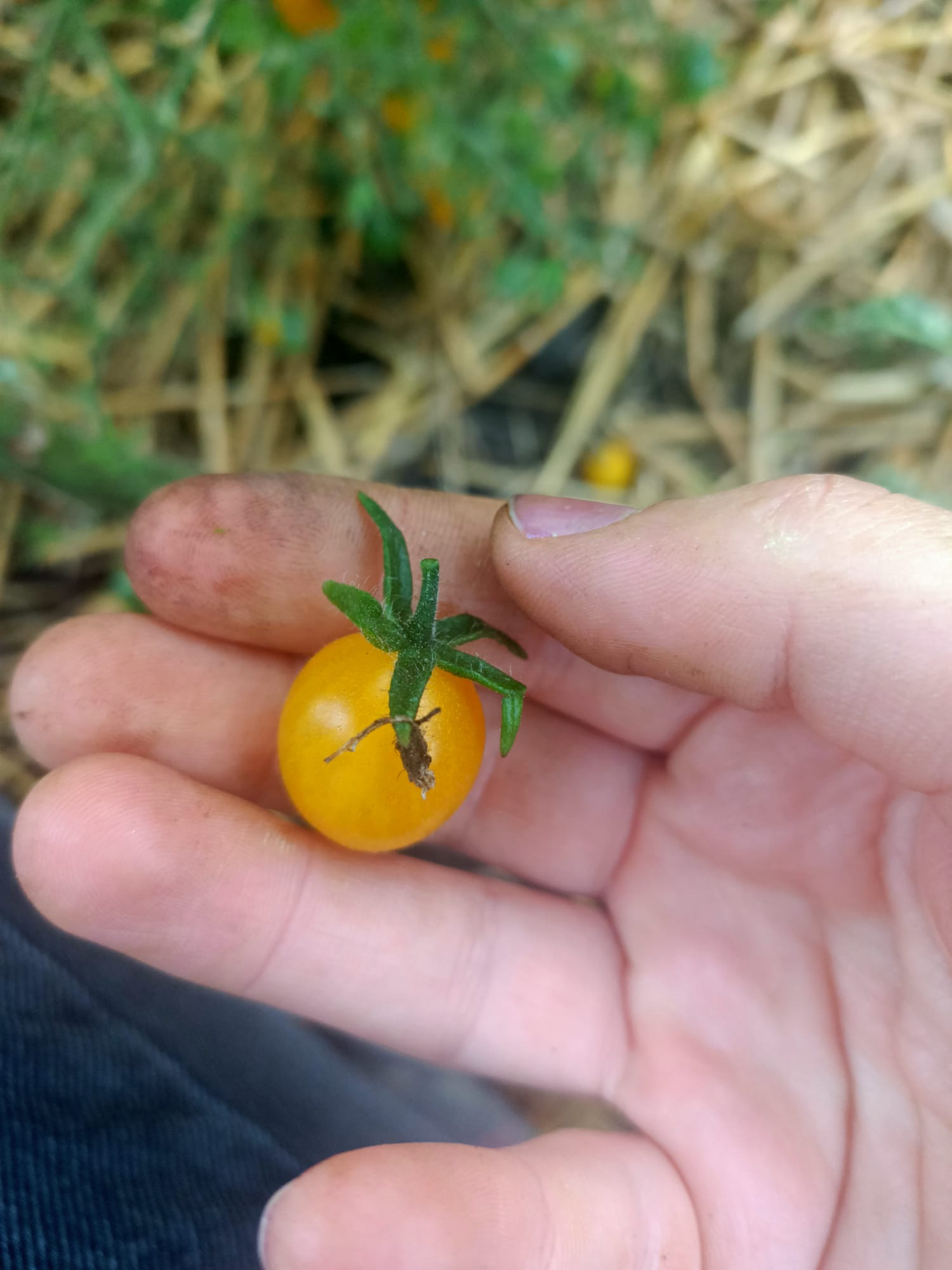
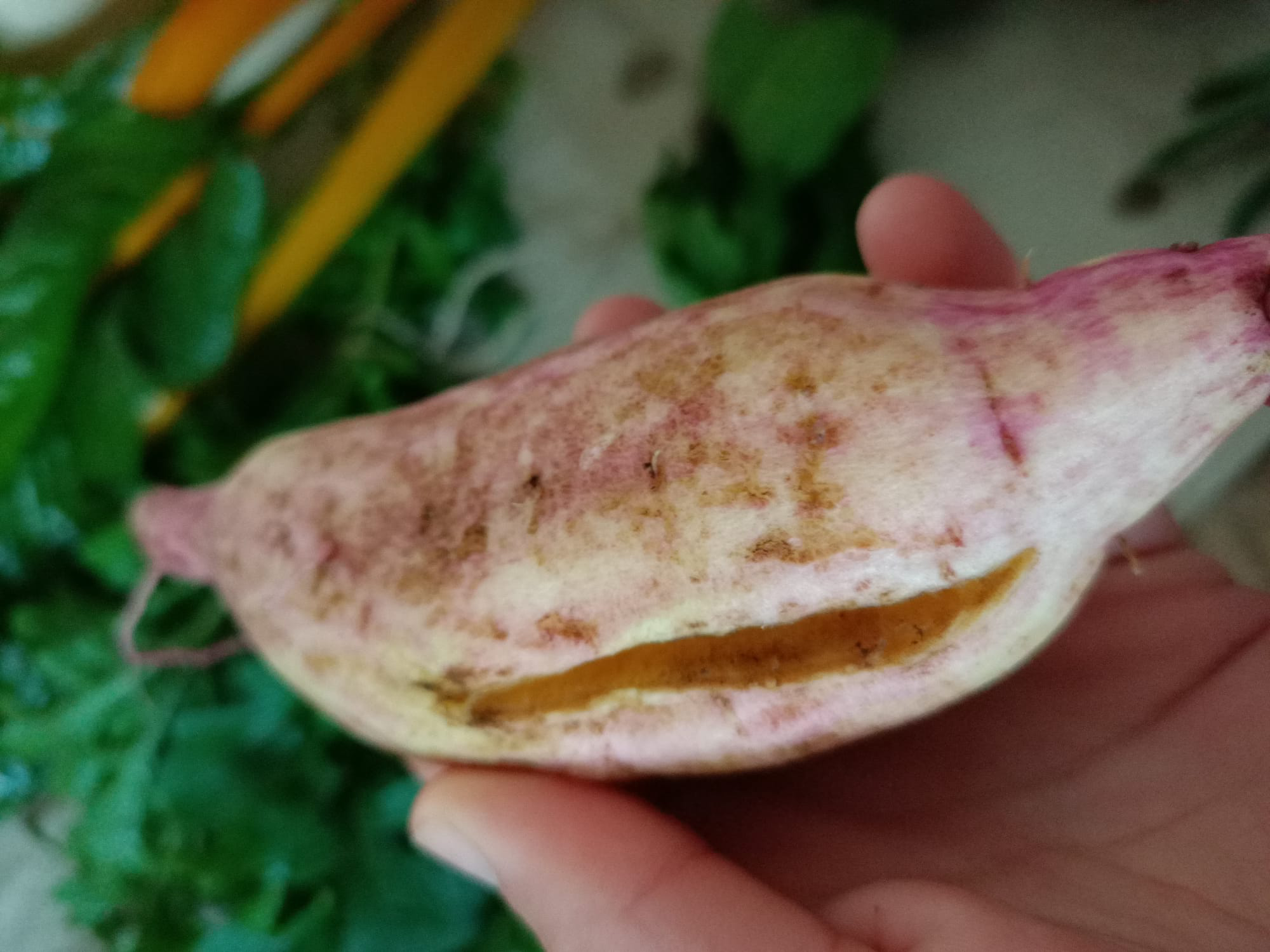
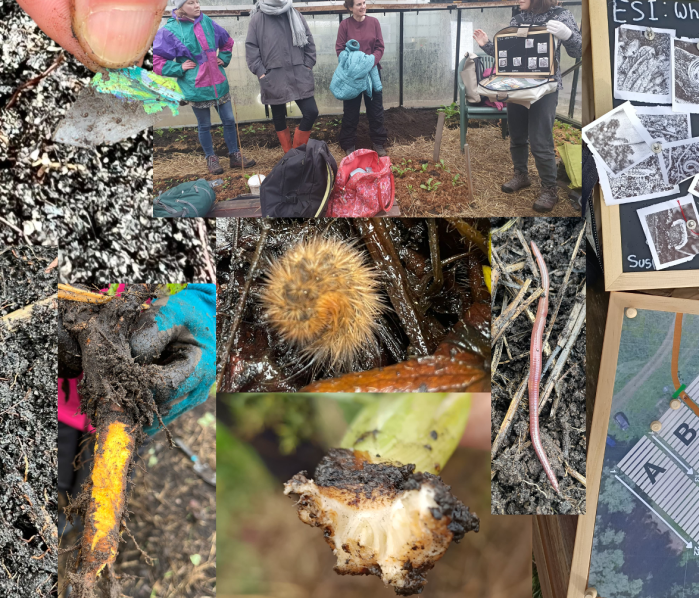
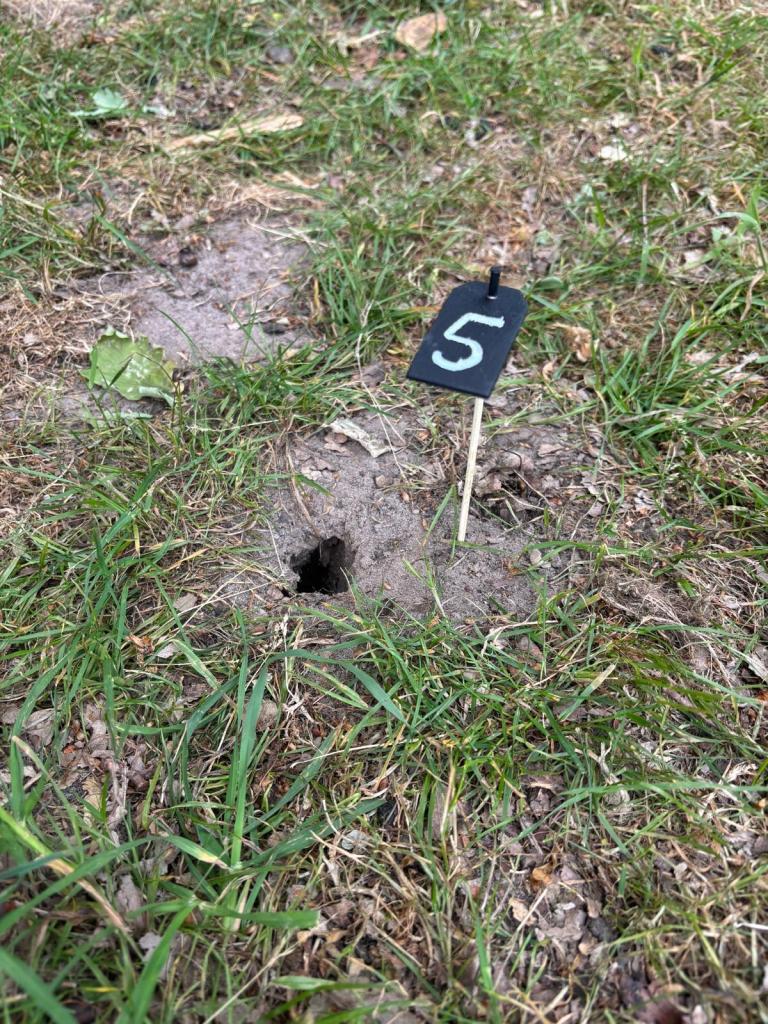
This time we did it differently: We still started with a short explanation and a mystery direction of holes in the soil (related to the vole that ate the roots of vegetables). The participants looked for evidence they passed by during the gardening activities of that day. After several hours of work, we came together and analysed our findings (the pictures). Participants learned from each other’s knowledge and were more aware of the ecosystem during the gardening. The mapping activity at the end also opened up space for connecting to Permaculture principles. Everyone was surprised by how much life they found in a small area.
Pilot at IVN Veldhoven-Eindhoven-Vessem: Pigeon
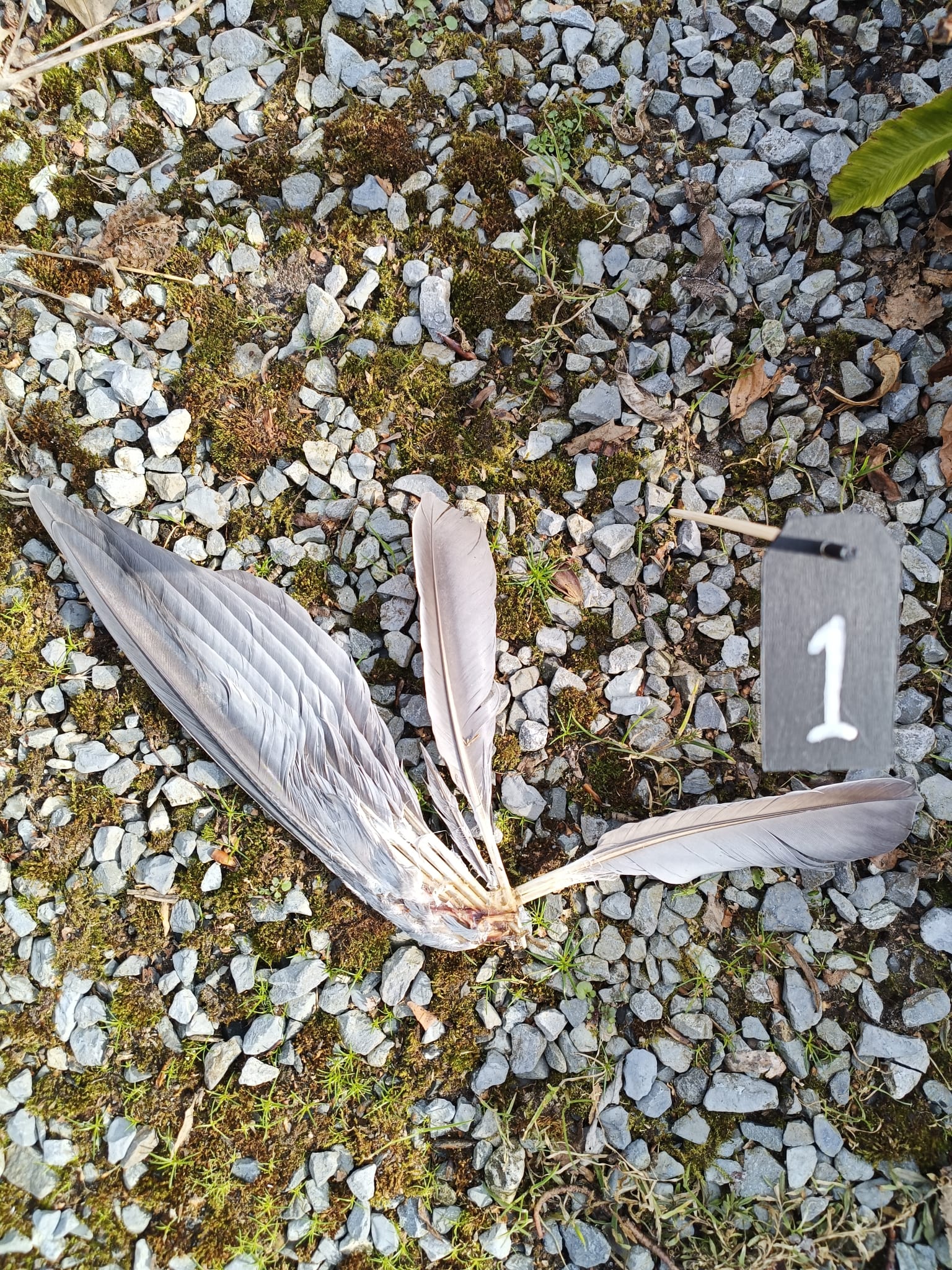
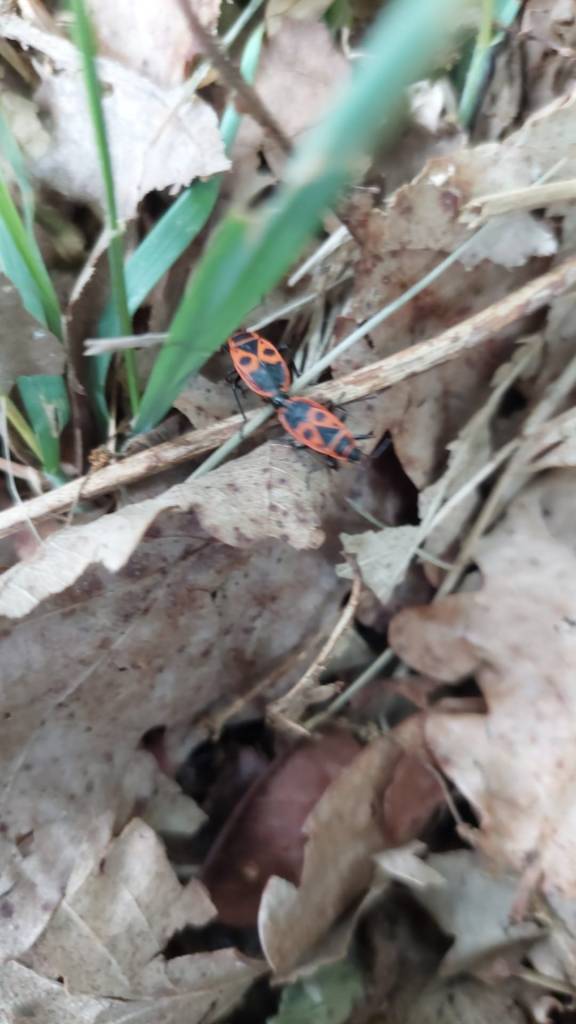
There was no prepared case in this pilot. Participants explored the IVN garden and found traces of insects in the winter as well as a dead pigeon. This last thing was the focus of the discussion that followed. The group (mostly experts) combined their knowledge and considered what might have happened and who could have killed the pigeon.
Pilot at Brabants Landschap: Dead Rabbit & Circle of Life
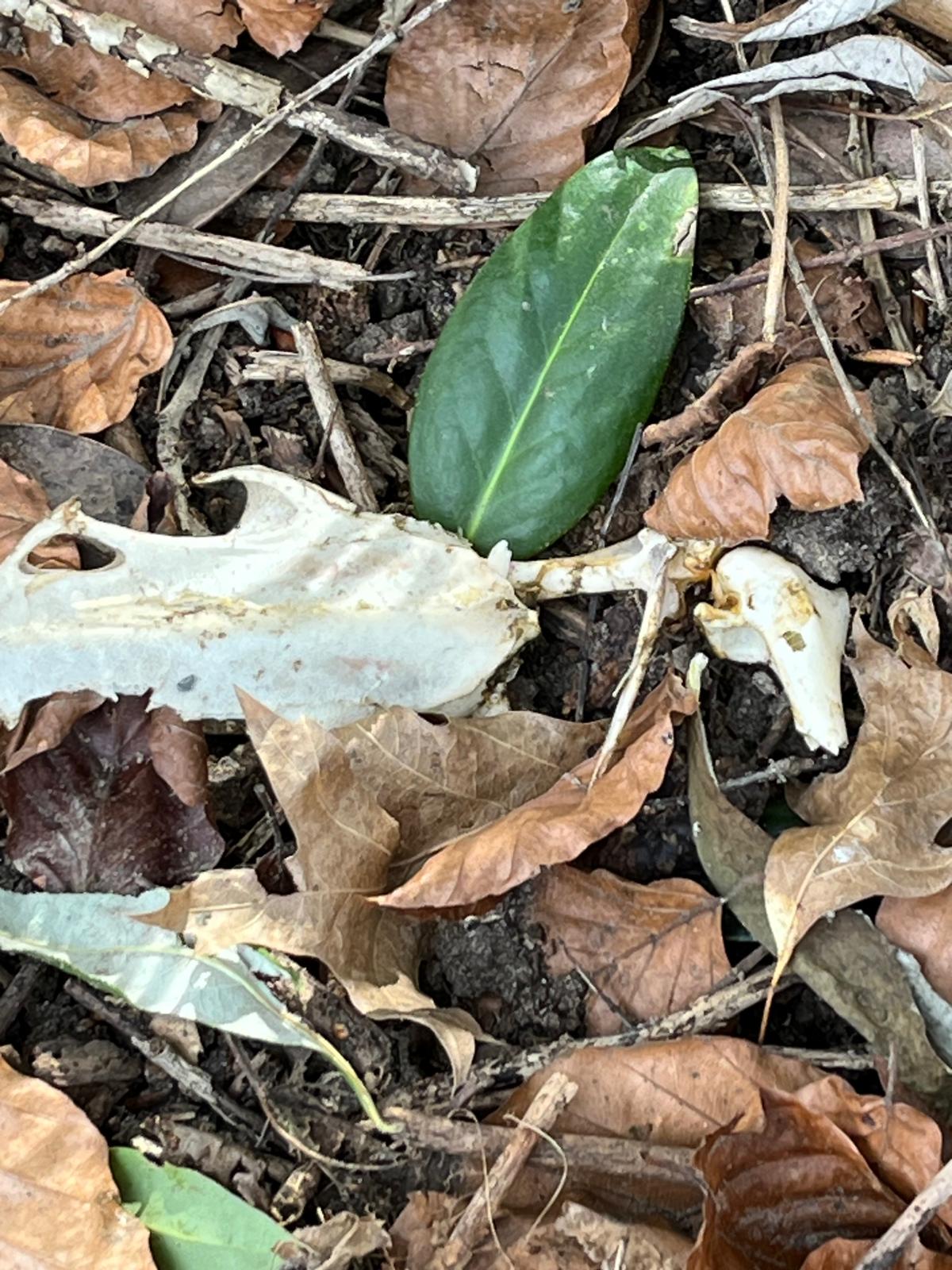
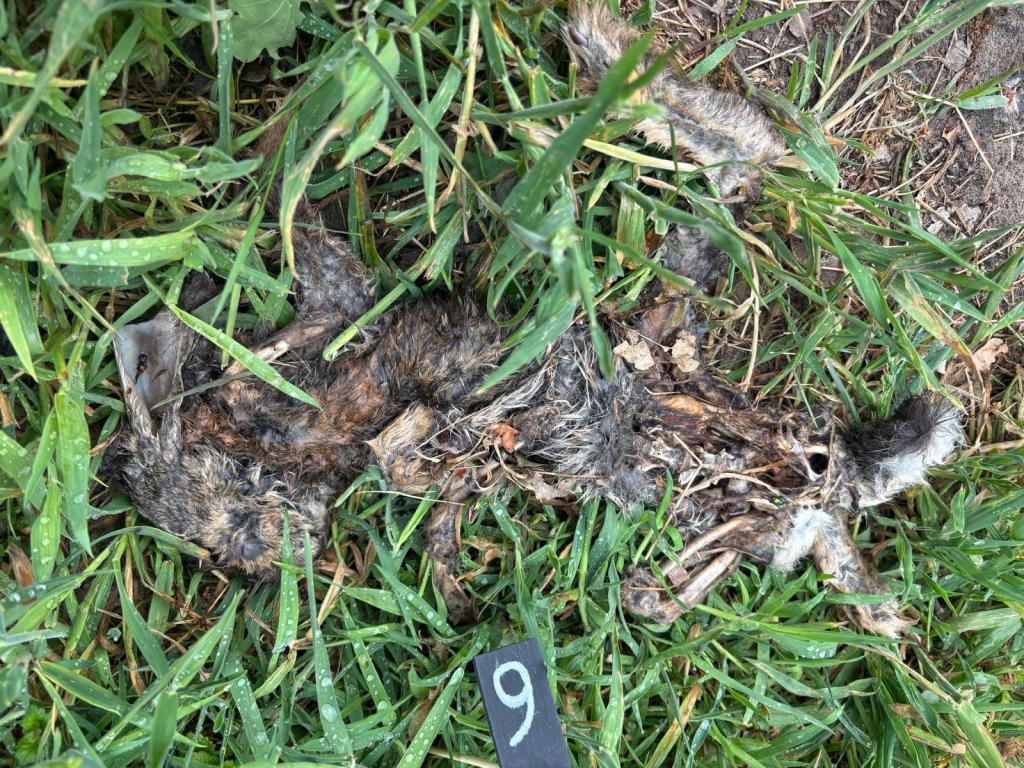
In De Kraaienberg near Bergen op Zoom there was a dead rabbit. Part of the participants explored that location, but another part of the group spread more broadly across the terrain to follow their interests and what they came across. This led to a wide variety of results and a discussion about how the start and end of life are connected.
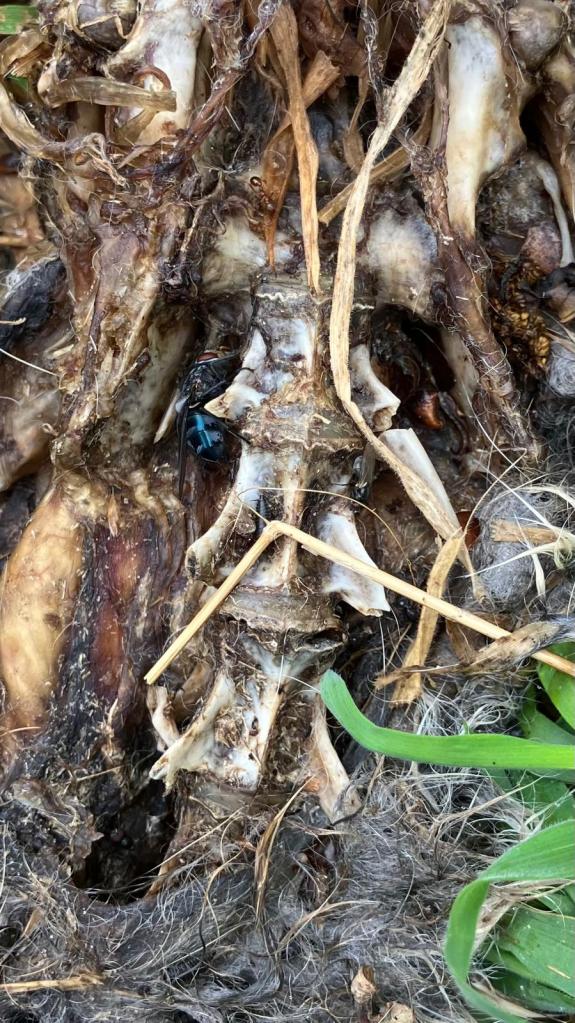
Workshop 1 for Green Café Eindhoven: Dead Shrew
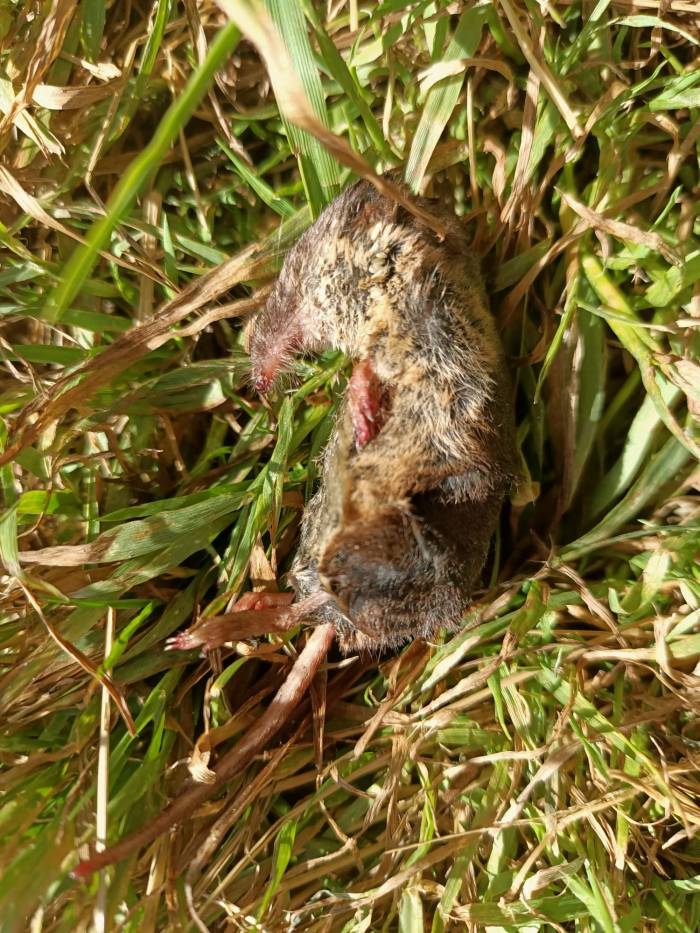
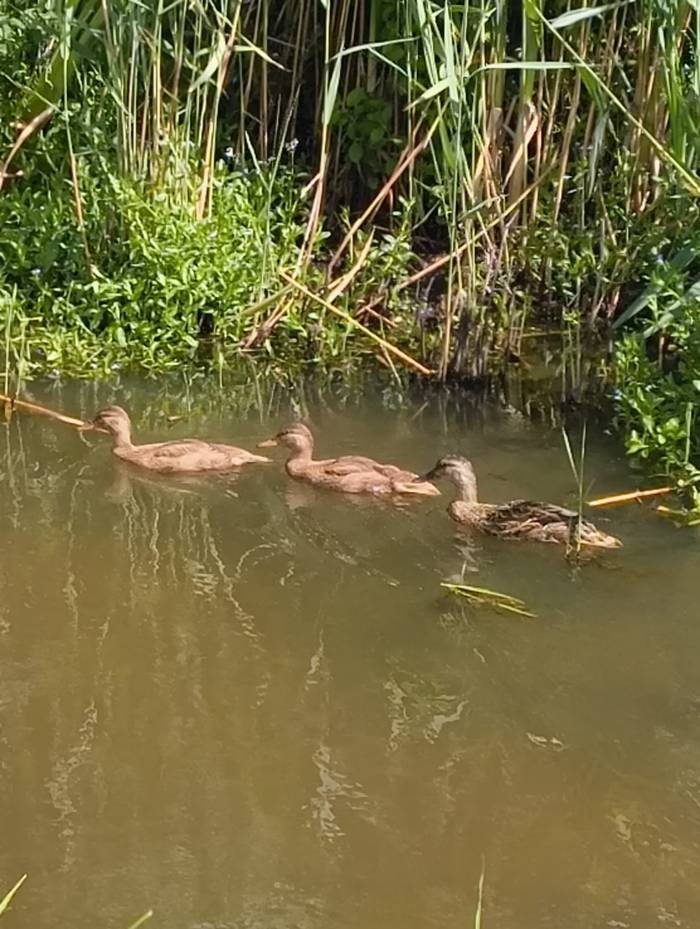
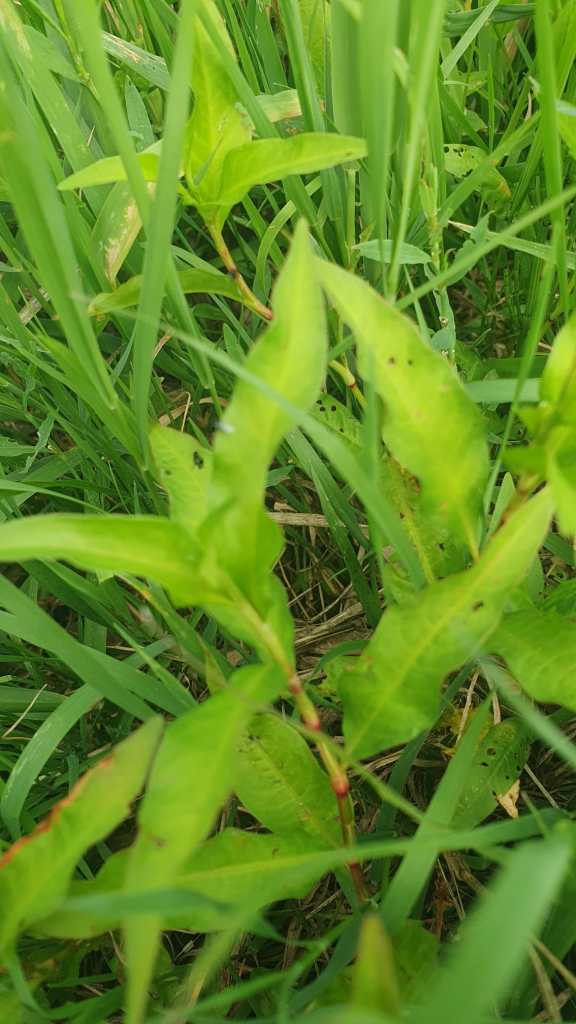
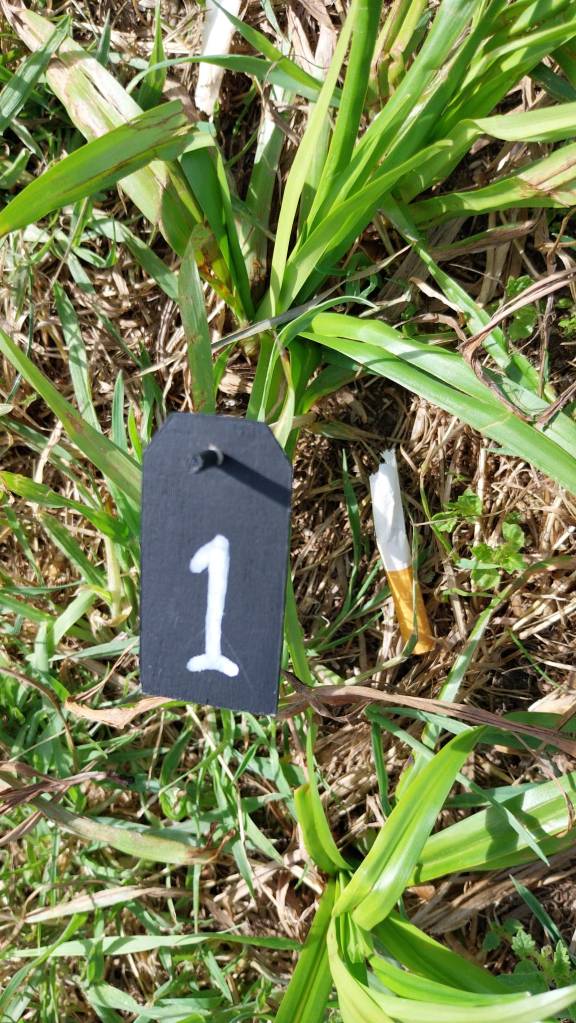
Together with Etje Hendriks (IVN Veldhoven-Eindhoven-Vessem), I organised a workshop for Green Café Eindhoven. We found a dead shrew at the Klotputten a few days before the workshop, which made us wonder what had happened there. When we came back with the participants, the shrew was gone. Again: What happened? The group found many different witnesses and suspects, some of whom were more likely than others: Ducks don’t eat mice, and an overdose of a pepper plant is not very logical. Similarly, shrews don’t smoke cigarettes, but they could get harmed by the toxic chemicals in it. The emergence of stories was wonderful. Read more in the recap.
Workshop 2 for Green Café Eindhoven: Dead Trees
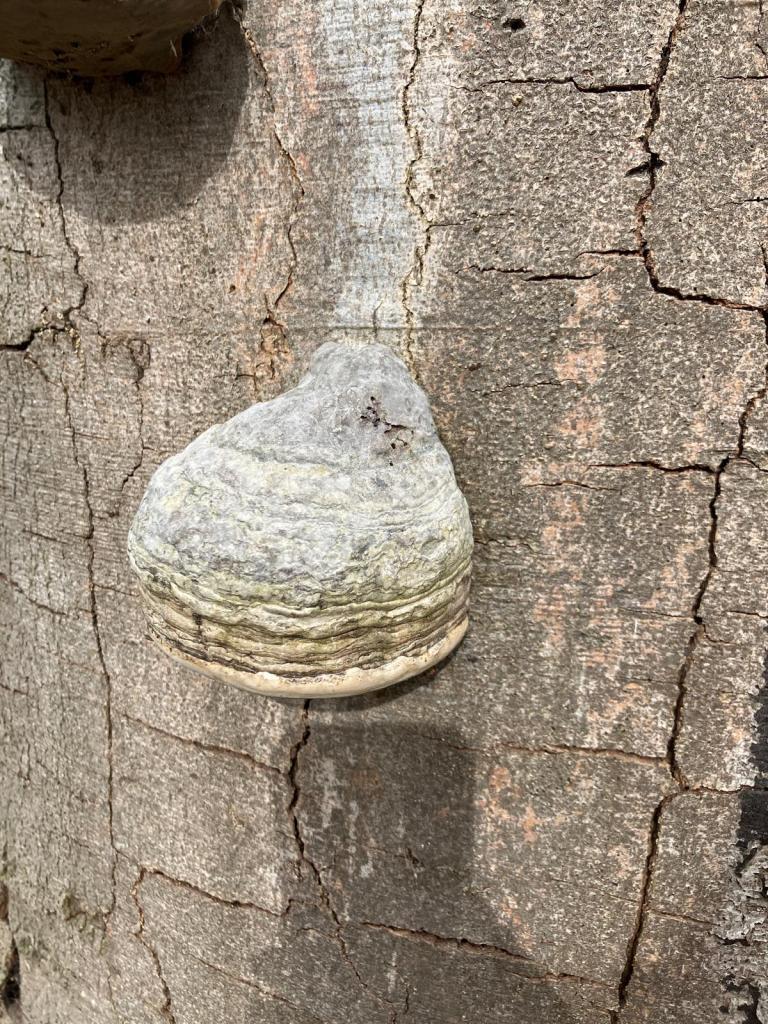
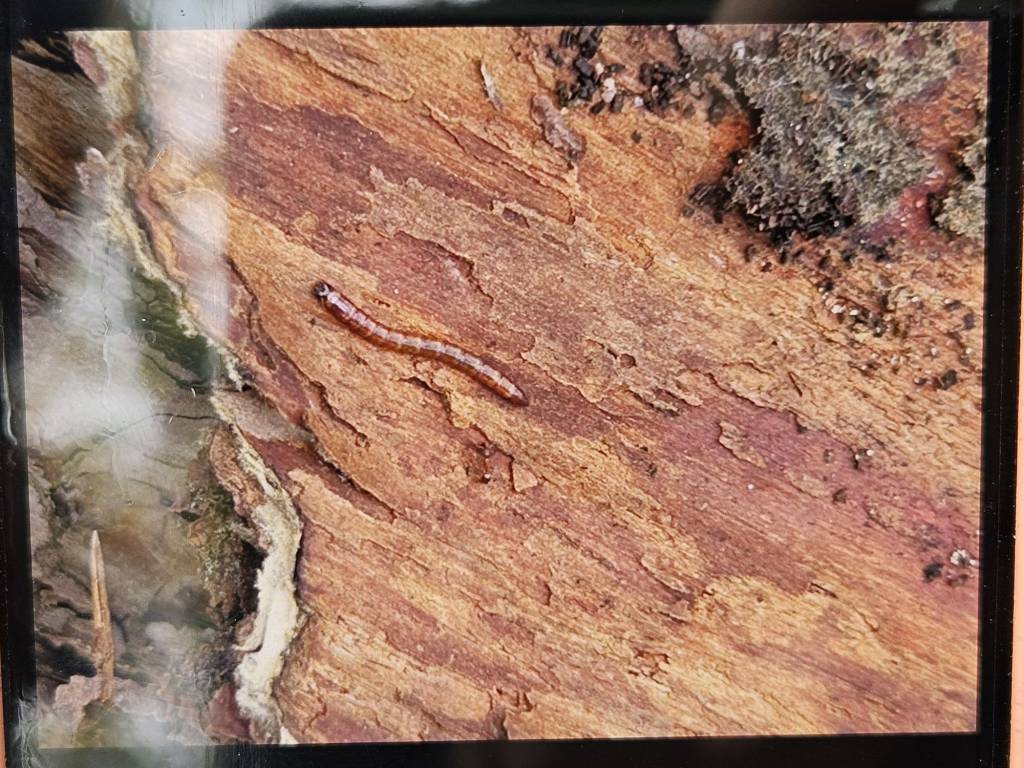
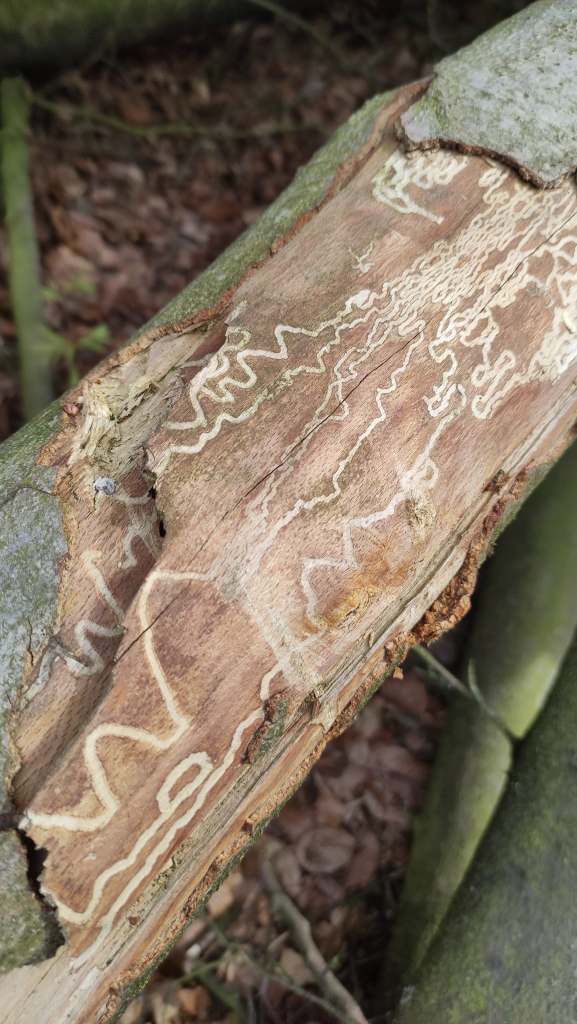
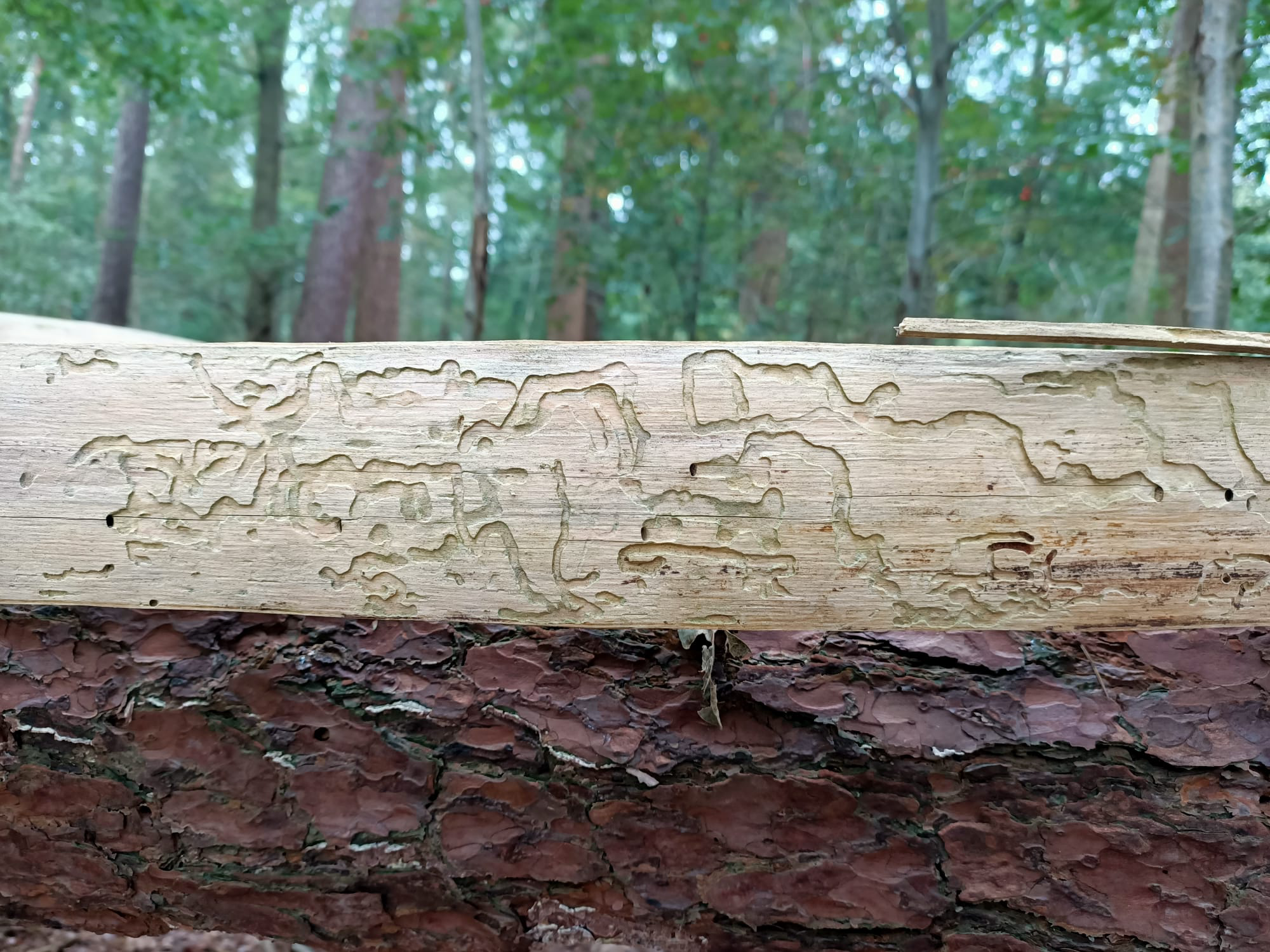
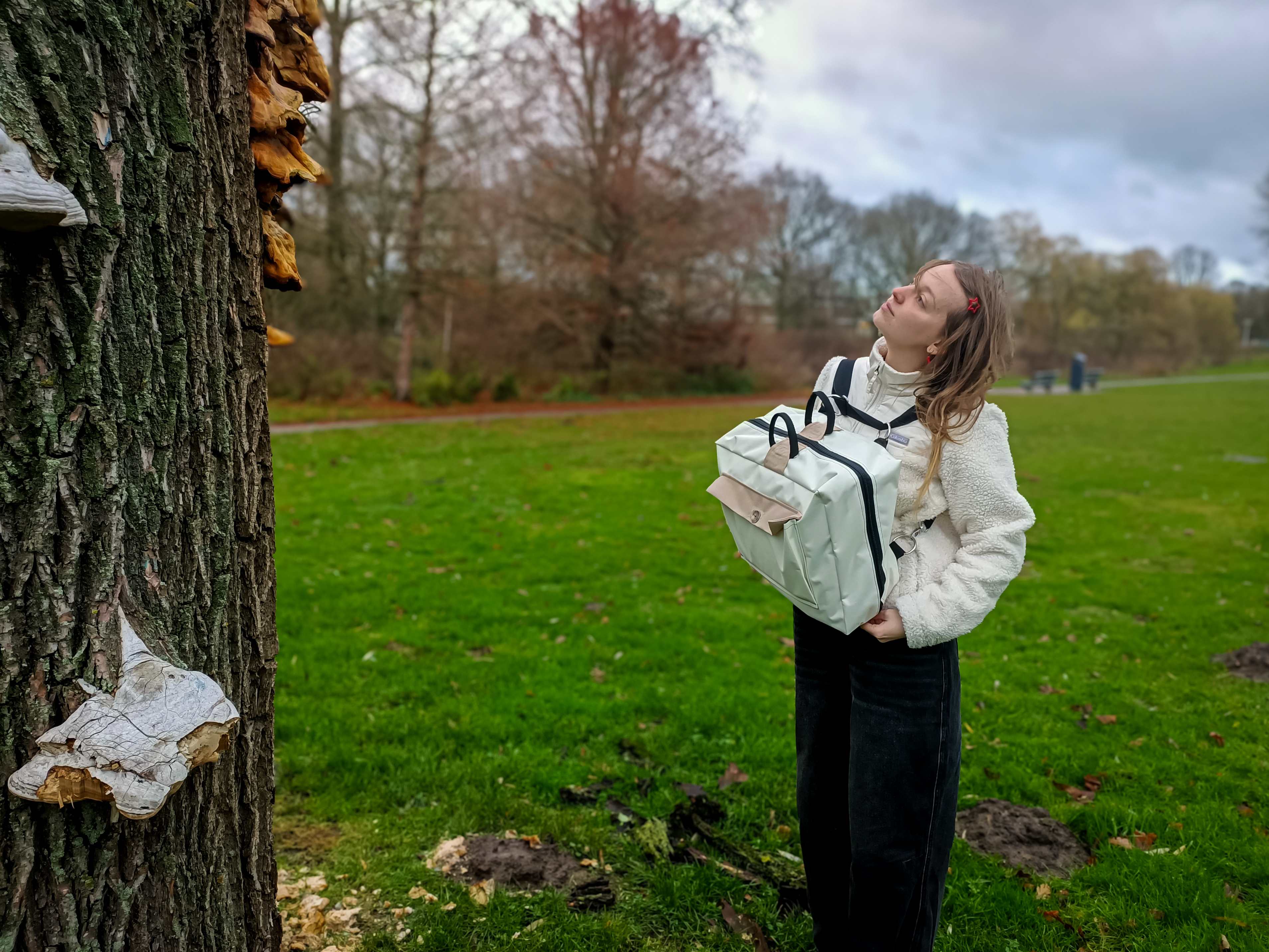
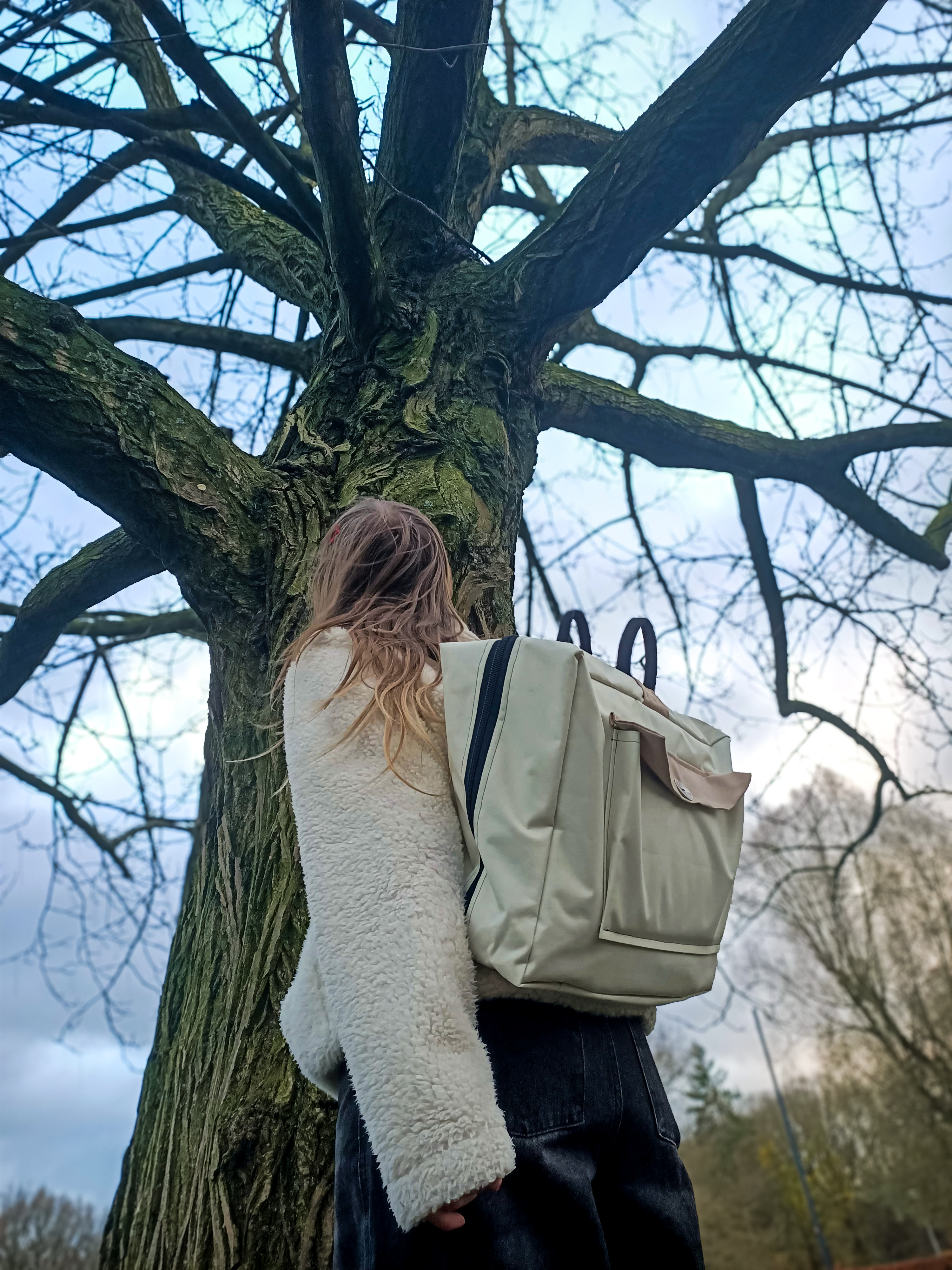
In the Philips de Jong park in Eindhoven, you can find a lot of dead trees. Some are cut at the top but still have the stem. The wood is collected on piles. Why is it there? To be taken away or to stay? With the group, we explored how life evolved around these dead trees and how they fed the ecosystem. We learned about bark beetles and their larvae’s beautiful traces, as well as how “echte tonderzwam” kills weak trees. The group made good use of Obsidentify and my expert, Etje Hendriks from IVN VEV. We concluded that humans often damage forests worldwide by cutting them down, but here they were actually helping the forest through how they cut the trees and left them behind to feed and shelter others.